Ear Piercing Types: A Complete Guide
Introduction: 14 Points on One Ear
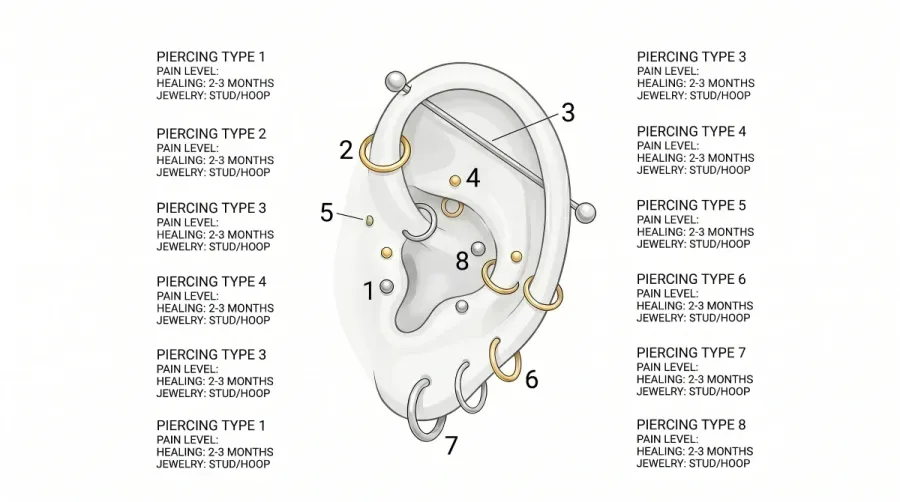
The human ear is an anatomically rich canvas. There are at least 14 distinct points where a piercing can be placed. Each has its own name, its own healing timeline, its own jewelry vocabulary.
Whether you are planning your first piercing or building a carefully composed stack across one ear, this guide covers every type, what sets them apart, how painful each is, how long they take to heal, and how to look after them properly.
A Brief History of Ear Piercing
Ear piercing is almost certainly the oldest form of body adornment with physical evidence to back it up. Otzi the Iceman, found preserved in the Alps and dated to around 3300 BC, had stretched lobe piercings. That is the earliest direct evidence we have.
Ancient Rome practiced lobe piercing widely among women and, more selectively, among men. Soldiers and sailors wore single earrings as identification and, according to some accounts, as a kind of personal insurance policy: the value of a gold earring was meant to cover burial costs if you died far from home. Egyptian mummies show ear piercings with gold and glass ornaments. Across the ancient Mediterranean, pierced ears signaled wealth, status, and religious affiliation in equal measure.
In Ayurvedic tradition, the ritual piercing of the ear is known as Karna Vedha, one of sixteen prescribed rites of passage. The choice of placement is considered alongside anatomy and, in traditional belief, linked to specific nerve pathways. The practice is performed on young children and remains common across many regions of the Indian subcontinent today.
Medieval Europe largely abandoned visible ear jewelry as head coverings became fashionable for both sexes. The Renaissance brought it back with force: sixteenth and seventeenth-century portraits regularly show male courtiers wearing a single drop earring in the lobe, sometimes pearl, sometimes gem-set.
Modern cartilage piercing emerged from the subcultures of the 1970s and 1980s. Punk in Britain and the United States transformed multiple piercings into a form of social statement. Helix piercings, industrials, rooks were signals of belonging, not simply decorative choices.
From around 2010 onwards, the aesthetic shifted again. The concept of ear curation, building a considered, multi-piercing composition across one ear, moved out of subculture and into mainstream American fashion. Today a combination of lobe, helix, and tragus is no more remarkable in New York or Chicago than a second lobe piercing was in the 1990s. The whole idea of an asymmetric stack, two ears styled differently, is one of the more interesting current directions, covered in detail in the guide on asymmetric earrings.
Ear Anatomy: A Map for Piercers
Before going through each type, it helps to understand the geography of the ear. Every region has its own tissue characteristics, blood supply, and healing behavior.
The lobe is the soft, fleshy lower portion with no cartilage. It is richly supplied with blood vessels, which is exactly why it heals so much faster than any cartilage position. It accepts virtually any jewelry style.
The helix is the outer curved rim running along the top and back of the ear. It is the longest cartilage structure on the ear and accommodates several distinct piercing positions along its length.
The antihelix is the inner ridge that runs roughly parallel to the helix. The rook and snug sit within this structure.
The tragus is the small triangular cartilage tab in front of the ear canal. Highly variable in size from person to person.
The antitragus is the small raised bump of cartilage directly opposite the tragus, sitting just above the lobe.
The conch is the large bowl-shaped area of cartilage at the center of the ear, divided into inner and outer sections.
The daith is the innermost fold of cartilage that arches just above the ear canal.
Cartilage tissue is nearly avascular, meaning it has very limited direct blood supply. It relies on surrounding tissue for nutrients and oxygen during healing. This is the fundamental reason a helix piercing takes ten times longer to heal than a lobe piercing: the biology of the tissue, not the size of the needle.
The Main Types of Ear Piercing
Divide the ear into three zones: the lobe, the inner cartilage, the outer cartilage. Each zone has its own piercings.
Lobe
Standard lobe is the most common piercing of all. Done by most people in childhood or adolescence. Heals quickly (4-6 weeks). Compatible with virtually every earring type. Pain level: 1-2 out of 10. The universal starting point, and for good reason.
Second lobe is a second piercing placed above the first. Often added a few years later. Heals just as quickly. Opens up the option of wearing two different earring styles simultaneously: a larger piece at the base, a small stud above.
Third lobe sits above the second. Popular among teenagers and young adults. Fast healing. A three-position lobe stack is one of the most popular starting points in contemporary ear composition.
Transverse lobe is a horizontal piercing that passes through the full width of the lobe. Less common. Healing takes longer (3-6 months). A barbell sits across the entire lobe. Not anatomically possible on every lobe: a certain thickness is required. Best left to experienced piercers.
Lobe stack is a series of consecutive piercings from base to top, typically 4-5 in a column, creating a curated jewelry composition. This is built over several visits, not in one session. Healing between additions is not optional.
Helix (outer upper edge)
Standard helix is the most popular cartilage piercing in the US. Placed on the outer rim at the top of the ear. Heals in 6-12 months. Suits small rings or flat-back studs. Pain level: 4-5 out of 10. Almost always the first cartilage piercing people choose, and a natural starting point for an asymmetric earring composition across both ears.
Forward helix sits on the front section of the helix, closer to the face. Often done in a row of 1-3. Works particularly well with small-diameter rings or minimalist flat studs. One of the more feminine-presenting cartilage placements.
Mid or upper helix refers to placements at different heights along the outer rim. Used to fill space in multi-piercing compositions and to create a stepped look along the edge of the ear.
Industrial connects two piercings (a forward and a rear helix) with a single long barbell running across the ear. Striking visually, but complex to heal. Healing time: 9-18 months. Pain level: 7-8 out of 10. Not suited to every ear anatomy: the helix curve must be sufficiently pronounced. A professional assessment is essential before committing.
Conch (inner cartilage, the cup)
Inner conch sits in the center of the ear bowl, its deepest point. Worn with a large flat-back stud or a hoop that wraps around the bowl. Heals in 6-12 months. Pain level: 5-6 out of 10. One of the more decorative cartilage piercings when paired with the right jewelry. A large hoop in the conch creates a statement visible from across the room.
Outer conch is placed closer to the outer edge of the bowl, nearer the helix. Less prominent but works well in a layered composition alongside the helix.
Tragus
Tragus sits on the small cartilage flap in front of the ear canal. One of the most popular cartilage piercings in the US. Worn with small rings or flat-back studs. Heals in 6-12 months. Pain level: 4-5 out of 10. Particularly visible from the front, which makes it a good choice for anyone who wants a cartilage piercing with clear visual impact without being too dramatic.
Anatomy note: tragus size and thickness vary considerably. Some people have a large, easy-to-pierce tragus; others have a very small or thin one. A qualified piercer will assess your anatomy before proceeding. If the tragus is very small, a surface piercing or anti-tragus may be a better option.
Anti-tragus
Anti-tragus is placed on the cartilage ridge opposite the tragus, just above the lobe. Less common. Healing is slow (9-12 months). Pain level: 5-6 out of 10. Works well in a paired composition with the tragus and adds an interesting detail to a minimal stack.
Daith
Daith sits on the innermost fold of the cartilage, the small curving ridge inside the ear. Has become significantly more popular over the past decade in US studios. Some people try it hoping it will ease migraines: there is no peer-reviewed clinical evidence that it does, but subjective reports persist. If the aesthetic appeals, that is a good enough reason on its own.
Complex anatomically: a pronounced inner fold is needed. Healing: 6-12 months, sometimes longer. Pain level: 6-7 out of 10. Heart-shaped rings are particularly popular for this placement because they follow the curve of the fold naturally. The daith sits deep in the ear, creating a surprising visual detail that is partially hidden from some angles.
Rook
Rook is placed on the cartilage ridge above the daith, within the antihelix structure. Less widespread. Worn with curved barbells or small rings. Pain level: 6-7 out of 10. Healing: 12-18 months. Not anatomically possible on every ear. The antihelix fold must be sufficiently developed. Professional assessment and an experienced piercer are both important here.
Snug
Snug sits on the inner cartilage edge along the middle section of the ear. The most technically demanding placement on this list. Pain level: 8-9 out of 10. Healing: 12-18 months. High rate of migration and rejection in people with less pronounced inner cartilage. Not a first cartilage piercing under any circumstances.
Auricle
Auricle sits between the helix and the lobe, at mid-height. An intermediate placement, good for filling in a composition between the lobe stack and the helix. Useful when you want a visual connection between the two zones without jumping straight to cartilage.
Pain Levels
Pain is highly individual and depends on your anatomy, the skill of your piercer, and your own tolerance. Arriving well-rested, fed, and without alcohol in your system makes a measurable difference. A rough guide:
| Piercing | Pain level (1-10) |
|---|---|
| Standard lobe | 1-2 |
| Second and third lobe | 1-2 |
| Tragus | 4-5 |
| Standard helix | 4-5 |
| Forward helix | 4-5 |
| Anti-tragus | 5-6 |
| Daith | 6-7 |
| Rook | 6-7 |
| Conch | 5-6 |
| Industrial | 7-8 |
| Snug | 8-9 |
The deeper the cartilage, the more sensation, and the longer the healing. A piercer with a fast, confident technique will always produce a less uncomfortable experience than someone who hesitates. This is one reason choosing the right studio matters beyond just sterility.
Healing: Realistic Timescales
Healing is individual, but average timelines are:
| Piercing | Full healing |
|---|---|
| Standard lobe | 4-6 weeks |
| Helix | 6-12 months |
| Tragus | 6-12 months |
| Conch | 6-12 months |
| Daith | 9-12 months |
| Rook | 9-12 months |
| Industrial | 9-18 months |
| Snug | 12-18 months |
Important: even if a piercing looks healed after a month, cartilage piercings continue healing internally for far longer. Do not change the jewelry before the full time has passed.
Healing happens in stages. The acute phase (first 2-4 weeks) involves obvious swelling and sensitivity. The intermediate phase (roughly 1-6 months) is when the body lays down new tissue and the channel begins to form. The mature phase (up to 12-18 months for cartilage) is when the canal fully stabilizes. Jewelry changes during the intermediate phase are one of the most common causes of complications.
Where to Get Pierced
The rule is simple: a professional piercing studio, never a mall kiosk with a gun.
Why a gun is wrong for cartilage:
- It causes blunt trauma rather than a clean cut
- The gun itself cannot be sterilized
- Significantly higher risk of keloids and infection
- Risk of micro-fractures in cartilage
What a professional needle does:
- A hollow, sterile, single-use needle
- A clean, precise channel with minimal trauma
- Lower complication risk
In the United States, professional piercing studios are regulated at the state and local level. Licensing requirements vary by state, but reputable studios voluntarily operate to standards set by the Association of Professional Piercers (APP), which has its own training requirements, material standards, and hygiene protocols. Checking for APP membership is a useful starting point when choosing a studio.
The cost of a piercing in a reputable studio is broadly comparable to a decent lunch, with jewelry priced separately. Studios that charge far less than the norm often cut corners somewhere.
Choosing the Right Studio
A good studio is more than a sterile room. It is a place where the piercer asks questions about your anatomy, explains the process, discusses your options, and does not pressure you.
Signs of a professional studio: Visible autoclave equipment. Single-use needles opened in sealed packaging in front of you. Clean gloves changed between clients and between different steps. Initial jewelry in sealed sterile packaging. The piercer uses a needle for every type of piercing, never a gun.
Questions worth asking before you commit: What metal is used for the initial jewelry? How do you assess anatomy for this placement? What aftercare do you recommend? What should I do if I develop a bump after two weeks?
If the piercer answers these questions thoroughly and without being dismissive, that is a good sign. If they seem irritated by the questions, take your business elsewhere.
Aftercare
First 2-4 weeks:
- Clean twice daily with sterile saline solution (ready-made or homemade: 1/4 teaspoon of non-iodized sea salt per glass of warm water).
- Avoid touching with unwashed hands.
- Do not rotate the jewelry. This is an old myth and actively delays healing by disrupting forming tissue.
- Stay out of open water (swimming pools, lakes, baths) for the first two weeks. Showers are fine.
First 2-3 months:
- Sleep on the opposite side. A travel pillow with a central hole is a well-known and effective workaround for side sleepers.
- Do not change jewelry until fully healed.
- Avoid snagging on clothing, towels, or hair.
- Avoid very heavy earrings on a healing lobe.
The first year:
- Maintain regular cleaning.
- Any redness, swelling, or discharge that persists or worsens: return to your piercer or see a doctor.
Good nutrition and adequate sleep also matter. Zinc and vitamin C support tissue regeneration. Stress and poor sleep extend healing timelines measurably.
What Not to Do
A list of the mistakes that genuinely slow healing:
Do not use alcohol or surgical spirit. These destroy healing cells along with bacteria. Saline only.
Do not remove the jewelry in the early months. The channel in cartilage closes surprisingly fast. Even a few hours without the jewelry can make re-insertion difficult or impossible without further trauma.
Do not change the jewelry before it is ready. The exterior may look healed while the interior channel is still immature. Early changes introduce infection risk and can cause irritation bumps.
Do not use hydrogen peroxide. As damaging as alcohol. Not appropriate for a healing piercing.
Do not use jewelry with unsuitable metals. Nickel in cheap alloys is the leading cause of contact allergic reactions in piercings across all age groups.
Do not sleep on a fresh cartilage piercing. Sustained pressure interrupts blood supply to the area and creates a persistent point of inflammation that significantly extends healing.
Do not apply creams, oils, or ointments. Despite intuition, these create a moist barrier that can harbor bacteria and interfere with the natural wound-healing process. Saline solution is sufficient.

Materials for a New Piercing
This matters more than most people realize. A healing piercing tolerates only certain materials. The wrong material is not a minor inconvenience: it can cause allergic reactions that mimic infection symptoms and extend healing by months.
Safe:
- Implant-grade titanium (Ti-6Al-4V ELI) the industry standard. Biocompatible, lightweight, genuinely hypoallergenic. Used in surgical implants for good reason.
- Surgical steel 316L or 316LVM reliable, though a small number of people react to the trace nickel content.
- Niobium excellent for highly sensitive skin or anyone who has previously reacted to steel.
- Solid 14K or 18K gold not plated, solid. Works well when the alloy is clean. Yellow gold and rose gold are generally better tolerated than white gold, which sometimes contains nickel-based alloys.
- Bioplast (PTFE) for anyone with metal sensitivities. Flexible and inert.
Not suitable for a fresh piercing:
- Silver (oxidizes and can cause reactions; fine after full healing)
- Plated jewelry with nickel base
- Tin, lead alloys
- Uncoated copper or brass
After full healing (6-12 months for cartilage), you can move to other materials as preferred.
Jewelry by Piercing Type
Choosing the right jewelry for a healed piercing is part aesthetics, part anatomy. A ring that is too large for a helix gets caught in hair and catches on clothing. A stud that is too heavy in a healing lobe slows healing. The guide below applies to fully healed piercings.
Lobe
Any earring style works: studs, hoops, drops, long pieces, shoulder-dusters. The main consideration is not overloading a healing lobe early on. After full healing, there are essentially no restrictions.
Helix
- Small rings (5-10 mm diameter)
- Flat-back studs with a small decorative top
- Labrets (flat on one side, good for tight cartilage positions)
- Small star, moon, or stone-set studs
Tragus
- Small studs with a flower, star, or stone setting
- Small rings (6-8 mm)
- Labrets with a flat back
Conch
- Larger decorative flat-back studs
- Large hoops that wrap around the bowl (trickier to fit yourself; a piercer can help initially)
Daith
- Hearts (popular for this placement due to the curve of the fold)
- Small rings in a tight diameter
- Decorative curved barbells
Industrial
- Long straight barbells (the standard)
- Designed barbells with charms or drops
Building an Ear Composition
Ear curation means approaching multiple piercings on one ear as a coordinated aesthetic composition rather than individual decisions made in isolation. The idea took hold in the US around 2010 and has been mainstream in American fashion since.
Start with a focal piece. Begin with the most decorative, most visually prominent element. This might be a large hoop in the conch, a daith ring, or a long drop at the lobe. Everything else is built around it.
Add accents, not competition. Smaller studs, thin rings, minimalist pieces at other positions support the focal piece. They should add to the overall composition, not fight for attention.
Metal consistency. Mixing yellow and white gold is possible but it has to be intentional. Random mixing of silver, gold, and rose gold reads as accidental. Choose one metal as primary or follow a deliberate alternating rule.
Odd numbers. Three, five, or seven pieces tend to look more balanced than two or four. This is a basic principle of visual rhythm.
Scale decreases upward. Heavier, larger pieces at the lobe; lighter, smaller pieces higher up at the helix. This mirrors natural visual weight distribution.
Ready combinations:
Minimalist combination. Standard lobe plus second lobe plus helix. Three points, all small, single metal (white gold or silver). Works in professional and everyday settings without attracting much comment.
Bohemian combination. Conch plus tragus plus double helix. More detail, mixed forms (rings and studs), varied sizing creates layered depth.
Alternative combination. Industrial plus multiple lobes plus forward helix. Noticeable, deliberate, not trying to be subtle.
Asymmetric approach. One ear more densely stacked (three or four pieces), the other minimal (one or two). Asymmetry in ear styling is one of the most interesting current directions in American jewelry.
Silver, gold, rings, symbolic pieces, matching sets.
Which Piercing Suits Whom
Lobe: universal. Simple, reliable, quick to heal, suits every style from minimalist to maximalist.
Helix: for anyone prepared for 6-12 months of aftercare. Most popular among the 15-35 age group, but there is no upper age limit. A single helix with a small gold ring reads elegantly at any age.
Tragus: for those who prefer understated, precise placement. Not the most painful, but clearly visible from the front. Good for people who want cartilage without going dramatic.
Daith: primarily chosen for aesthetic reasons. The migraine-relief claim has no clinical backing, but subjective reports are common enough that people keep trying it. The aesthetic alone is worth it if you like deep, hidden details.
Conch: for those who want a statement placement. The inner conch with a large hoop is one of the most visually impactful single piercings available.
Industrial: suits alternative or edgier aesthetics. Not a typical office-friendly choice, and the long healing timeline requires patience and commitment.
Snug: for experienced wearers only. Not a first cartilage piercing. The rejection risk is real and the healing is genuinely long.
Complications to Know About
Most piercing problems are preventable with proper aftercare and a good studio. But knowing what can go wrong helps you respond correctly if it does.
Keloid scar. A firm, raised scar at the piercing site that grows beyond the wound boundary. Keloid tendency is genetic: if you have had keloids before from cuts or other wounds, discuss this with a piercer before any cartilage work. Keloids require professional medical treatment (dermatology or surgery) and will not resolve on their own.
Irritation bump. A small, soft bump adjacent to the piercing caused by mechanical irritation, not infection. Common causes: sleeping on the piercing, snagging, too-heavy jewelry, touching with unwashed hands. Usually resolves when the source of irritation is removed and aftercare is improved. Not the same as a keloid.
Migration. The body slowly pushes the jewelry toward the surface. More common in surface piercings and poorly fitted jewelry. Looks like the jewelry shifting position over weeks or months.
Infection. Genuine signs: yellow or green discharge (white lymph fluid in the first days is normal), escalating pain, spreading redness and warmth, swollen lymph nodes nearby. Mild infections often respond to intensified saline cleaning. Significant infections require medical attention. Do not remove the jewelry if you think there is an infection: this can trap the bacteria inside.
Allergic reaction. Most often to nickel in lower-quality jewelry. Symptoms: persistent itching, redness, rash around the site. Switch to implant-grade titanium or niobium.
When to See a Doctor
Most piercing issues resolve with proper aftercare. But go to a doctor if:
- Pain is intensifying rather than slowly improving after the first week
- You have yellow or green discharge
- You have a fever
- The ear is significantly swollen, hot to the touch, or showing spreading redness
- The lump or swelling is growing rather than staying stable or shrinking
Cartilage infections are harder to treat than soft tissue infections. Waiting with the assumption it will resolve on its own can result in permanent tissue damage. Take it seriously.
FAQ
What is the minimum age for ear piercing in the US?
There is no single federal standard. Requirements vary by state. In most states, minors under 18 need parental or guardian consent. Some states have specific regulations for cartilage versus lobe piercings. Reputable studios will ask for ID or a signed parental consent form. If a studio does not ask for this from an underage client, that tells you something about their standards.
Can I get multiple piercings in one visit?
Technically yes, but it is not recommended for more than two at a time. Each piercing is a wound. Multiple simultaneous healing wounds place strain on the body and raise the risk of complications. One or two per visit, with a gap of at least two months before the next session, is the sensible approach.
What if I decide I do not want it anymore?
Remove the jewelry and the piercing will close. A fresh piercing (under a year) closes within weeks or months. An older piercing may leave a small permanent mark.
What if a keloid develops?
A raised, firm scar at the piercing site is a keloid. This requires assessment by a dermatologist or doctor. It will not resolve on its own and should not be treated at home. Keloid tendency is genetic: if you have had keloids before, discuss this with a professional before any cartilage piercing.
How do I manage a piercing at work?
A small stud in the lobe or helix is rarely noticed in most workplaces. Industrial piercings or large hoops may attract comment in conservative environments where a strict dress code applies. Clear bioplastic retainers are available specifically for concealing piercings when needed, but should only be used in fully healed piercings.
Will a piercing set off metal detectors at the airport?
Typically not. Piercing jewelry is too small to trigger standard detectors reliably. Occasionally security staff may ask you to remove it for additional screening.
Do piercings cause problems in an MRI?
Implant-grade titanium is non-magnetic and MRI-safe. Steel jewelry may interact magnetically. Most radiology departments ask you to remove all jewelry before scanning. For fully healed piercings, removal is easy; for healing piercings, discuss with the radiologist and your piercer.
Is it safe to sleep on a piercing?
After full healing, yes. During the healing period, sleeping on a cartilage piercing slows healing and causes discomfort. A travel pillow with a central hole is a well-known and practical workaround.
Does a daith piercing actually help with migraines?
There is no peer-reviewed evidence that it does. Some people report relief, which is most likely a placebo effect. If you like the aesthetic, that is a good enough reason. Migraine treatment should be discussed with a neurologist or your primary care physician.
Are ear cuffs a real alternative to piercing?
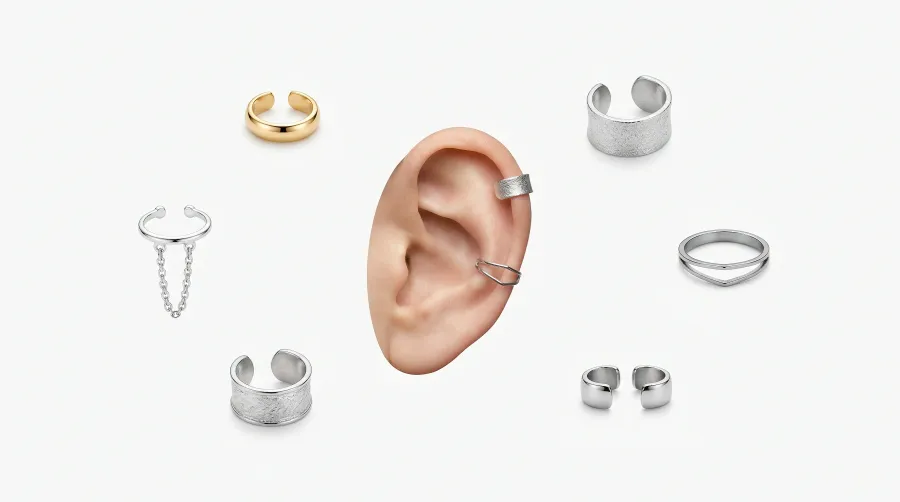
Yes. An ear cuff gives a similar visual result without any commitment. Particularly useful for helix and conch positions. Good quality ear cuffs stay in place throughout the day without causing discomfort.
How do I choose a piercer?
Look for: a studio with visible hygiene standards and an autoclave, a piercer with a strong portfolio including cartilage work, single-use needles opened in front of you, and the time to answer your questions without pressure. APP membership or equivalent professional association membership is an additional mark of quality.
Why did I get a bump next to my piercing?
A small bump next to a healing piercing is usually an irritation bump, not a keloid and not an infection. The most common causes are sleeping on the piercing, a ring diameter that is too large for the position, touching with unwashed hands, or a snag from clothing or hair. Improve aftercare, eliminate the source of irritation, and the bump usually resolves within two to three weeks. If it grows or persists beyond a month, see your piercer or a dermatologist.
Piercing at Different Life Stages
One question that comes up regularly, though rarely in the same terms: is there an age where getting a cartilage piercing stops making sense? The short answer is no. The longer answer involves understanding what changes and what does not.
In your teens and twenties, cartilage heals relatively quickly and the range of suitable placements is widest. The skin is more elastic, tissue density is generally higher. The industrial piercing, which requires enough cartilage structure to support two simultaneous piercings on a long barbell, is most reliably achievable on younger ears with well-defined helix anatomy.
In your thirties and forties, healing timescales are only marginally longer. The bigger change is typically in taste: elaborate multi-piercing compositions with mixed metals often give way to fewer, more considered pieces in better materials. A single daith ring in 14K gold, a precise tragus stud, a clean helix ring. The move toward quality over quantity is a pattern that most piercers describe seeing in clients over thirty.
In your fifties and beyond, skin becomes thinner and more delicate. Lobe piercings continue to be straightforward. Cartilage piercings heal, but may take longer, and the tissue is somewhat less forgiving of jewelry that creates pressure or irritation. The practical advice: go smaller, go lighter, go for higher-quality materials. Implant-grade titanium or solid gold. Nothing heavy. Nothing that catches.
A well-executed single helix ring in white gold reads beautifully at fifty. There is no version of this where age is a barrier, only an influence on choices.
The Psychology of the First Piercing
First piercings come with a particular set of anxieties that are worth addressing directly, because they are almost always larger before the appointment than during or after it.
The fear of pain is typically disproportionate to the experience. A standard lobe piercing takes less than a second and produces a sensation similar to a sharp pinch. A helix is more intense, but still over in a moment. The anticipation, sitting in the chair, seeing the needle, is for most people significantly worse than the actual piercing. Experienced piercers know this and will often talk you through it in a way that reduces anticipatory tension.
The fear of regret is also common, especially for cartilage piercings. This is worth thinking about honestly rather than dismissing. Cartilage piercings close slowly and, for older piercings, may leave a small mark. The question is not whether the piercing is permanent, because it is not, but whether you have made a considered decision rather than an impulsive one. A helix ring or a daith that you have wanted for a year is unlikely to produce regret. A snug done on a whim the same day you saw it online is a different calculation.
The fear of infection is real but manageable. Following the aftercare protocol described in this guide means the vast majority of piercings heal cleanly and without incident. The piercers who see the most infections see them almost entirely in people who did not follow aftercare, changed their jewelry too early, used inappropriate cleaning products, or got pierced at non-professional establishments.
There is also the quieter anxiety about what other people will think. In most American workplaces and social circles, a well-placed helix or tragus with a small gold piece attracts no comment. The cultural shift since the early 2000s has been substantial: what was once associated with subcultures is now simply how a large percentage of adults in the US style their ears. If you are the first person in your immediate circle to get a cartilage piercing, there is a reasonable chance you will not be the last.
One practical note: bringing someone with you to the appointment is a genuine help for many people. The company reduces anticipatory anxiety and gives you someone to talk to in the chair. If you prefer going alone, that is equally fine. A good piercer will manage the process in a way that keeps you comfortable.
Jewelry Trends in the American Market
The US piercing and fine jewelry market has seen a clear shift over the past decade toward what the industry calls "fine piercing jewelry": pieces made in solid gold, often set with diamonds or gemstones, in small and precise designs. The distinction from fashion jewelry or costume jewelry is in the materials and the intention: these are pieces meant to be worn continuously, including during healing, and to last indefinitely.
For lobe piercings, the trend moved from large statement drops toward smaller, more precise pieces, often worn in multiples. A column of three small gold studs up the lobe, each slightly different in design, is a look that emerged from the ear curation movement and became a mainstream American jewelry preference.
For cartilage, flat-back labrets in solid gold with small gemstone tops became the standard for first-piercing jewelry in professional US studios. They sit flush against the skin, produce less irritation than rings during healing, and look proportionate to the small scale of cartilage positions.
The interest in birthstone jewelry extended naturally into piercing. A tragus stud set with a small emerald, a forward helix with a blue sapphire, a daith ring with a cluster of seed pearls. These are combinations that have become standard offerings in fine piercing studios across New York, Los Angeles, and other major US cities.
Caring for Long-term Piercings
Once a piercing is fully healed, the active care protocol drops away. But long-term maintenance matters for keeping jewelry looking good and tissue healthy.
Cleaning healed piercings. A quick rinse in the shower is sufficient for fully healed piercings. If you notice buildup of dead skin cells around the base of a stud or ring, use a cotton swab dampened with saline to clean the area. This is particularly relevant for conch and daith piercings, where the position makes natural cleaning by water flow less effective.
When to take jewelry out. Fully healed piercings in good condition can be left without jewelry for hours or even a day or two without closing. An older, well-established cartilage piercing may stay open for a week without jewelry. Lobes, especially older ones, can stay open essentially indefinitely. Do not push this assumption too far with newer piercings: a two-year-old helix may close in forty-eight hours if the jewelry is removed.
Jewelry maintenance. Solid gold and titanium can be cleaned gently with a soft cloth. Do not use jewelry cleaning solutions designed for gemstone rings on piercing jewelry, especially rings that are in permanent contact with skin. The residues can cause irritation.
Knowing when to retire a piercing. Piercings age. If a cartilage piercing has become permanently irritated, shows recurrent irritation bumps, or the jewelry sits poorly because the skin has thinned around it over years, removal and letting it close is a reasonable option. The decision is yours, and there is nothing wrong with choosing to close a piercing that no longer works for you.
Updating jewelry over time. A healed piercing is not a fixed commitment to a single piece of jewelry. Taste changes. A helix that started with a plain titanium ring might get a 14K gold clicker with a small sapphire a few years later. The initial jewelry choice is a starting point. Once the channel is mature and healthy, the range of what works in it is wide. This is part of what makes ear curation a long-term practice rather than a one-time decision.
Conclusion
Before the final summary, one point worth making: the ear is not a fixed canvas. Piercings can be added, changed, and retired. A composition that starts with a single helix can evolve over years into something more considered. The best ear stacks tend to be built incrementally, with time given to each piercing to heal fully and settle into its place before the next is added.
Ear piercing types are not simply different coordinates on a map. They are different aesthetic choices, different commitments in terms of care, different statements about personal style. Choose based on what your life actually looks like: how much time you can dedicate to aftercare, what your pain tolerance is, and what you want to see in the mirror at the end of the process.
If you are starting out with cartilage, a standard helix or tragus makes a considered first step. Complex placements like the snug, industrial, or daith are better approached after you have experience with at least one healed cartilage piercing.
About Zevira
Zevira makes handcrafted jewelry in Albacete, Spain. We are not piercers, that is a profession in its own right, but we make earrings and ear jewelry for every type of healed piercing: standard lobes, cartilage positions, and everything in between.
What you will find in the catalog for different piercings:
- Small flat-back studs for first lobe piercings
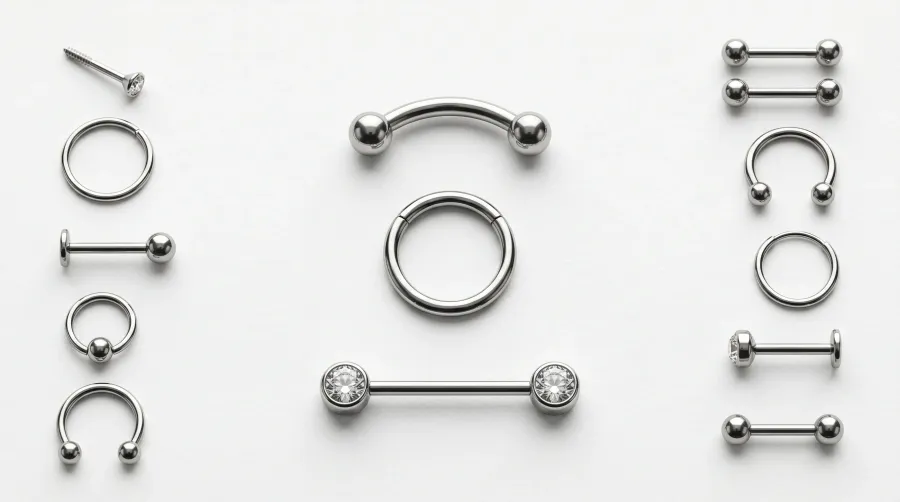
- Rings in a range of diameters for helix and tragus
- Labrets for flat cartilage positions
- Barbells for industrial piercings
- Ear cuffs as a no-piercing alternative
- Hypoallergenic 925 silver for sensitive healed piercings
Every piece is made by hand, with optional personalized engraving. We work in 925 silver and solid 14-18K gold.