Butterfly Jewellery: Meaning, Symbol and History
A creature that has actually died and come back
There is something this symbol carries that no other popular motif quite manages. The butterfly literally undergoes death and rebirth. A caterpillar wraps itself in a cocoon, dissolves inside into something barely recognisable as a living thing, and what emerges is a completely different creature. Not an improved caterpillar. Not a larger caterpillar. Something else entirely.
People across every culture noticed this metamorphosis long before they had words to describe it precisely. And everywhere it became a symbol. It speaks of the possibility of being one thing, then becoming another.
In jewellery, this is one of the most meaning-laden motifs there is. A butterfly pendant looks like a pretty and feminine piece, but behind it lies five thousand years of cultural weight.
British folklore has its own particular relationship with these creatures. In Wales, to kill a white butterfly was considered bad luck, since white butterflies were held to carry the souls of children. In Cornwall, the first butterfly spotted in spring was greeted with a piece of bread or cake, left out as an offering. The soul does not simply depart, the old belief ran. It takes a form. It continues.
The biology behind the symbol
Butterflies belong to the order Lepidoptera. Around 180,000 species have been described, and new ones continue to be discovered. It is one of the largest insect orders on earth.
Complete metamorphosis runs through four stages: egg, larva (caterpillar), pupa inside the cocoon, and imago, the adult. The cocoon stage lasts between seven and twenty-one days depending on species and temperature. What happens inside is biologically extraordinary. The caterpillar's body does not simply reshape itself gradually. It breaks down to near-molecular level and reassembles according to a fundamentally different blueprint. Not growth. Demolition and reconstruction.
The adult butterfly lives an average of two to four weeks. The monarch is an exception: it can live up to eight months because it needs time for migration. The monarch travels approximately 4,000 kilometres each year, from Canada and the northern United States to the mountain forests of Michoacán in Mexico. No single butterfly completes the entire route in one lifetime. The migration spans multiple generations, yet each generation follows exactly the route of its predecessors. This remains one of the most puzzling phenomena in biology.
The colour of butterfly wings in most species comes not from pigment but from physics. The structure of the scales on the wing refracts light so that we perceive blue, green or violet. This is why the vivid blue morpho butterflies from Amazonia do not fade over time as paint would. The same principle produces the iridescence of opal. In enamel jewellery, the plique-à-jour technique attempts to replicate this effect. Nature still does it better.
Butterfly jewellery: what to choose
Pendant
The most common form, and rightly so.
- Small wings, 1-2 cm for everyday wear. Entry-level pricing, rarely looks cheap if the metalwork is clean.
- Medium, 3-4 cm with detailed wing pattern. The most frequent choice. Mid-range.
- Large, 5-8 cm as an expressive focal point. Mid to premium range.
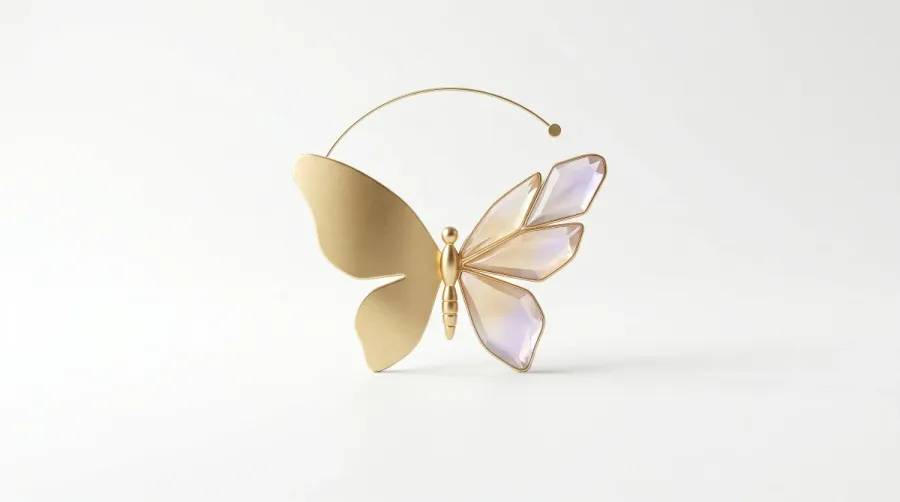
- Enamel wings with vivid colour (blue morpho, orange monarch). Particularly striking. Mid-range.
- Pave stone wings where the surface is set with small stones. Luxury segment.
Earrings
- Small stud wings as pairs, for daily wear. An excellent first gift for a young girl.
- Drop earrings where the wings move with the wearer, mimicking flight. For evenings, for summer.
- Asymmetric with one large wing on one ear and a smaller piece on the other. A contemporary approach.
Rings
Less common than pendants and earrings, but striking when done well.
- Statement piece with open wings large and immediately visible. Mid to premium range.
- Fine band with a small motif for the minimalist.
Bracelets
- Several small charms on a chain layered, bohemian.
- One large piece on a flat bracelet as the focal point.
- A paired set with two butterflies for couples (drawing on Chinese symbolism of love).
Brooches
A returning trend, particularly in vintage and Art Nouveau aesthetics.
- Large enamel brooch for a jacket, coat or scarf.
- Stone-set brooch the premium option, suited to evening wear.
Hair jewellery
A tradition from the Victorian era and Art Nouveau. Butterflies in metal and enamel were pinned into the hair or fixed to hats. The form has returned in contemporary jewellery as pins, combs and clips, often in silver or gold-fill with delicate wing detail.
Materials and techniques
The butterfly wing, because it spans space and suggests translucency, rewards certain techniques more than others.
Sterling silver with oxidising. The darkened metal emphasises the engraved detail of the wings, creating depth and shadow. Versatile, suits most styles. The most common choice in accessible butterfly jewellery.
Plique-à-jour enamel. A glass-like technique in which enamel is suspended within a metal frame with no backing, allowing light to pass through as through stained glass. The wings appear lit from within. This was René Lalique's preferred technique for insect jewellery. Extraordinarily beautiful, but fragile. Requires careful storage and handling.
Champlevé enamel. Deeper and more durable than plique-à-jour. The metal is carved out and the recesses filled with coloured enamel. A Renaissance-era technique. Saturated colour, less fragility.
Pavé stone setting. The entire wing surface covered with small diamonds or coloured stones. The luxury option for evening jewellery. Do not use ultrasonic cleaning, as small stones can loosen. Professional cleaning in a workshop is recommended.
Resin with botanicals. A contemporary approach: wings filled with transparent resin enclosing dried flowers or colour pigments. More accessible, handmade character, particularly vivid when layered with plant material.
Types of butterfly and their meanings
Specific species appear frequently in jewellery, each with its own associations.
Monarch. Orange with black patterning. A Mexican cultural emblem, associated with souls and migration. Particularly resonant in Latin American tradition.
Morpho. Brilliantly blue, iridescent. From South America. A symbol of natural forces and rarity. The most beautiful species to render in enamel.
Peacock butterfly. With characteristic eye-spot markings on the wings. The classic European variety. Victorian jewellery made frequent use of this species in Britain. A familiar sight on English meadows and gardens in summer.
Swallowtail. With long tails on the lower wings. An elegant form, often found in premium jewellery.
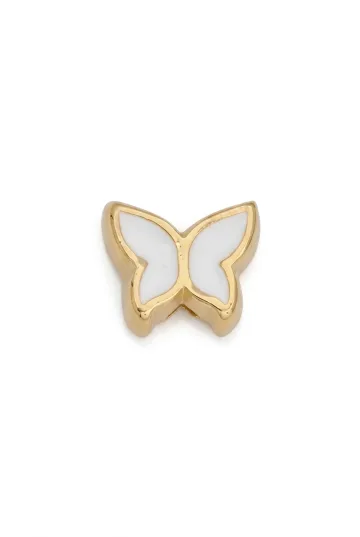
Silhouette. An abstracted form with no specific species intended. The most common representation in accessible jewellery.
How to wear it
Worn close, unseen
A small pendant tucked beneath a blouse or shirt. A private sign of transformation, seen only by the wearer.
Worn outward
A medium or large pendant worn over a blouse or dress. Romantic, feminine.
Layered
Several small charms on chains of different lengths. A bohemian approach.
With tailored clothing
A minimal wing motif works well. Large enamel pieces or stone-set designs only where the setting permits, creative industries for instance.
With casual clothing
Any size. Particularly well suited to spring and summer, with floral dresses and light fabrics.
Materials
- Sterling silver: the classic choice, suits most styles
- Yellow gold: traditional, the Victorian preference
- Rose gold: the contemporary alternative
- Enamel: for coloured wings, the most vivid option
- Mother-of-pearl or pave stones: premium finishes
What the butterfly means
This image in jewellery carries several layers of meaning, and they often work together.
Transformation. The primary meaning. Like the scarab beetle in ancient Egyptian symbolism, it speaks of rebirth and the moment a person has changed, become someone different. Often after a crisis, a loss, an illness, a move, a period of growing up. The symbol marks the fact: I am not who I was.
Freedom. A winged creature that goes where it wishes, unattached to a nest, laying up no provisions for winter. Its life is short, but entirely its own.
The soul. In Greek the word psyche meant both soul and this creature, the same word for both. For the Greeks, a winged thing rising from a cocoon was a literal image of the soul leaving the body.
Resurrection. Christian tradition took this image as a symbol of the resurrection: the caterpillar as earthly life, the cocoon as burial, the butterfly as the risen form. The phoenix carries a parallel symbolism of rebirth in other cultural strands.
Beauty from pain. A more recent reading. Someone has been through a difficult time and emerged changed for the better. Common in tattoos and jewellery among people who have come through depression, addiction or abusive relationships.
Femininity and delicacy. The classical perception. Light, graceful, colourful.
The present moment. An adult butterfly lives for two to four weeks. Its existence is about experiencing a short season of beauty. A symbol of now.
Mental health recovery. From the 2010s onward, the butterfly has become a recognised image in communities supporting people through depression and anxiety disorders. Several organisations working in this area have adopted it as an official emblem.
Sterling silver, gold, rings, symbolic motifs and paired sets.
Who it suits
A girl, first jewellery. The classic introductory gift. Earrings or a pendant as a symbol of growing into oneself.
A woman after a significant ending. As a sign of new freedom. Often purchased for oneself rather than received as a gift.
A woman after illness. After recovery, particularly from a serious condition, this motif becomes a private marker.
In memory of someone. A mother, a grandmother, a sister. A pendant as a reminder of her presence.
Coming of age. Marking the transition into a new stage of life.
A gift for a mother. Especially one who loves gardens, nature, the seasons.
A romantic gesture. Symbolising lightness of feeling, without weight of obligation.
A wedding gift. Drawing on Chinese paired-butterfly symbolism.
A pregnant woman or new mother. The cocoon as the space where something entirely new takes shape is not only metaphor here. It is literal.
Someone in recovery. After a difficult period of any kind. A reminder that the cocoon is behind them.
The history of the symbol: from the ancient world to today
This motif appeared independently in cultures across the world, and the meanings converge in ways that are worth noting.
Ancient Egypt
The Egyptians painted winged creatures on tomb frescoes as part of the landscape of the afterlife. The soul of the departed might take this form.
Ancient Greece
Psyche was the word for both the soul and the butterfly. The myth of Psyche and Eros tells of a mortal girl who must pass through a series of trials before she is raised to become a goddess. She is represented with butterfly wings.
The Roman writer Apuleius retold the myth in Latin in the second century AD in his novel "The Golden Ass". His version became the standard one for the Western tradition. Through Apuleius, the story reached the Renaissance, the engravings of Raphael, and the sculptures of Canova. The Greek name Psyche was, for an ancient Greek, inseparable from the image of the winged insect.
Celtic Ireland and Wales
In Celtic tradition, butterflies were held to be the souls of the dead wandering between worlds. Irish folklore forbade killing a white butterfly: it might be the soul of a child. Welsh belief connected the appearance of certain species with omens of death or, conversely, with a sign from the other world. This was not decorative mythology. It was belief that shaped behaviour.
China and Japan
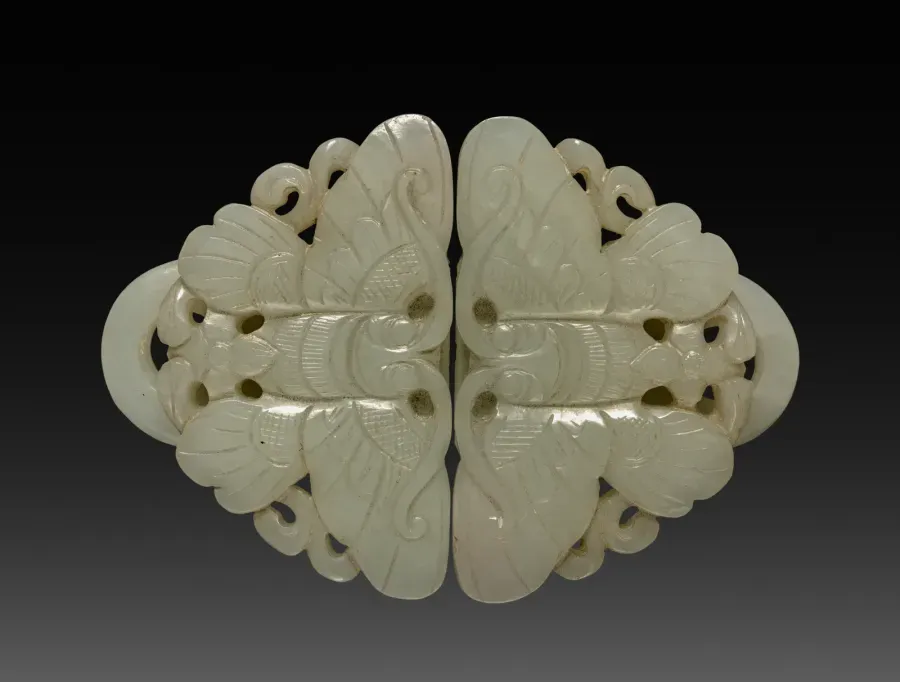
In China, the butterfly (hu die) is a symbol of love, marital happiness and immortality. Two butterflies flying together are the classic image for a couple.
In Japan (cho), the butterfly represents femininity and youth. It is one of the recurring motifs on kimono, fans and jewellery. White butterflies released at weddings are understood to represent the souls of bride and groom.
Mesoamerica

The Aztecs connected this image with the souls of fallen warriors. Itzpapalotl, the obsidian-winged goddess, presided over war and motherhood. In Mexico today, the monarch butterflies that arrive each autumn are linked to the souls of the dead at Día de los Muertos.
Hindu and Buddhist traditions
In Hindu thought, the butterfly is associated with the fluctuation of the mind, the same restlessness that meditation seeks to settle. The Buddhist parallel is impermanence: beautiful, brief, not to be grasped. These traditions do not exalt the butterfly as a fixed symbol. They use it to point at the transient nature of all phenomena, which is a more interesting reading than simple prettiness.
Native peoples of North America
Among the Hopi people there is a Butterfly Clan. The katsina figure Polikatsina is associated with beauty, fertility and ceremonial dance. For the Apache, the butterfly is a symbol of happiness and good news. These associations run parallel to but independent of the European and Greek traditions.
Medieval and Renaissance Europe
The motif appears in medieval art as a symbol of resurrection. Madonnas with the Christ child often include a butterfly in the composition. In the Renaissance this continued: Dürer, van Eyck and other masters incorporated the creature into their work. The cocoon was read as the tomb, and the butterfly as the life that emerges transformed.
The Victorian era
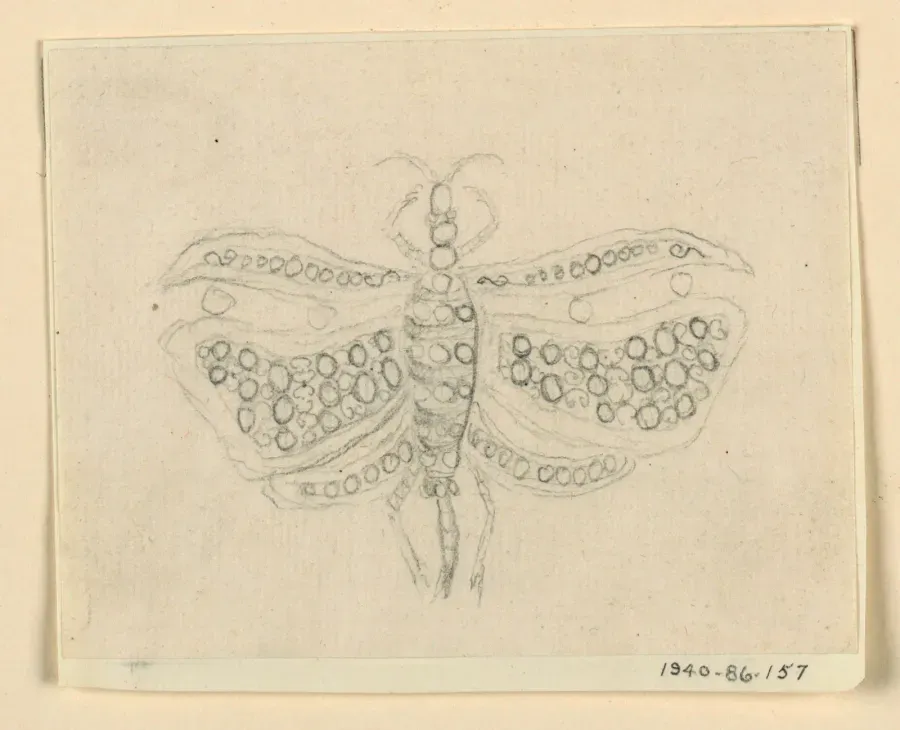
A period of remarkable intensity for this motif in Britain. One of the dominant jewellery themes of the nineteenth century. Pearl-set, enamel, wings built from pavé diamonds. Brooches were particularly popular. The peacock butterfly with its distinctive eye-markings became a favourite in British Victorian pieces, worn by women of all stations.
The Victorians also used butterfly jewellery in mourning contexts. A delicate creature with a brief life made natural sense as an emblem of someone taken too soon. Hair set beneath a crystal butterfly pendant was a recognised form of mourning jewellery.
The Victorian lepidopterist was a particular figure of the era. Both men and women collected and catalogued specimens with scientific rigour. The butterfly brooch pinned to a jacket and the specimen case on the study wall came from the same moment and the same cultural impulse: the insect as an object of wonder, simultaneously natural history and personal symbol.
Art Nouveau
René Lalique, working in Paris at the turn of the nineteenth and twentieth centuries, produced several pieces in this style that defined the aesthetics of the period. His work in guilloché enamel and plique-à-jour set the visual language of the butterfly in fine jewellery for the decades that followed.
In Britain, the Liberty style ran parallel to French Art Nouveau. Liberty of London commissioned designs from architects and artists rather than traditional jewellers, and the butterfly was a recurring motif in their early silver and enamel ranges.
Charles Robert Ashbee and his Guild of Handicraft (founded 1888) produced butterfly brooches in silver using Arts and Crafts techniques, as a conscious return to hand labour in opposition to industrial manufacture.
Twentieth and twenty-first centuries
The motif has moved through several waves of fashion: the 1970s with the bohemian and hippie movement, the 1990s with an aesthetic centred on female power, the 2010s with a revival of 1990s nostalgia. In the 2020s it returns each season without ever fully disappearing.
The butterfly in British folklore
The tradition is quieter than the great Greek myths, but no less specific.
In Wales, the white butterfly was the soul of the dead. To harm one was to harm someone who had once lived. This was not metaphor but practical belief, the kind that shaped behaviour in a village.
In Madame Butterfly, Puccini's opera of 1904, the creature in the title is not an ornament but a fate. The Japanese word for butterfly (cho) also carries the sense of an elegant, transient thing. The English-speaking audience received it as something both exotic and familiar, since the butterfly was already theirs too, in a different key.
The Lepidoptera collector, common in Victorian and Edwardian England, brought a scientific eye to creatures that were simultaneously objects of natural history and personal symbolism. Many Victorian women who could not pursue science professionally collected butterflies with the same rigour as their male counterparts, pressing specimens between glass, cataloguing wings. The butterfly brooch and the butterfly case on the wall came from the same era, the same impulse.
The myth of Psyche and Eros
This is one of the most enduring Greek myths, and the one that underpins the association of the butterfly with the soul.
Psyche, whose name in Greek means soul, was a mortal of extraordinary beauty. People stopped visiting Aphrodite's temples to admire this girl instead. Aphrodite, furious, sent her son Eros to make Psyche fall in love with something monstrous.
Eros fell in love with her himself. He married her in secret and came to her only at night, in complete darkness, forbidding her to look at his face.
When Psyche lit a lamp and saw Eros sleeping, a drop of oil fell on his shoulder. He woke and fled.
Psyche crossed the world searching for him, endured every trial Aphrodite set her. She reached Olympus. Zeus was moved. He made her a goddess and restored her to Eros.
In art, Psyche is shown with butterfly wings, Eros with the wings of a bird or angel. Their union represents love that survived pain and became permanent.
The myth was retold by the Roman author Apuleius in the second century. His version became the one that fed the Renaissance imagination. You find Psyche in the frescoes of the Villa Farnesina in Rome, in the engravings of Raphael, in the marble of Canova. Always with wings. Always the soul that earns its immortality through suffering rather than inheritance.
In jewellery, the myth lives on in paired pendants, in earrings where a butterfly appears on one side and an arrow on the other.
Lalique and Art Nouveau butterflies
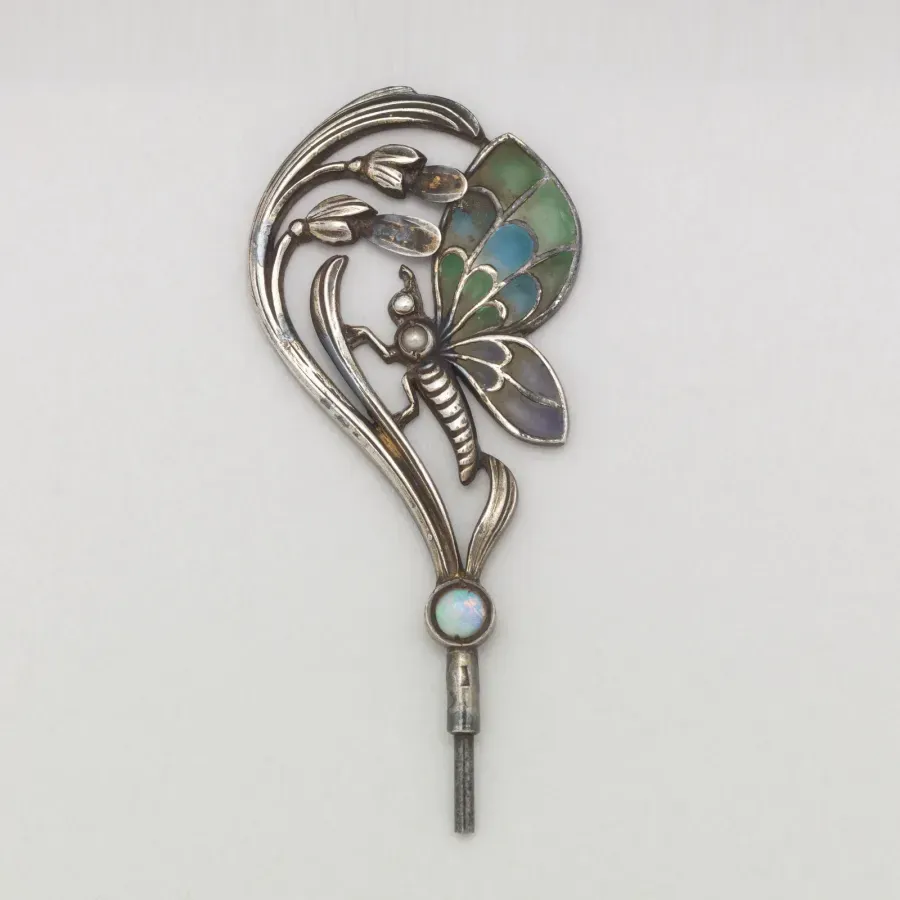
René Lalique (1860-1945) was a French jeweller who transformed the craft at the turn of the nineteenth and twentieth centuries. His butterfly pieces now sell at major auction houses for considerable sums.
Several works are worth noting.
His dragonfly woman of 1898 is technically a dragonfly, but the butterfly pieces from the same period share the same approach. It is now held at the Gulbenkian Museum in Lisbon.
His pectoral with butterflies, dating from around 1900, features enamel butterfly wings on a gold base. Each wing is a separate exercise in plique-à-jour enamel, the glass-like technique in which enamel is suspended within a metal frame with no backing, allowing light to pass through as through stained glass.
Lalique worked from living insects as models, studying the structure of wings and replicating in enamel the optical effect of refracted light. His approach set the standard for how butterfly motifs are rendered in premium jewellery. Makers across Europe in the Art Nouveau period used the same vocabulary: naturalistic forms, iridescent enamel, wings as windows for light.
The Chinese legend of the butterfly lovers
Liang Shanbo and Zhu Yingtai are the protagonists of one of the most familiar Chinese legends, sometimes called the Chinese Romeo and Juliet. The story dates to the fourth century.
Zhu Yingtai disguises herself as a man in order to attend school. She studies alongside Liang Shanbo. He does not know she is a girl.
After three years, Zhu returns home. Liang, learning that she is a woman, travels to ask for her hand. She has already been promised to another man. Liang falls ill with grief and dies.
On the day of Zhu's wedding to the man she does not love, the procession passes Liang's grave. She leaps in. Two butterflies emerge from the grave and fly away together.
In Chinese culture, two butterflies have since symbolised eternal love, united through death.
The legend has been adapted into opera, film and dance countless times. The Yueju form of Chinese opera treats it as a central story. The finale, where two butterflies rise from the grave, remains unchanged across every adaptation.
The Monarch and Día de los Muertos
The monarch is one of the few butterfly species that undertakes a long annual migration. Each year, millions fly from Canada and the United States to the mountain forests of Michoacán in Mexico.
The arrival coincides with Día de los Muertos on the first and second of November. For the Purépecha people of Michoacán, monarchs have always been the returning souls of the dead, coming home for one day each year.
When millions of butterflies cover the trees in those forests, it is not simply a natural spectacle. For those who hold this belief, it is the return of all the ancestors at once.
Monarch jewellery in Mexican and Mexican-heritage communities carries this weight. Often given to children, so that they remember those who have gone before.
The butterfly in the memorial tradition
The association between butterflies and death, or more precisely between butterflies and the soul after death, is one of the most consistent threads across cultures.
In Victorian Britain, butterfly jewellery was used explicitly in mourning. A butterfly pendant with a compartment for a lock of hair was a recognised form of memorial jewellery. The logic was clear: the creature's brief life and its capacity for transformation made it a fitting emblem for someone taken too soon or for a soul believed to have passed into another form.
In Greek tradition, the soul was already a butterfly in name alone. The word psyche did both jobs. In Mesoamerica, the souls of warriors became butterflies. In Celtic belief, the soul of a child might take this form and wander. These are not related traditions. They arrived at similar images independently.
In contemporary culture, the butterfly is frequently chosen as a memorial tattoo or pendant for a mother, grandmother, or person lost to illness. The meaning has not changed in structure. What has changed is that people now articulate it directly rather than through the intermediary of folklore.
The butterfly in contemporary culture
Mexico and Latin America
The monarch is a national emblem of Mexico. Each November, the migration coincides with Día de los Muertos. For many families, they are the returning dead.
China
The paired motif remains a classic wedding gift. It means love that lasts a lifetime.
Japan
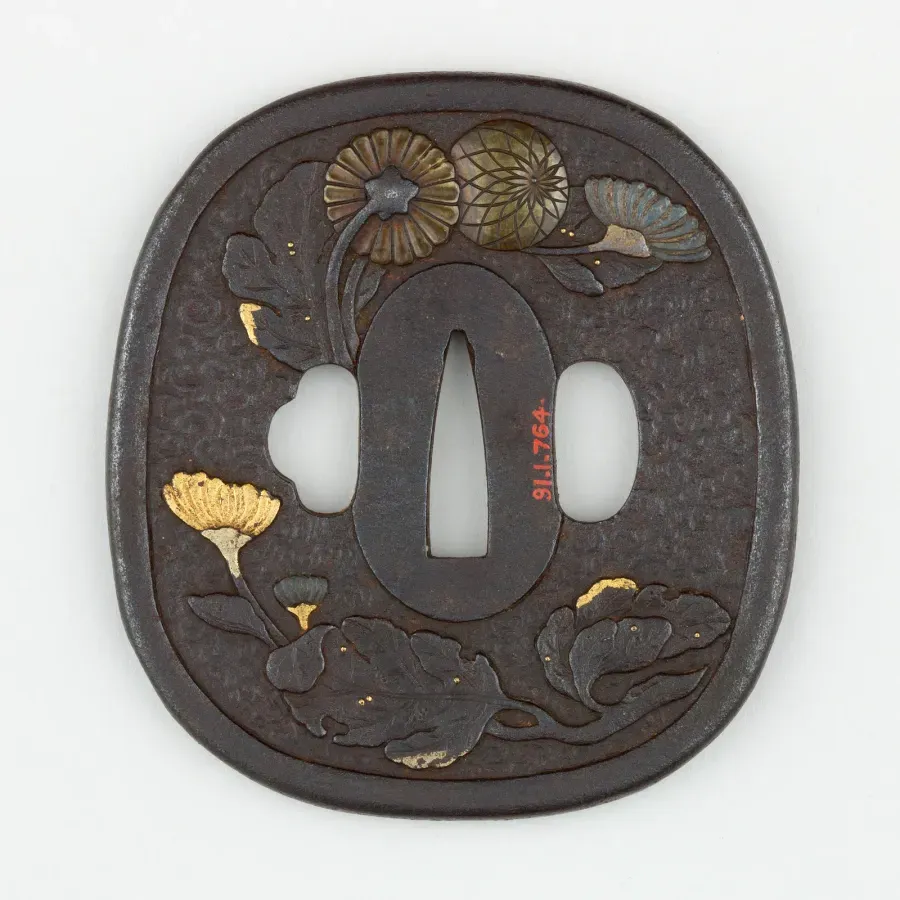
A recurring kimono motif, it remains in contemporary Japanese fashion. Associated with spring, with youth, with the transience of beauty.
Britain and the United States
The motif has travelled from Victorian mourning symbol to contemporary sign of resilience. In the United States from the 2010s onward it has been particularly used in feminist and survivor contexts.
Butterfly jewellery in the tattoo tradition
This is one of the most consistently popular tattoo subjects of the last thirty years. In many studios it sits within the top five requests.
Meanings in tattoo contexts tend to be specific.
Survived trauma. Women who have left abusive situations frequently choose this mark as a symbol of having emerged from a cocoon. Several charitable organisations working in this area have adopted it as an official emblem.
Sobriety. After overcoming addiction, it carries the sense that the previous self has been left behind.
Remembrance. A small piece on the wrist or behind the ear in memory of a specific person, usually a mother or grandmother.
Transition. In trans communities, the symbol of physical and social transformation.
Aesthetics alone. Many people choose it simply because it is beautiful. This is equally valid.
Engraving on butterfly jewellery
Because the butterfly marks a moment of passage, it lends itself particularly well to a personal inscription. The engraving does not need to be explained to anyone else.
A date. The day of emergence from the cocoon: a divorce, a discharge from hospital, a sobriety date, a relocation. The date is private. The piece records it.
"Resurgam." The Latin word meaning I shall rise again. One word, with both Christian and philosophical resonance.
A name or initials. A memorial for someone specific. In combination with the butterfly motif, the engraving makes explicit what the symbol implies.
A birth date. For a mother, marking the arrival of a child. The cocoon as the space where new life formed.
Care of butterfly jewellery
The wing form often involves fine construction and, in some techniques, genuine fragility.
Pavé setting. Do not use ultrasonic cleaning: small stones can loosen and fall. Professional cleaning in a jewellery workshop once a year or when needed.
Plique-à-jour enamel. Very fragile. No chemicals, no abrasive cleaners. Store separately to avoid contact with other pieces. Keep away from hard impact.
Storage. Flat, in a separate compartment of a jewellery box. The wings should not rest against other pieces.
Lotions and perfume. Enamel, resin and some coatings are damaged by contact with cosmetics. The piece should not come into regular contact with skincare products or fragrance.
Silver. Tarnishes in air from sulphur compounds. Store in a sealed pouch with anti-tarnish fabric, or in a closed box.
FAQ
Is this only for women?
Traditionally associated with women, but this is changing. In contemporary jewellery and tattooing, men also wear this motif, particularly as a marker of transformation or remembrance.
Can it be given in bereavement?
Yes. The image has deep associations with the memory of the dead. In Greek, Mexican, and Christian traditions it is an entirely appropriate symbol for loss.
What do two butterflies together mean?
A couple in love. The classic Chinese reading. Often used in wedding jewellery and paired pendants.
Can it be combined with a cross?
Yes. Christian tradition frequently combines the butterfly (soul, resurrection) with the cross. Christening pendants for girls sometimes take this form.
What materials work best?
Enamel gives the most vivid colours. Pave stones give the most luxurious surface. Plain silver is the most versatile. Yellow gold is the most traditional.
Does a butterfly pendant turn on its chain?
A known issue with asymmetric forms. If this matters, look for designs with two suspension points, or ask your jeweller about a bail that holds the piece level.
Is the monarch a particularly significant choice?
In Mexican and Mexican-American culture, yes. Elsewhere it reads primarily as a beautiful piece. If there is a personal connection to Mexico or to themes of migration, it carries additional meaning.
What is the difference between butterfly and moth symbolism?
In most European traditions, the moth has darker connotations: it is attracted to light but destroyed by it. The butterfly, by contrast, carries the associations of transformation and soul across nearly every culture. The distinction matters in custom jewellery where the two forms look similar.
Can a child wear butterfly jewellery?
Yes. Small stud earrings and fine pendants are among the most traditional forms of first jewellery for girls in many European cultures. The symbolism of transformation and growing into oneself is straightforwardly appropriate.
About Zevira
Zevira makes jewellery by hand in Albacete, Spain. The butterfly is one of the recurring motifs in the Spanish jewellery tradition, particularly in the Art Nouveau style and in pieces connected to the Day of the Dead in Latin culture.
What you will find with this motif:
- Minimal silver butterfly pendants for daily wear
- Enamel butterflies with detailed wing work in the Art Nouveau spirit
- Small butterfly stud earrings
- The monarch butterfly in orange and black, referencing Día de los Muertos
- A butterfly pendant on a silver chain as a symbol of transformation
Each piece is made by hand, with the option of a personal engraving. We work in 925 silver and 14-18K gold.