The Owl in Jewelry: Symbol of Wisdom, Night, and Mystery
A bird with two very different reputations
Few symbols carry such contradictory meanings across cultures. In ancient Greece, the owl was the companion of Athena, goddess of wisdom and patron of Athens. In Rome, a hoot in the night was taken as a death omen. In Hinduism, the owl carries Lakshmi, goddess of wealth. In American folk tradition the screech owl outside the window meant different things in different regions: foreboding in parts of Appalachia, neutral background noise in the suburbs, and something closer to magic in the imagination of anyone who grew up reading about the wizarding world.
This duality is precisely what makes the owl an enduring symbol. It is not a simple shorthand for one quality. It lives at thresholds: between day and night, knowledge and mystery, the visible world and whatever lies beyond it.
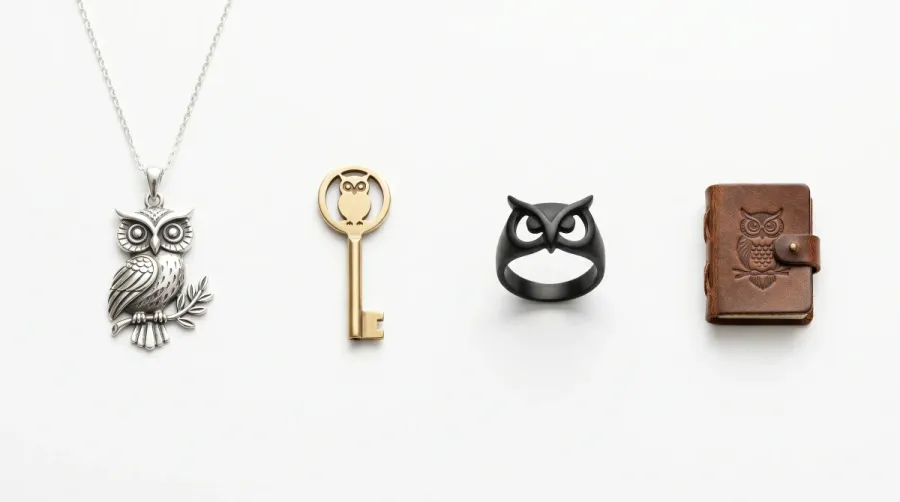
In jewelry, the owl works on all these registers at once. You might wear one as an emblem of learning. You might choose it for its gothic atmosphere. Or you might simply find the form beautiful -- the wide, forward-facing eyes, the stillness, the suggestion of concentrated attention. All three readings are entirely legitimate.
The biology behind the symbol
Before getting to the cultural layers, it helps to understand why this particular bird became a symbol in the first place. The owl's mythology is grounded in real, observable biology.
Asymmetrical ears. Most owl species have ears positioned at slightly different heights on either side of the skull. This is not a defect but a precise evolutionary design. The asymmetry allows owls to triangulate sound in three dimensions, locating prey under snow or leaf litter by sound alone with accuracy that no other vertebrate matches.
Head rotation up to 270 degrees. An owl's eyes are fixed in their sockets -- they cannot move the eyeball the way humans can. To compensate, owls can rotate their heads up to about 270 degrees in one direction. They have roughly twice as many neck vertebrae as humans, with blood vessels that coil like springs to prevent rupture during rotation.
Silent flight. Specialized comb-like structures on the leading edge of flight feathers break up turbulence and eliminate the sound of moving air. An owl arrives on its prey in near-total silence. This is the physical reality behind every myth about owls arriving without warning, knowing things before they are announced.
Facial disc. The flat, forward-facing disc of feathers around an owl's face works like a satellite dish, funneling sound toward the ear openings. It is also what gives owls their characteristic appearance of direct, unblinking attention -- the sense that they are looking at you specifically.
These physical features explain why virtually every culture that observed owls closely ended up assigning them symbolic weight. The bird genuinely sees in the dark, genuinely hears what others cannot, genuinely moves without sound. The mythology followed the biology.
Owl jewelry: what to look for
Pendants
The most popular form, and for good reason. A pendant gives the owl room to be itself: detailed, expressive, visible.
- Small pendant, 2-3 cm -- a miniature owl on a fine chain. Understated, suitable for everyday wear. Budget to mid-range.
- Medium pendant, 4-5 cm -- the most frequently chosen size. Detail in the feathers and eyes becomes meaningful at this scale. Mid-range.
- Large pendant, 6-8 cm -- a statement piece with stones set in the eyes. Victorian or gothic aesthetic. Mid to premium.
- Pendant with stone eyes -- moonstone, labradorite, malachite, garnet. The stones amplify the owl's watchful quality. Mid to premium.
When choosing a pendant, consider what the eyes are set with. Cabochon stones give a deep, opaque quality -- mysterious. Faceted stones catch light more actively -- alert, present. The difference is subtle but real. A moonstone cabochon in the eye socket reads differently from a faceted garnet, even on an otherwise identical piece.
Earrings
- Small owl studs -- paired, understated, well suited to everyday wear or as part of a set with a pendant.
- Drop earrings with spread wings -- more dramatic, better suited to evenings or as a deliberate accent.
- Asymmetric owl earrings -- one owl, one moon or one key on the other side. A current trend in symbolic jewelry that works particularly well with the owl's nocturnal register.
Rings
- Sculptural owl ring -- a substantial piece that commands attention. Gothic or academic feel. Mid to premium.
- Slim ring with small owl -- a quiet, minimalist accent. Budget to mid-range.
- Signet-style owl ring -- an engraved silhouette, often in a flatter setting. Suits men and women equally.
- Two-finger or statement ring -- an owl spanning two fingers or covering the knuckle. Maximalist, committed, hard to miss.
Bracelets
- Several small owl charms on a chain -- layered, boho aesthetic.
- Single large owl on a wide cuff -- a bold accent piece.
- Owl on a leather cord -- everyday, unisex.
Brooches
A Victorian tradition worth reviving. A large owl brooch makes a considered statement, often in an Art Nouveau style. Particularly good on a wool coat, a tweed blazer, or heavy fall fabrics. The brooch is underused in American fashion and tends to read as confident and deliberate when someone does wear one.
Types of owl in jewelry design
Wide-eyed owl. The most widespread form. Stylized, often with stones in place of eyes. Works across mass-market and artisan jewelry alike. The wide eyes trace directly to Athena's owl on the Athenian tetradrachm -- the form has ancient precedent.
Naturalistic owl. More anatomically detailed, often appearing in premium or handmade pieces. May represent a specific species: barn owl, great horned owl, snowy owl. These pieces appeal to birders, naturalists, and anyone who has a specific species in mind.
Athena's owl. Small, round, slightly plump -- recognizable from ancient Athenian iconography. A scholarly choice with deep historical roots. Looks good in silver with a dark patina; the round shape benefits from warm tones.
Owl in flight. Wings spread wide. Dramatic, popular in men's jewelry. The spread-wing form works particularly well as a pendant or brooch where the full span can be appreciated.
Geometric owl. Abstracted form, large eyes, clean lines. At home in contemporary minimalist design. Works in gold or yellow gold tone.
Owl with crescent moon. A combined symbol: night, intuition, the lunar and the nocturnal together. One of the most enduringly popular combinations in symbolic jewelry.
Owl with key. Secret knowledge implied: the owl knows, the key opens. Popular in dark academia and steampunk-adjacent aesthetics.
Owl with book. Academic wisdom made explicit. An obvious but apt choice for teachers, professors, or anyone who wears their scholarly identity visibly.
Owl with hourglass. Time and wisdom: the owl has seen much and knows that time is the teacher. A less common combination but a resonant one.
Owl species in jewelry iconography
Different owls carry different visual weight. Which species is depicted is itself a choice, even when the piece is not explicitly labeled.
Barn owl. White, heart-shaped face, no ear tufts. Found across North America. The most recognizable owl face worldwide, largely due to its distinctive appearance. In jewelry, most commonly associated with the Harry Potter owl Hedwig, though Rowling specified a snowy owl.
Great horned owl. The dominant owl of North American mythology and imagination. Large, powerful, with dramatic tufted "ears." This is the owl of American wilderness literature, of Native American traditions across many regions, of natural history illustration from Audubon onward. Frequently used in men's collections and in pieces with a nature-focused aesthetic.
Snowy owl. White, large, rare enough to feel mythological. The direct visual reference for Hedwig. In jewelry, works in silver or white gold with pearl or white stone accents.
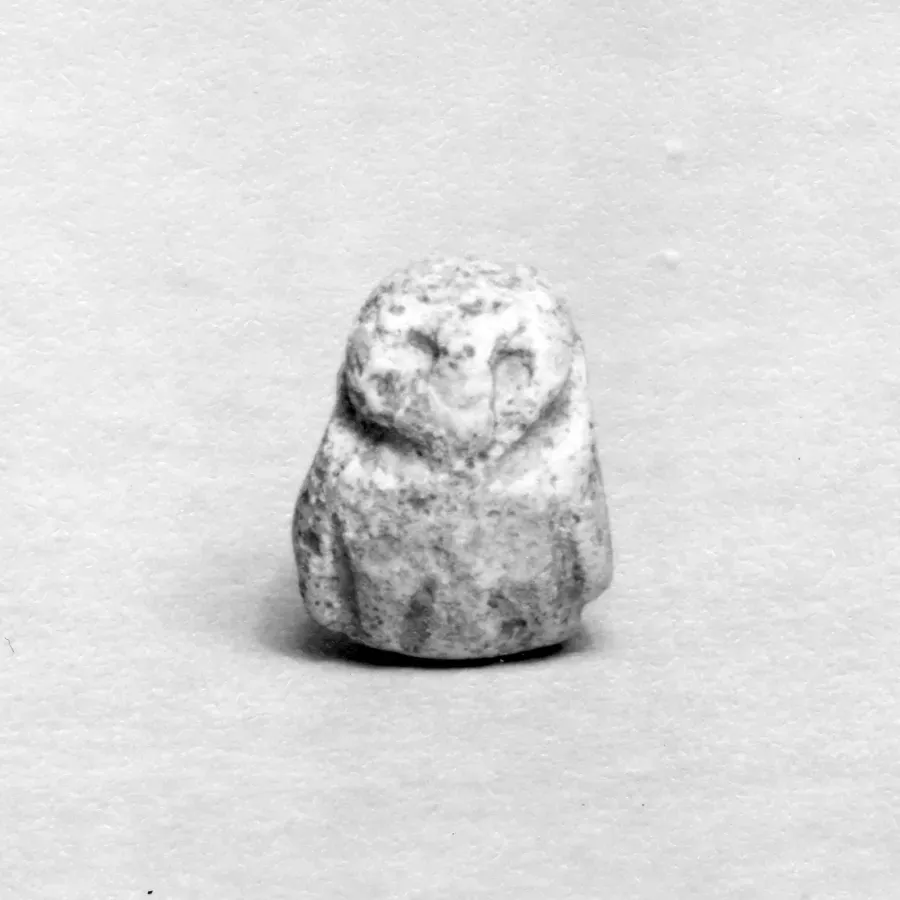
Little owl (Athene noctua). Small, round, compact. This is Athena's own bird, the owl on the Athenian tetradrachm. Deceptively unimposing for a symbol with three thousand years of cultural history. The scientific name literally honors the goddess.
Eastern screech owl. Small, tufted, with a haunting descending whinny rather than the classic hoot. The urban and suburban owl of the American East, frequently heard but rarely seen. Its small, intense presence makes it a natural for miniature pendants.
Burrowing owl. Ground-dwelling, found in the American West and Plains. Long legs, short tail, a comically serious expression. In Native American traditions of the Southwest it was associated with the underworld and with protection of the dead. An unusual and specific choice for a pendant.
Stylized or geometric. No specific species. Abstract form with large eyes. The most common type in mainstream jewelry.


What the owl symbolizes
Wisdom. The best-known meaning in Western culture, derived from Athena and reinforced by centuries of academic imagery -- owls on university crests, owls on library seals, owls perched on books. This is wisdom of a particular kind: earned, considered, slightly nocturnal in its habits. The owl does not represent the quick bright insight of a flash of light. It represents the slow, deep knowledge that accumulates after long observation in difficult conditions.
Mystery. The owl sees in the dark, hears what others miss. In jewelry this often reads as "I notice what others overlook" -- a quiet, watchful intelligence rather than a loud claim. The raven works the same territory from a different angle, and many wearers drawn to the owl find the corvid speaks to them too.
Night and the moon. The owl is a creature of the hours between dusk and dawn. It shares symbolic territory with the crescent moon, with dreams, with the unconscious. Many owl pieces pair the bird with a half-moon for exactly this reason. In Jungian psychology the owl sometimes appears as a symbol of the unconscious itself -- the knowing that operates below the threshold of daylight awareness.
Death, in certain traditions. In Roman mythology the owl preceded disaster. In parts of Native American tradition -- Cherokee, in particular -- the screech owl near the house was a warning. In various European folk traditions a hoot at midnight meant someone in the household would not see morning. This does not make owl jewelry morbid -- but the layer is worth knowing, especially if the piece is a gift for someone from one of these traditions.
Perception. Those enormous forward-facing eyes are the owl's defining feature. In jewelry they read as attention, as the capacity to see clearly and directly. The owl does not look away.
Witchcraft and the occult. In Western esoteric tradition the owl is the classic companion of witches and magicians. The association is alive in gothic aesthetics, in dark academia, in the broader revival of interest in folk magic. For a segment of wearers this is precisely the appeal: the owl signals a particular orientation toward the night side of things, without the heavier mortality of the skull or the more aggressive posture of certain other symbols.
Luck, elsewhere. In Japan, fukuro (owl) is a good omen -- the word overlaps phonetically with expressions meaning "no suffering" and "good fortune." In northern India the owl is auspicious, associated with Lakshmi arriving in the night to bless a household. These associations are real, even if they are less immediately familiar to an American audience.
Silver, gold, wedding rings, symbolic jewelry and paired sets.
History of the symbol
Ancient Greece: the owl of Athena
The single most important origin point for how Western culture reads the owl. Athena -- goddess of wisdom, war, crafts and the city of Athens -- was always depicted with an owl, and just as often with a spear or sword: hers was the wisdom that knows when to strike, a register the sword carries through Western symbolism. Her sacred bird was the little owl (Athene noctua), still common across the Mediterranean today.
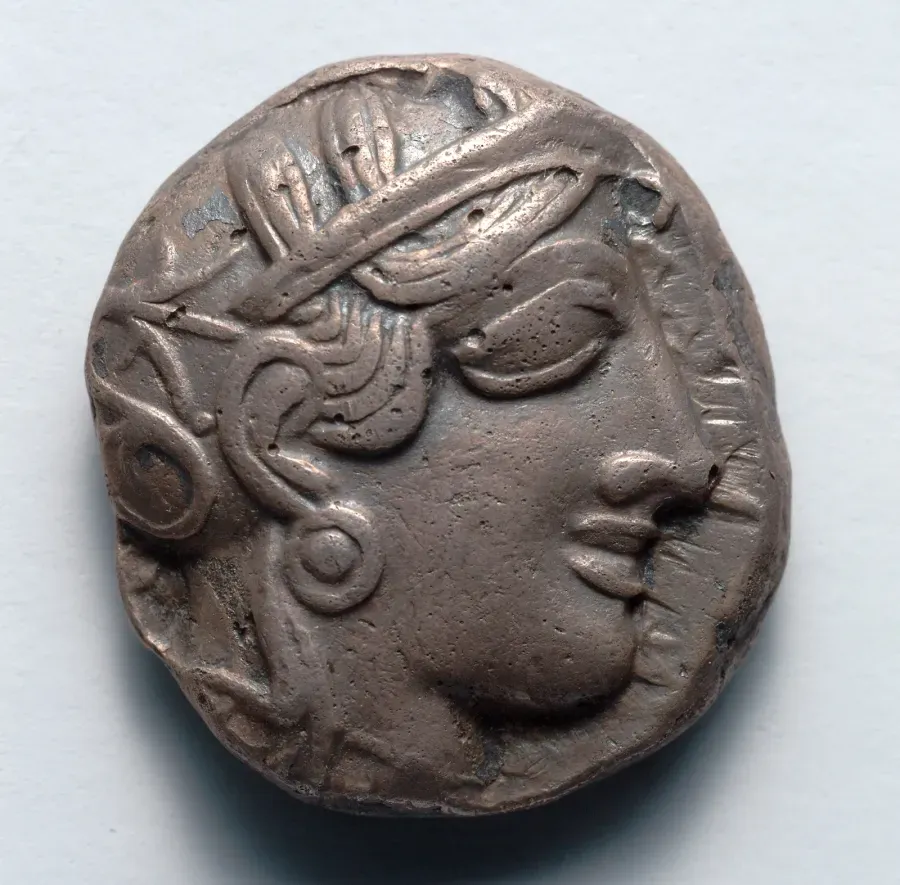
The Athenian tetradrachm, the silver coin struck from the fifth century BCE onward, bore an owl on the reverse and Athena on the obverse. It became one of the most widely circulated currencies of the ancient Mediterranean world, accepted from Egypt to southern Italy. The coins were nicknamed "owls" (glaukes, from glaukopis, the epithet applied to Athena meaning "bright-eyed" or "owl-eyed"). A pendant replicating this coin connects directly to this three-thousand-year-old tradition.
The epithet glaukopis is worth sitting with. Modern Greek glaukos means a pale greenish-grey -- the color of olive leaves, of the sea in certain lights, of a large bird's eyes in dim light. Athena was the owl-eyed goddess because she could see what ordinary eyes missed. This visual quality -- the intense, direct, forward gaze of the owl -- was the exact quality attributed to the goddess of wisdom.
Ancient Rome: the owl as omen
Rome inherited the owl from Greece but shifted the meaning. The Latin bubo carried associations of death and ill omen. Pliny the Elder records that an owl heard in the city was considered a warning of misfortune. Julius Caesar's death was preceded by owls hooting in the city, according to several ancient sources. This darker reading persisted through European folklore and fed into the American gothic tradition, particularly in the horror literature of the nineteenth century.
The transformation of the owl from Athena's companion to omen of death is one of the cleaner examples of how a symbol gets inverted when it moves from one culture to another. Greece valued the owl's night-sight as a form of wisdom. Rome, with its more officially optimistic state religion, read the owl's association with darkness as threatening.
Ancient Egypt
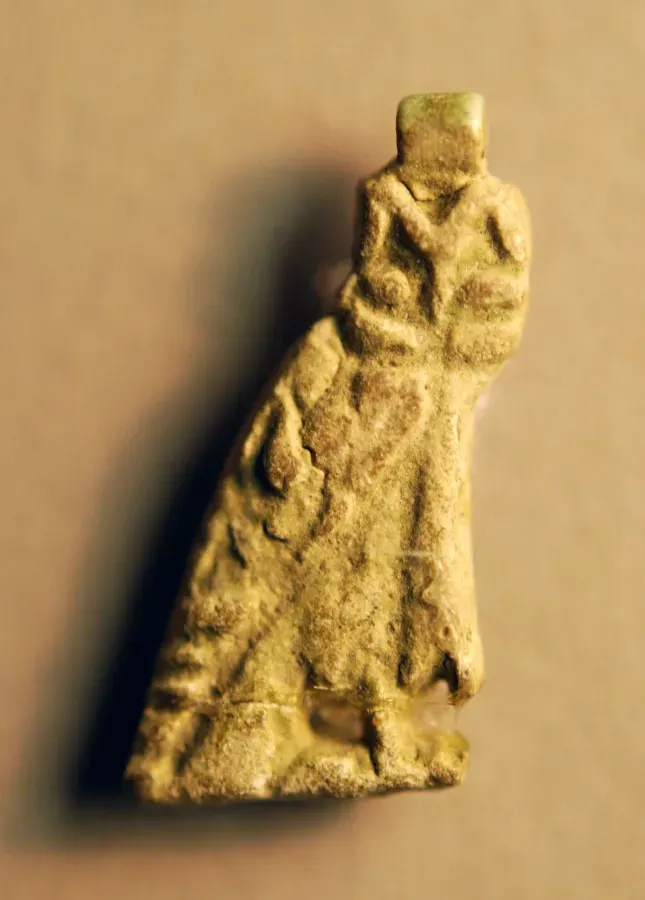
In hieroglyphs the owl represented the sound "m" -- one of the most common characters in the script. The Egyptian owl was a working symbol rather than a charged one. It appears in some contexts related to death and transition, but this seems to be a matter of phonetic association rather than symbolic weight. The owl's role in Egyptian mythology is modest compared to the ibis of Thoth or the falcon of Horus.
Native American traditions
Different nations held widely varying views of the owl, and it is a mistake to generalize. Among the Cherokee, the screech owl (skili) was associated with sickness and death -- to hear one calling your name at night was a serious warning. Among the Hopi and Pueblo peoples of the American Southwest, burrowing owls were associated with the god of the dead and with protection of warriors. Among many Plains nations, owl feathers carried protective power.
What is consistent is that owls were rarely neutral. The bird's ability to see in darkness, to move without sound, to know things before they were visible gave it a connection to the threshold between the living and the dead in many traditions. This is not exclusively ominous -- the guardian of that threshold is a figure of power, not merely of danger.
Medieval Europe
Christian iconography sometimes cast the owl as a symbol of night, sin and ignorance -- a creature of darkness in a system that valued light. This was not universal, but it is the source of the negative associations that occasionally surface in folk superstition. Illuminated manuscripts sometimes show owls as figures of derision, surrounded by mocking birds, representing those who refuse the light of faith. This medieval visual tradition is where the "sinister owl" of European folklore gets its strongest institutional support.
The Renaissance and Enlightenment
The classical associations were recovered. Owls returned to the crests of newly founded colleges and academies -- Harvard, founded 1636, eventually chose the owl for various seals and honors programs, as did dozens of European and American universities. The bird became a mascot of learning, of libraries, of the new scientific and humanistic culture. By the eighteenth century, the owl on an academic crest was so common as to be almost invisible.
Hegel and the owl of Minerva
In 1821, the German philosopher Georg Wilhelm Friedrich Hegel wrote in the preface to his Philosophy of Right: "The owl of Minerva takes flight only as the dusk begins to fall." Minerva being the Roman Athena. His point: philosophical understanding arrives at the end of an era, not its beginning. Wisdom is retrospective.
This single sentence has circulated through every university philosophy department in the world ever since. Its meaning is genuinely uncomfortable: by the time we understand what was happening, we can no longer change it. History can only be comprehended in retrospect. Philosophy arrives when the action is already over.
If you wear an owl pendant as a symbol of learning, you are wearing, in part, a reference to this idea: that wisdom is not prophetic but retrospective. That knowledge deepens with time, often arrives late, and is no less valuable for it.
The American naturalist tradition
John James Audubon painted multiple owl species in his Birds of America (1827-1838), giving them the same monumental treatment he gave the bald eagle and the whooping crane. The great horned owl, snowy owl, and barn owl all appear in his work as figures of wild dignity. This artistic treatment fed directly into the American view of owls as symbols of wilderness, of the American landscape, of something both beautiful and slightly dangerous at the edges of the farmstead.
The naturalist tradition influenced jewelry differently from the scholarly tradition. Where the academic owl references Athena and learning, the naturalist owl references the American landscape and wild knowledge -- not the library but the treeline at dusk.
Hogwarts and the Harry Potter generation
The series (published 1997-2007) made owls one of the most instantly recognizable images for an entire generation. Hedwig, Harry's white snowy owl, appeared from the very first chapter and her death in Deathly Hallows was one of the series' most affecting moments -- the end of childhood made visible. Owl jewelry in Hogwarts aesthetics is a significant and entirely legitimate corner of the market. For many buyers it is the direct entry point to owl jewelry more broadly.
The owl in culture today
Academic culture
The owl remains the universal emblem of learning. University crests, prize medals, library logos, academic publishing. In the United States, numerous schools from elementary through graduate level use the owl as a mascot precisely because of these associations. The bird still works hard in this territory.
Contemporary feminism
Athena's owl carries an ancient association with female authority and intellect. In contemporary feminist aesthetics the owl sometimes appears as an alternative to more assertive symbolic vocabulary -- it speaks of intelligence and observation rather than force. Several feminist literary magazines and presses have adopted the owl as their visual identity for this reason.
Gothic and dark academia
The owl is central to gothic aesthetics and to the broader dark academia trend that became particularly visible in the late 2010s and early 2020s. Dark academia -- tweed, old books, candlelight, the suggestion of secret knowledge -- is one of the owl's most active current contexts. An owl pendant reads immediately in this aesthetic, without needing explanation.
The environmental and conservation movement
In recent years owl jewelry has acquired an additional layer from the conservation context. Several North American owl species are under pressure from habitat loss and secondary poisoning. For some wearers, an owl piece signals a connection to bird conservation or more broadly to an environmentalist identity. This is not the dominant reading, but it is present.
The Athenian tetradrachm: the owl that became money
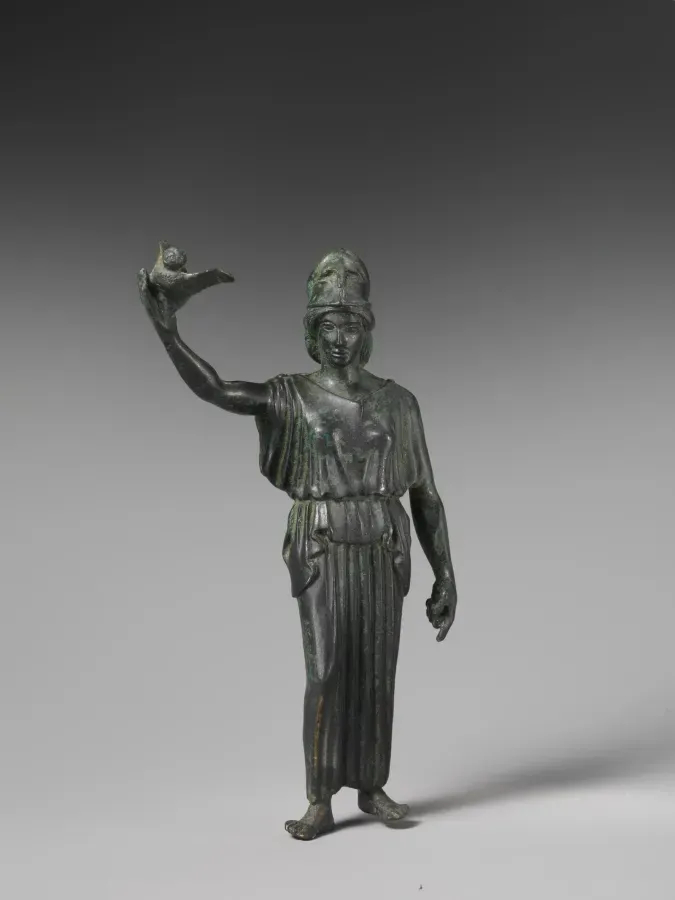
One of the most widely reproduced images in history. The Athenian silver tetradrachm was struck continuously from roughly 525 BCE to around 40 BCE -- nearly five centuries of the same design. It was used as international currency across the Mediterranean world. Its reliability and silver purity made it the dollar of its day.
Obverse: the head of Athena in profile, wearing her crested helmet.
Reverse: the little owl facing forward (unusual in ancient numismatics), an olive branch to the left (the symbol of Athens), a crescent moon above (the owl's nocturnal nature), and the letters AOE (for Athenaion -- "of the Athenians").
The specific owl depicted is Athene noctua, the little owl -- small, round-headed, serious-looking. It is not a great horned owl or a barn owl. Its modest size is part of the point: Greek wisdom was not theatrical.
Modern owl pendants that reference this coin, especially in silver with a patina, carry this entire weight of association in a small, wearable form. The combination of elements on the coin -- owl, olive branch, moon -- is an unusually complete symbolic statement: wisdom, peace, and night together.
Hegel's owl of Minerva: the full meaning
Georg Wilhelm Friedrich Hegel (1770-1831) was not making a casual remark about birds. The sentence from the Philosophy of Right is one of the most quoted in Western philosophy precisely because it captures something genuinely uncomfortable: understanding comes too late to change things. The owl of Minerva (wisdom, philosophy) only takes flight when the day -- the era, the civilization -- is already ending.
This is not a counsel of despair. It is a counsel of humility and patience. Hegel is saying that we should not expect to understand our own time while it is happening. The full picture only assembles itself in retrospect. The philosopher, the historian, the person who takes a long view -- these are the night-flying figures who make sense of things after the fact.
If you wear an owl pendant as a symbol of learning, you are wearing, in part, a reference to this idea: that wisdom is not prophetic but retrospective. That knowledge deepens with time, often arrives late, and is no less valuable for it.
Hedwig and the Harry Potter generation
J.K. Rowling chose a snowy owl for Hedwig with clear deliberation. In British tradition -- and in the tradition of the American reader who grew up on these books -- white owls are rare enough to feel magical. Hedwig was Harry's first gift from the wizarding world, present from Chapter 4 of The Philosopher's Stone to her death in Deathly Hallows. Her symbolic role in the series: the bond between Harry's two worlds, the one emblem of magic that was wholly loyal, wholly his.
White owl jewelry -- barn owl or snowy owl, worked in silver or white gold with pearl or moonstone accents -- speaks directly to this association for everyone who grew up with the books. For the generation that read the first book as a child and the seventh as a young adult, Hedwig carries a specific emotional weight that has nothing to do with mythology and everything to do with the experience of growing up alongside a fictional world.
How to wear owl jewelry
Under clothing
A small owl pendant worn inside the shirt or blouse. Personal symbol, invisible to the world. This is the way to wear something that means a great deal to you but is not for display -- a talisman rather than a statement.
Over clothing
A medium or large pendant worn over a blouse or sweater. A clear academic or gothic signal. This is the wearing mode that invites comment and connection: people who recognize the symbol will mention it.
Layered
Owl plus moon plus key on chains of different lengths. A symbolic ensemble that accumulates meaning. Works best when the pieces share a metal tone.
With business wear
A small, minimalist owl works in professional settings. It reads as thoughtful rather than eccentric. Avoid very large or overtly gothic pieces in formal professional contexts unless you are deliberately establishing an aesthetic identity.
With casual and fall clothes
Any size works. Particularly good with tweed blazers, vintage denim jackets, heavy knits, and the fall color palette: burgundy, dark green, ochre, rust. The owl has a seasonal quality that aligns naturally with September through November.
Materials
- Oxidized sterling silver: gothic, vintage, mystery. The dark patina reveals feather detail.
- Sterling silver: classic, versatile.
- 14K gold: academic aesthetic, formal occasions.
- Rose gold: contemporary softening of the gothic edge.
- Enamel: colorful, contemporary, works well for the naturalistic species approach.
- Stone eyes (cabochon): moonstone, malachite, garnet, onyx. Each stone shifts the reading.
Who suits owl jewelry
Teachers, professors, college faculty. The direct professional symbolism is real and recognized. Faculty members often self-select this symbol; wearing it signals membership in a community.
Students, especially at graduation. The transition from learning to knowing, marked by the symbol of Athena. An owl pendant or ring makes a meaningful graduation gift at any level.
Night people. Writers, programmers, emergency workers, anyone whose best hours are between midnight and dawn. "I work when others sleep" is a legitimate identity that the owl represents cleanly.
Psychologists and therapists. The owl as emblem of perceiving what is hidden, of seeing below the surface. The bird that sees in the dark is an apt image for a profession that deals in things not easily visible.
Harry Potter fans. An entire generation has a direct emotional relationship with owl imagery through Hedwig. This is a real and legitimate market with its own specific visual language.
Gothic and dark academia enthusiasts. The owl is foundational to both aesthetics. It is one of the few symbols that spans both without friction.
Birders and naturalists. Especially those with a specific owl species in mind. An ornithologist with a great horned owl species ring is wearing something precise and personal.
Women in positions of authority. An alternative to power symbols that emphasize force. The owl says intellectual authority, observation, strategic intelligence -- all the qualities associated with Athena.
As a memorial piece. For a professor, a teacher, a scientist, a librarian who has died. The owl carries that weight appropriately and without being morbid.
The owl in literature
Winnie-the-Pooh (A.A. Milne, 1926). Owl is the Hundred Acre Wood's resident authority, learned but slightly pompous -- a gentle parody of academic solemnity. Milne was working with the same cultural material as everyone else. His Owl spells "his" as "hiself" because real wisdom and demonstrated competence are sometimes different things.
The Owl and the Pussycat (Edward Lear, 1871). One of the most frequently quoted poems in the English language. Lear's owl is a romantic figure -- musical, adventurous, improbably sentimental. It has nothing to do with wisdom and everything to do with a certain joyful silliness that is its own kind of charm.
Harry Potter (Rowling, 1997-2007). The entire postal infrastructure of the wizarding world. Owls carry letters, parcels, Hogwarts acceptance letters. They are the connective tissue of a world in which magic and ordinary life communicate. Hedwig is the emotional center of this, but she is surrounded by hundreds of working owls doing the practical business of the magical world.
Guardians of Ga'Hoole (Kathryn Lasky, from 2003). A fantasy series set among owls, giving them the full weight of heroic narrative. Owls as warriors, scholars, builders of civilization. The series takes the symbol seriously in its own right.
Moby-Dick (Herman Melville, 1851). The owl appears briefly but pointedly in the chapters preceding the Pequod's fate, one of several animal omens that Melville stacks against Ahab. Its presence in one of the foundational texts of American literature is part of how the owl entered the American symbolic register as a figure of dark knowledge.
FAQ
Does an owl bring bad luck?
This depends entirely on tradition. In Greece, Japan and northern India the owl is a good omen. In parts of Native American tradition (particularly Cherokee), the call of an owl at night was a warning. In various European folk traditions the owl near the house preceded misfortune. If you are not operating within one of the traditions that reads the owl negatively, wear it without concern.
What material works best for an owl?
Silver with a dark patina brings out feather detail and suits the gothic or academic reading. Yellow gold gives a warmer, more classical feel. White gold or silver with pearl accents is the obvious choice for Hedwig references. Enamel adds color and works well in contemporary or naturalistic pieces.
Is owl jewelry suitable for men?
Yes. Owl rings, pendants and brooches appear in men's jewelry across gothic, academic and nature-inspired aesthetics. The signet-style owl ring and the large sculptural pendant are both well established in menswear. The great horned owl in particular reads strongly in a masculine register.
Can an owl and a cross be worn together?
The historical relationship is complicated -- medieval Christianity was not enthusiastic about the owl's associations. In contemporary usage the combination is straightforward and raises no particular difficulty.
What owl jewelry references Harry Potter?
Look for a white or very pale owl, worked in silver or white gold, ideally with pearl or white stone accents. The barn owl and snowy owl are the closest species. A pendant on a fine chain is the most common form.
Is a wide-eyed stylized owl too childlike for an adult?
Not necessarily. The wide-eyed form is also the form of Athena's owl on the tetradrachm -- it has ancient precedent. Scale and material make the difference: a large, detailed piece in sterling silver reads very differently from a small enamel charm.
What does an owl with a moon signify?
The combination doubles the nocturnal register: moon and owl together speak of night, of the unconscious, of a certain reflective, inward quality. In Victorian jewelry this pairing was common. It remains popular in romantic and gothic pieces.
How do you explain the symbolism to a child?
Simply enough: "The owl could see in the dark when all the other birds were sleeping. Athena, the goddess of wisdom, chose it as her companion because it was wise and watchful. It means you see clearly, even when things are difficult."
What is the difference between a barn owl and a snowy owl in jewelry?
A barn owl has a white heart-shaped face and a buff-and-brown body. A snowy owl is entirely white. In jewelry, both read as "pale owl" and both carry the Hedwig association. The snowy owl is more specifically accurate to the book description; the barn owl is often used because its heart-shaped face is more immediately recognizable and expressive.
Is an owl ring appropriate for a graduation gift?
Very appropriate. An owl ring works across academic levels and genders. For a high school graduation, a smaller, more wearable piece in silver makes sense. For a doctoral graduation, a more substantial sculptural ring or a pendant after the Athenian tetradrachm is appropriate to the occasion.
Owl jewelry as a gift: what to consider
Giving owl jewelry as a gift works best when you have a sense of what the owl means to the recipient, or when you want to suggest a meaning intentionally.
For a graduation. The owl is one of the least ambiguous choices you can make. It is explicitly connected to learning, to Athena, to the academic tradition in a way that needs no explanation. A silver pendant after the Athenian tetradrachm or a sculptural ring is appropriate for undergraduate and graduate alike. For a doctoral graduate, the coin pendant in particular carries a specific scholarly weight: the owl on the Athenian silver, the symbol that circulated across the ancient Mediterranean as a mark of intellectual currency.
For a teacher. An owl piece makes an excellent end-of-year or retirement gift for someone who has spent years in the classroom. It acknowledges the profession without resorting to the more generic apple-shaped gifts. A teacher who receives an owl pendant from a thoughtful student is receiving something that connects to a three-thousand-year tradition of linking the owl to the transmission of knowledge.
For a reader, a writer, a researcher. Anyone whose life is organized around words and ideas. The owl in the dark academia register, on a fine chain over a black turtleneck, is one of the cleaner symbolic statements available. It does not need to be explained.
For a night person. Not everyone operates best in daylight hours. Writers on deadline, programmers chasing a solution, parents of infants who have temporarily lost the distinction between day and night: the owl as a gift for someone who lives in the productive dark hours is an apt and considered choice.
For someone going through difficulty. The owl does not look away. Its capacity to see clearly in conditions that obscure other vision makes it an appropriate symbol to give someone who is navigating something hard, not as a promise that everything will be fine, but as an acknowledgment that they have the capacity to see clearly even now.
As a self-purchase. Most owl jewelry is bought by the wearer for themselves. This is not a sign that the symbol is too personal to give: it is a sign that the owl attracts people who know what they want and choose their symbols deliberately. If you are buying one for yourself, that deliberateness is part of the point.
Caring for owl jewelry
Owl pieces vary in construction and require slightly different care depending on material and finish.
Sterling silver with oxidized patina. The dark patina that brings out feather detail is applied intentionally and can wear away over time, especially with frequent contact. Store flat or hung, away from other pieces that could scratch the surface. Clean with a soft cloth only. Do not use polishing cloths on intentionally oxidized pieces: they will remove the patina. If the patina fades more than you want, a jeweler can reapply it.
Bright sterling silver. More forgiving. A silver polishing cloth removes tarnish. Avoid contact with perfume, lotion, and chlorinated water. Store in a zip-seal bag when not in use to slow tarnishing.
Gold. Gold does not tarnish but can pick up oils and lose its luster. Wipe with a soft cloth after wearing. Fine details in sculptural owl pieces can collect grime; a soft toothbrush with mild soapy water, rinsed and dried, cleans these effectively.
Stone eyes. Moonstone, labradorite, and other cabochon stones are relatively durable but can chip if struck. Treat the piece gently when putting it on and taking it off. Avoid ultrasonic cleaners for pieces with set stones.
Enamel pieces. Enamel is glass and can crack if the piece is dropped or struck. Handle with corresponding care. Clean only with a soft damp cloth.
The owl in art history
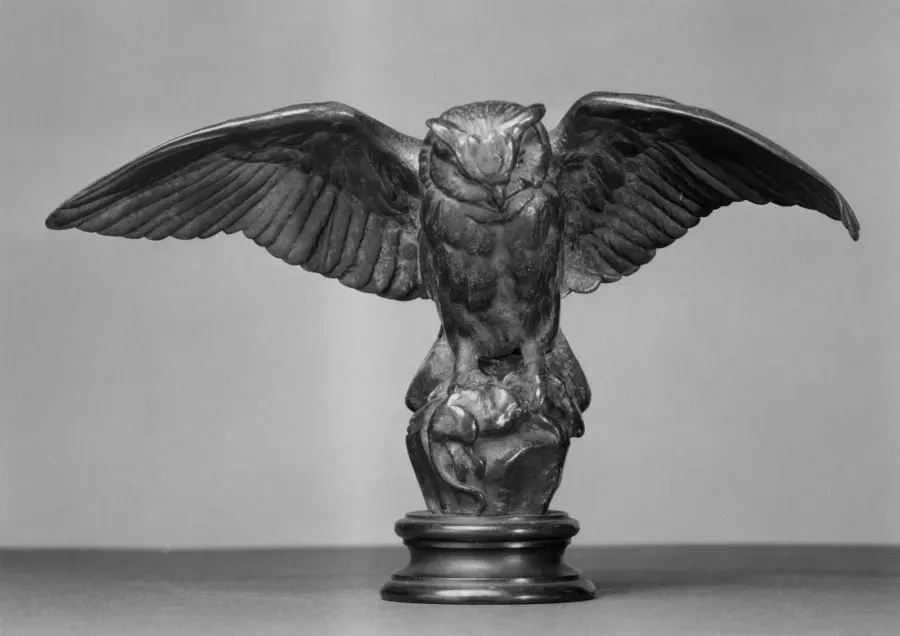
The owl has appeared in Western art across millennia with unusual consistency. A brief survey of its appearances in painting, sculpture, and decorative arts illuminates how the symbol has functioned across different periods.
Ancient coins and seals. The Athenian tetradrachm is the starting point. The owl appears facing forward on thousands of coins struck over nearly five centuries, the most consistent single image in the ancient Western world.
Hieronymus Bosch. The Netherlandish painter (c.1450-1516) populated his triptychs with owls in positions that are not easy to decode. In The Garden of Earthly Delights, owls appear in contexts that suggest knowledge that has become corrupted or misused. Bosch was working with the medieval association of the owl with sin and darkness, but the birds in his paintings have an unsettling specificity. Several art historians have suggested they represent corrupted wisdom rather than simple evil.
Albrecht Dürer. Dürer (1471-1528) drew and painted owls with the same precision he brought to his famous rhinoceros. His 1508 watercolor of a barn owl is one of the great naturalistic owl images in European art, a scientific observation and an aesthetic object simultaneously.
Francisco Goya. In The Sleep of Reason Produces Monsters (c.1799), one of the most reproduced prints in Western art, the dreaming figure is surrounded by bats and owls. Goya's owls here are not the owls of Athena but of Roman superstition: they represent the irrational forces released when reason sleeps. The print is one of the foundational images of the Romantic imagination.
Art Nouveau jewelry. At the turn of the twentieth century, designers like René Lalique integrated owls into jewelry in ways that drew on all the available symbolic registers at once: naturalistic detail, esoteric association, the female figure and the bird intertwined. Lalique's owl pieces remain some of the most sought-after in the secondary market for early twentieth-century jewelry.
Mid-century Scandinavian silver. Danish and Finnish silversmiths of the 1950s and 1960s produced highly stylized owl figures in sterling silver, with a modernist reduction of form to essentials: two round eyes, a suggestion of feathers, a stable seated posture. These pieces influenced the mainstream owl jewelry that followed.
About Zevira
Zevira makes jewelry by hand in Albacete, Spain. The owl is one of the consistent motifs across our collections, from the classical Athena's owl worked after the Athenian tetradrachm to contemporary minimalist pieces with wide stone eyes.
What you can find with us in owl jewelry:
- Pendants after Athena's owl in the tetradrachm tradition
- Minimalist owls on fine chains for everyday wear
- Owls with stone eyes -- moonstone, labradorite
- Small owl studs
- Owl rings for those who consider the bird their guiding symbol
Each piece is made by hand, with personal engraving available. We work in sterling silver 925 and gold 14-18K.
Conclusion
The owl is one of the few symbols you can wear across an entire life and find that its meaning shifts with you. As a student it is the emblem of a mind being formed. In working life it is a reminder to see clearly and observe carefully. In later years it carries the specific weight of Hegel's formulation: wisdom that arrives late, that requires the perspective of time, that is none the worse for waiting.
Its contradictions -- wisdom and death, light and darkness, the scholarly and the uncanny -- are not a weakness. They are what makes it a richer symbol than most. A piece of jewelry that means only one thing is quickly exhausted. The owl accommodates doubt, complexity, the passage of time.
The bird that sees in the dark has always been the figure for whoever does not accept that darkness is the end of knowledge. That meaning is as available now as it was on the coins of ancient Athens.