Gothic Jewelry Collection: The Complete Guide to Symbols, Styles and Aesthetics
An aesthetic that never truly leaves
Few visual languages have the staying power of the gothic. It resurfaces every decade or so, yet it never fully disappears between peaks. Victorian mourning culture of the 1880s. Post-punk America of the 1980s, when bands like Christian Death from Los Angeles, The Virgin Prunes from Dublin, and 45 Grave from Hollywood gave the sound a specifically West Coast flavor. The dark alternative of the 1990s. Emo of the mid-2000s, born in Washington D.C. from the hardcore scene. Social media subcultures of the 2010s. The dark academia and cottage-witch aesthetics of the 2020s.
Each wave added its own layer, yet the core vocabulary stayed constant: skull, cross, raven, thorns, dark stones, oxidized silver. And jewelry has always been one of the primary canvases for this style.
There is something specifically American about a strand of the gothic tradition that rarely gets acknowledged. New Orleans, the oldest city in the South, is the most architecturally gothic city in the United States: above-ground cemeteries, Spanish colonial ironwork, Creole mansions with wide galleries, a French Quarter that looks more like Marseille than Manhattan. Anne Rice set her Vampire Chronicles there. The city has two distinct gothic seasons: Mardi Gras, with its masks and skulls, and Halloween, when the cemeteries host candlelight tours. The Salem witch trials of 1692 gave New England its own dark mythology, one that feeds directly into American gothic jewelry: pentagrams, protective symbols, ravens, the imagery of trials and outsiderdom. The Southwest's Day of the Dead tradition, imported from Mexico and now deeply American, brought the calavera aesthetic into the mainstream.
If you are building such a collection, or simply thinking about where to begin, this guide covers what belongs in it and how the pieces work together.
The history: where this all came from
Gothic architecture of the thirteenth to fifteenth centuries
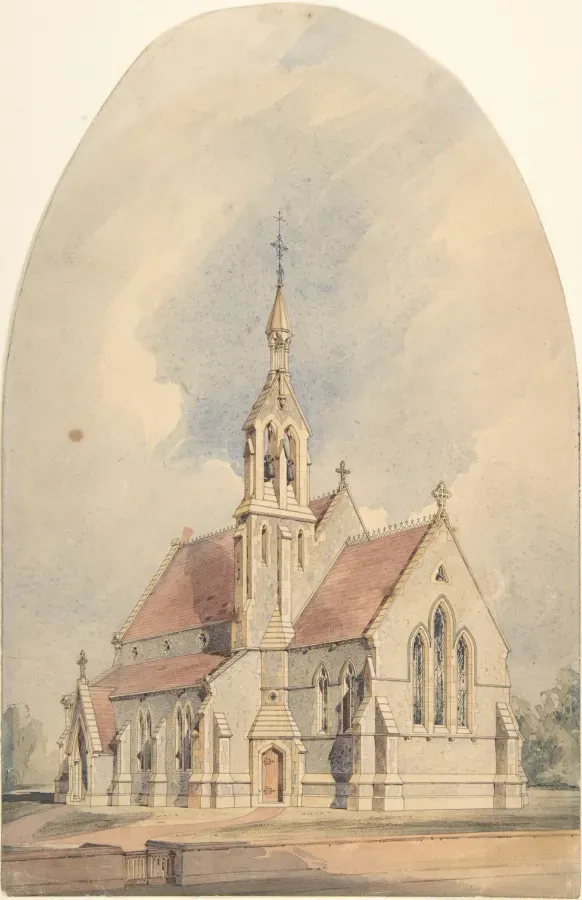
The word "gothic" began in architecture. The style emerged in the Ile-de-France in the twelfth century and by the thirteenth had become the dominant visual language of European cathedrals. Notre-Dame de Paris (begun 1163), Reims Cathedral where the kings of France were crowned, Chartres with its stained glass that remains the benchmark of medieval glassmaking. In Britain, the style took on its own character at Canterbury, Lincoln, and Salisbury.
The architecture was built on contradiction: vast windows that flooded interiors with colored light, yet deep shadow under the vaulting. Stone reaching toward the sky through flying buttresses and pinnacles, yet the weight of centuries pressing downward. Gargoyles at the parapet, half-human, half-beast, protecting the sacred space by embodying the frightening. This aesthetic of contrast, light against dark, aspiration through weight, later entered the DNA of gothic subculture.
The nineteenth century brought the neo-gothic revival. In America, it arrived through the Gothic Revival architecture of the 1830s to 1870s: Trinity Church on Broadway in Manhattan (1846), St. Patrick's Cathedral (begun 1858), the Smithsonian Castle in Washington D.C. (1855). Richard Upjohn and James Renwick Jr. brought the European vocabulary to American institutions. At the same time, American literature developed its own gothic register. Edgar Allan Poe in Baltimore wrote the first distinctly American gothic in the 1830s and 1840s: "The Fall of the House of Usher," "The Masque of the Red Death," "Berenice." He gave the tradition its most durable imagery: the sealed chamber, the premature burial, the obsessive mind, the raven at the window. Nathaniel Hawthorne in Salem gave it moral weight with "The Scarlet Letter" (1850). Ambrose Bierce in San Francisco added black humor. These writers defined the American dark aesthetic in ways that still filter through to jewelry design today.
American folk gothic and regional traditions
The United States has its own regional dark traditions that feed into the gothic aesthetic in ways distinct from the European lineage. The Appalachian folk magic tradition, rooted in Scots-Irish and Cherokee practices, produced protective amulets, hex signs, and charm bags that predate the goth subculture by centuries. The Pennsylvania Dutch hex signs on barns, geometric patterns designed to protect against evil, connect directly to the symbolic language of contemporary gothic jewelry. The hoodoo tradition of the American South, blending West African, Native American, and European folk practices, contributed its own protective symbolism: mojos, roots, bones, and the crossroads. The crossroads is a particularly American gothic symbol: Robert Johnson supposedly sold his soul to the devil at a Mississippi crossroads, and the image recurs through blues, rock, and metal alike.
New Orleans cemetery culture, with its above-ground tombs, voodoo traditions, and jazz funerals, gave America a visual mourning aesthetic unlike anything in Europe. The jazz funeral, where a brass band plays solemn hymns on the way to the cemetery and up-tempo jazz on the way back, embodies the same memento mori philosophy that gothic jewelry carries: acknowledge death, then celebrate life more fully because of it.
The 1980s and the subculture
Gothic as a recognizable American subculture formed in the early 1980s, drawing partly from British post-punk and partly from the American horror tradition. The Los Angeles band Christian Death, formed in 1979, was among the earliest explicitly gothic bands on the American side. The New York scene at clubs like the Limelight and the Pyramid Club developed its own version. A shared visual code emerged: black clothing, silver jewelry with crosses and skulls, long dark coats, high boots. Jewelry was not an accessory but part of a wearable statement.
Hollywood horror films had already prepared the visual ground. Universal Pictures' classic monster movies of the 1930s (Dracula, Frankenstein, The Mummy), the Hammer Horror productions of the 1950s to 1970s, and Roger Corman's Poe adaptations of the 1960s defined what gothic looked like on screen. The subculture absorbed this imagery and wore it.
The 1990s saw the aesthetic fracture into multiple American sub-streams: industrial gothic in Chicago and Detroit, the Southern gothic revival in literature, the Marilyn Manson shock-gothic of the mid-decade, the nu-metal overlap of the early 2000s. By the 2010s, Tumblr and then Instagram had given every variant a global distribution network. Dark academia emerged as a specifically aesthetic (rather than musical) movement, and the witch aesthetic found an enormous American audience through social media.
Southern gothic: a distinctly American register
Southern gothic is one of the most specific American contributions to the broader tradition. It draws on the particular landscape and history of the American South: decaying antebellum mansions, Spanish moss over cemeteries, the unspoken weight of history, the grotesque appearing in ordinary domestic settings. William Faulkner's Yoknapatawpha County, with its ruined aristocracy and buried secrets. Flannery O'Connor's brutal grace, where violence and redemption arrive together. Carson McCullers' lonely hearts. Cormac McCarthy's bone-dry violence.
Southern gothic in jewelry tends toward the antique and the organic: seed pearls on oxidized silver, mourning lockets with braided hair inside, pieces that look inherited rather than purchased. The aesthetic connects directly to the actual mourning culture of 19th-century New Orleans and Charleston, where elaborate funerary customs produced a jewelry vocabulary that contemporary gothic style continues to reference.
The principal symbols of a gothic collection
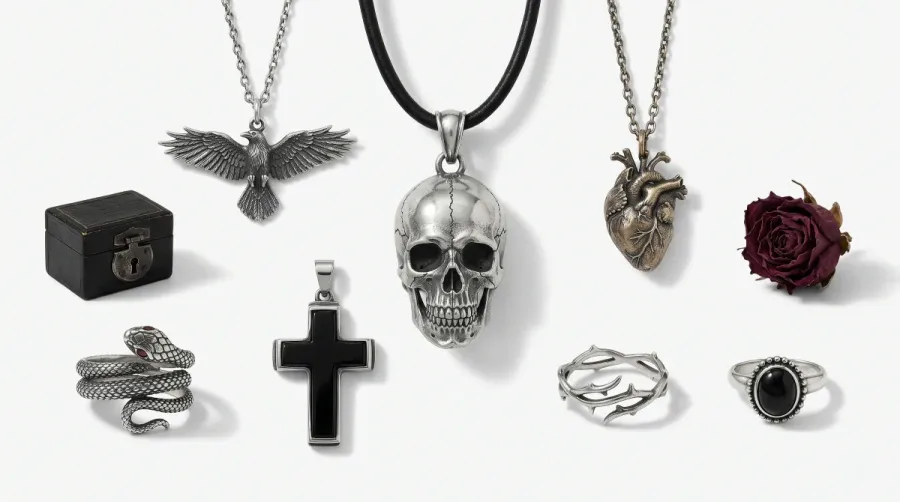
Skull (Memento Mori)
The central motif of the entire tradition. Not a symbol of death, but of the conscious acceptance of mortality, the classical memento mori, from the Latin "remember that you will die." In Roman practice, a slave whispered memento mori to a general during his triumph to prevent hubris. In medieval iconography, a skull sat at the feet of saints. In Victorian jewelry it became an anatomically precise motif, carved in silver with a craftsman's attention to detail. The skull does not dwell on loss; it insists on living deliberately.
The American tradition has added its own registers to the skull motif. The calavera of Dia de los Muertos, celebrated across the Southwest and now mainstream across the country, is celebratory and decorative: faces painted in flowers, skulls dressed in party clothes. This is the tradition of José Guadalupe Posada, the Mexican printmaker whose skeletons dance and ride bicycles and play guitar. It carries zero morbidity. At the other end of the spectrum, the biker skull tradition of Sturgis and Daytona Beach gave the motif an American working-class swagger: carved in chrome, worn on leathers, displayed on fuel tanks. Gothic jewelry absorbs both registers, depending on the piece and the wearer.
Distinct stylistic lineages exist: the anatomical Victorian skull (precise, unsentimental), the Mexican calavera (celebratory, decorated), the Norse warrior skull. Each carries its own aesthetic weight.
Raven
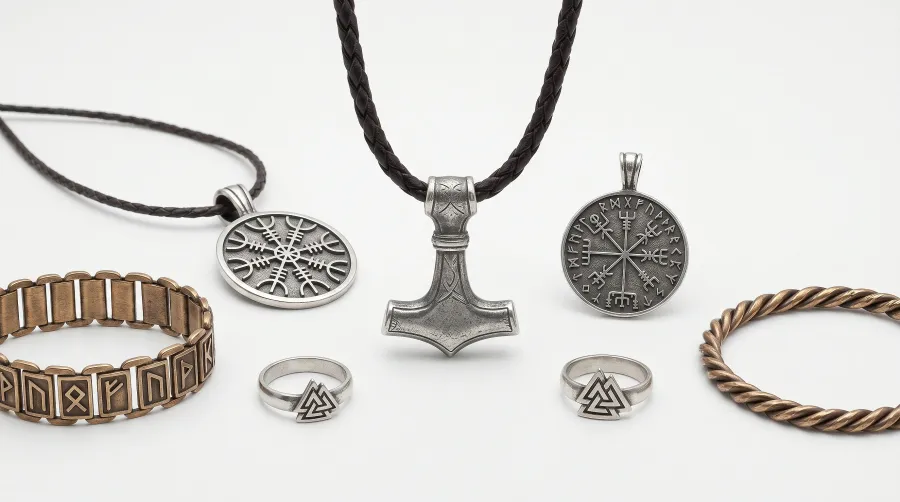
Edgar Allan Poe's bird, symbol of mystery, night, the uncanny. In Norse tradition, Huginn and Muninn (thought and memory) sat on Odin's shoulders and brought him knowledge of the world. In Poe's poem of 1845, the raven answers every question with "Nevermore," turning the bird into the most memorable emblem of obsession and grief in the American literary canon. The heavy, oxidized silver of the gothic palette overlaps directly with Norse jewelry, where ravens, wolves and the Valknut carry the same dark weight.
Anatomical heart
The actual organ, not the stylized shape. Dark aesthetics prefer truth over softened beauty. The anatomical heart appears in Victorian post-mortem traditions as well as contemporary alternative jewelry. In American gothic, the anatomical heart has a particular presence: from the sacred heart imagery of Catholic New Orleans to the anatomical illustrations in 19th-century medical texts that circulated through the country's new universities.
Serpent and ouroboros
A dual symbol: wisdom, rebirth, danger. Serpent rings that coil around the finger have roots in ancient Egypt and Victorian mourning jewelry. The ouroboros, the serpent devouring its own tail, is one of the oldest symbols in existence, passing through Egyptian papyri, Greek philosophy, medieval alchemy, and directly into gothic iconography. In American folklore, the serpent has additional resonance through the Aztec and Maya traditions that came north through centuries of cultural exchange along the border.
Cross
Not the plain Latin cross, but the Celtic cross (with its ring), the Teutonic cross, the Maltese cross. Often embellished with gothic ornament, occasionally inverted for heavier subcultures. The inverted cross is historically the cross of Saint Peter (who asked to be crucified upside-down), not a satanic symbol, though the gothic tradition has used it in both registers.
The rose with thorns
Beauty paired with pain. Gothic aesthetics inherited this motif, the rose and its thorns as a single object, which is why silver roses with thorns appear across the tradition. In American gothic, the rose connects to Southern gothic literature: the decaying rose garden in Faulkner's "A Rose for Emily," the thorns of an unattainable past. A piece of jewelry that carries both beauty and something that cuts is a compact symbol of the entire tradition.
Crown of thorns
Christian in origin (the Passion of Christ), gothic in interpretation: transcendence through suffering, power earned through endurance. Appears as rings, pendants, and headpieces.
Hourglass
Time passing. Memento mori without the skull. In Victorian symbolism, a winged hourglass meant that time flies. Often combined with bones or skeletal forms. In the American biker tradition, the hourglass also appears as a tattoo motif, particularly associated with the Black Widow spider, and has filtered into gothic jewelry through that route.
Waning moon
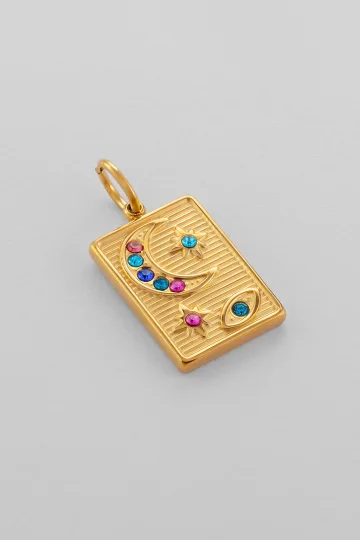
The lunar phase connects, in this tradition, to mystery, cycles, and the shadow-side of knowledge. The waning moon particularly fits the gothic aesthetic of fading and melancholy. In the American witch aesthetic, lunar phases carry specific ritual meanings, and the waning moon belongs to release, endings, and the acceptance of what passes.
Bat
Unique to the gothic tradition in a way few other symbols are. Biologically a nocturnal mammal that navigates by sound rather than sight, the bat became the animal of the vampire tradition and of everything that moves in darkness by inner knowledge rather than external illumination. In American popular culture, the bat has additional resonance through the superhero tradition: the Batman iconography, rooted in gothic Gotham, has given the bat silhouette mainstream visibility. Gothic jewelry works with the bat as a symbol of night knowledge, not darkness for its own sake.
Spider and web
Creator and hunter simultaneously. The web as metaphor for fate runs through Greek mythology (Arachne), Norse legend, medieval symbolism. In gothic jewelry the spider works as a nocturnal craftsman, building in darkness. The web on a ring or earring becomes a miniature map of invisible connections.





Materials: what the collection is built from
Oxidized sterling silver 925
The most characteristic material of gothic jewelry. Silver is deliberately treated with sulfides to produce a dark patina. This deepens the relief of engraving, sharpens detail, and gives a sense of age. Oxidized silver should not be polished: the patina is intentional. If wear lightens the raised surfaces slightly, that is normal aging, not damage.
The chemistry is specific: silver sulfide forms on the surface when silver contacts sulfur compounds. The reaction darkens the metal uniformly and permanently at the molecular level. The result looks like centuries of natural tarnish but is controlled and even. When an engraved piece is oxidized, the recesses stay dark while a jeweler polishes the raised surfaces to a shine, creating a contrast that makes every detail visible. For gothic jewelry, this contrast is the point: without oxidization, a skull ring reads as a flat silver shape; with it, every anatomical detail reads clearly.
Do not polish oxidized silver with a silver cloth, paste, or ultrasonic cleaner. To freshen, wipe gently with a soft cloth without pressure. Store separately from other silver: the patina can transfer on contact.
Black steel
Stainless steel with black PVD coating. More industrial in register: heavier, colder to the touch. Suited to massive chains, spiked bracelets, rings with strong geometric forms. PVD (Physical Vapor Deposition) creates a bond at the molecular level that is far more durable than electroplating. The coating holds through years of normal wear.
Whitby jet
Whitby jet is fossilized wood, technically a gemstone, coal-black in color, matte or with a deep polish. It has been carved on the North Yorkshire coast since the Bronze Age. The Victorian jet industry reached its peak after Queen Victoria chose it for her mourning dress following Prince Albert's death in 1861.
Genuine Whitby jet is now rare and expensive; its weight (light, unlike glass imitations) is one way to identify it. Authentic jet warms in the hand, smells faintly of coal when rubbed, and is significantly lighter than French jet (black glass). Most "jet" sold in tourist markets is glass: more brittle, heavier, and without the organic warmth of the real thing.
Black onyx
The primary stone of this aesthetic. Deep and uncompromising, used in mourning jewelry since antiquity. Works well as a cabochon in rings and pendants. Unlike tourmaline, onyx has a uniform structure: no visible crystals, just depth. The visual effect is of a hole, a window into something without light.
Black tourmaline (schorl)
Rarer than onyx. The crystalline structure gives a characteristic metallic sheen. Historically regarded in folk traditions as a protective stone, which adds a symbolic layer. In the American crystal-healing tradition that became mainstream in the 2010s, black tourmaline is among the most popular protective stones, worn as both a talisman and jewelry.
Garnet and hematite
Garnet: deep red, the color of memento mori. Hematite: heavy metallic gray, cold and earthy. Both fit the gothic palette without competing with the black base. In Victorian mourning jewelry, garnet was the permitted warm-toned accent during the second year of mourning, when the strictest black-only protocols had passed.
Black freshwater and Tahitian pearl
A pearl is living material from a living organism. A black pearl, whether the natural black of Tahitian varieties or the treated black of freshwater varieties, carries a depth that glass cannot replicate. In the romantic gothic sub-genre, a single black pearl drop earring or a strand of black pearls over dark fabric is an image of muted luxury. The pearl has been associated with tears since antiquity, which gives it a natural place in mourning jewelry.
Sub-genres of the gothic aesthetic
This is not a single style but a family. Understanding the distinctions helps when building a coherent collection.
Trad goth (1980s-1990s)
The original subculture aesthetic. Black clothing, pale makeup, silver jewelry, crosses, chains, hourglasses. Highly theatrical. Rooted in the post-punk bands of the early 1980s: Bauhaus, The Sisters of Mercy, The Cure, Christian Death, 45 Grave. American trad goth absorbed the British sound and added its own theatrical excess through the Hollywood horror aesthetic.
Victorian gothic
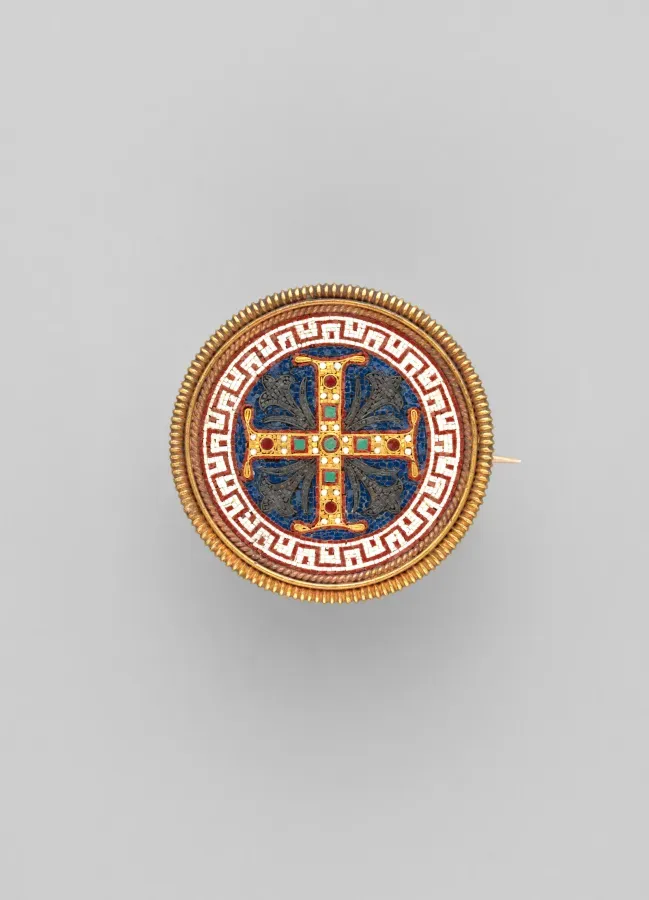
Lace, velvet, long garments. Jewelry: antique crosses, agate brooches, mourning pieces, hair lockets. The most historically grounded sub-genre, with direct connections to actual Victorian practice. In America, this sub-genre connects to the 19th-century mourning culture of New England and the South, where elaborate funerary customs produced their own jewelry vocabulary.
Victorian gothic jewelry is characterized by maximum ornamentation of each individual piece: fine silver filigree alongside deep black onyx, velvet ribbon with a miniature skull, locket with braided hair inside. Every element is worked through, nothing simplified.
Dark academia (2020s)
Ancient libraries, autumn landscapes, academic dress. Jewelry: vintage crosses, lockets with inscriptions, brass settings, book-shaped pendants. In the American version, dark academia finds its settings in the Ivy League and the old universities of the Northeast: Princeton's Gothic buildings, Yale's Gothic dormitories, the neo-Gothic spires of the University of Chicago. The literary touchstones are Donna Tartt's "The Secret History" and the tradition of the campus novel.
Witch aesthetic
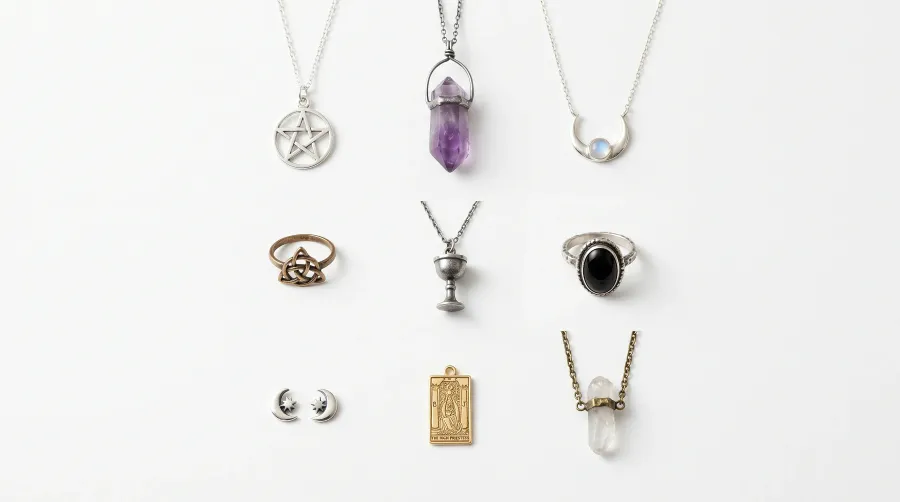
Pentagrams, moons, crystals, tarot imagery alongside the classical dark symbols. The American witch aesthetic has an enormous current moment, rooted in the Salem trials mythology, the feminist reclamation of witch identity since the 1970s, and the social-media visibility of practitioners from every tradition. The full vocabulary of pentacles, lunar phases and labradorite belongs to the witchy collection, which is the natural occult cousin of gothic.
Southern gothic
A specifically American register: the decaying mansion, the Spanish moss, the unspoken family secret, the landscape that holds its own history. Southern gothic in jewelry tends toward the antique and the organic: seed pearls on oxidized silver, mourning lockets, pieces that look inherited rather than purchased. Faulkner, Flannery O'Connor, Cormac McCarthy: the literary tradition has a distinct visual grammar.
Day of the Dead gothic
The Dia de los Muertos aesthetic fully integrated into American gothic. Calavera sugar skulls, marigold imagery, the altar offerings translated into jewelry. This is celebratory memento mori: the skull is not somber but joyful, because the dead are invited to the party. In states with large Mexican-American populations, this aesthetic is not subcultural but mainstream.
Minimalist gothic
A slender silver cross on a chain. A small skull ring. A drop earring with black onyx. Not the total black look, but a single piece that sets the tone. Works for those who carry this aesthetic into daily life without theatricality. Sometimes called nu-goth in American usage.
In minimalist gothic, the quality of the single piece carries everything. A small skull with precise, deep engraving says more than a large but flat-stamped one. The depth of craft is the whole point.
Maximalist gothic
Massive silver chains, multiple layered necklaces, a wide spiked bracelet, three rings on one hand. Full gothic statement for particular occasions or as a way of life.
Romantic gothic
Combining lace with silver, roses with skulls, fragility with darkness. An antique locket, a fine silver necklace with a rose, drop earrings with garnet. More Anne Rice than cyberpunk.
Memento mori and dark Victorian
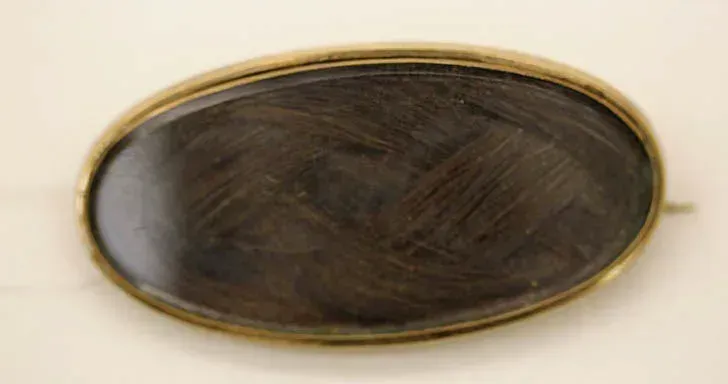
A specific register: conscious meditation on mortality. Anatomical hearts, hourglasses, Victorian-style skulls. Mourning pieces. An aesthetic for those who know the history well and use it as a lens on experience.
Building a gothic collection
Minimal set (3 pieces)
Skull pendant plus serpent ring plus cross earrings. A functional foundation. These three pieces speak in one voice without competing. A skull pendant defines the aesthetic; a serpent ring adds the element of transformation and cyclicality; cross earrings provide the vertical line. Together, they work.
Full set (6-8 pieces)
Add: spiked bracelet, black onyx ring, hourglass necklace, heraldic signet ring. A spiked bracelet introduces the industrial gothic register without overwhelming a softer base. A black onyx ring works as a second ring that does not compete with the serpent. An hourglass necklace layers the memento mori motif in a different register. A signet with a gothic crest or skull adds a formal element.
Themed set: dark academia
A brass locket plus an antique-style cross plus a book pendant plus a skeleton key plus spectacles on a chain. A coherent visual story. Every piece looks like it was found, not bought. The brass patina reads as aged. The skeleton key is the most useful symbol in the dark academia vocabulary: knowledge is locked, and this is the key.
Day of the Dead set
A calavera pendant in colorful enamel plus a silver marigold ring plus a black pearl drop earring plus an ouroboros bracelet. Celebratory, colorful, still fundamentally gothic. Works particularly well for November wear.
Romantic gothic set
Silver rose necklace plus garnet drop earrings plus ouroboros ring plus twisted band bracelet. Softer, but still recognizable.
Paired set (with a partner)
Paired skulls (his and hers), paired hourglasses (time together), serpent rings. For those who want matching symbolic language without literal inscriptions.
Combining gothic jewelry with clothing
Gothic pieces work with specific textures and silhouettes.
Leather: a leather jacket or corset plus silver chains gives the classic 1980s look. Metal against leather creates contrast without effort. For the American market, the leather jacket is already iconic, from the Ramones to the biker tradition. Adding oxidized silver chains rather than chrome changes the register from punk to gothic in one move.
Lace and organza: Victorian romanticism. Fine fabrics with silver or dark stones. The combination of fragility and darkness. A black lace dress with a single heavy silver necklace is a complete gothic statement. The lace provides texture; the necklace provides weight; the combination is complete.
Velvet: deep black velvet plus a heavy silver necklace. The most aristocratic combination. Requires confidence in how it is worn. Velvet absorbs light; silver reflects it. The contrast is the point.
Flannel and denim: the American casual gothic. A black flannel shirt plus a skull necklace plus a spiked bracelet is recognizably gothic without being theatrical. This is the everyday version that works in most American cities.
Band shirts: the original American gothic casual uniform. A vintage horror band shirt or a black concert tee plus silver pendants is the subcultural baseline. The graphic does the work; the jewelry adds specificity.
Oversized silhouettes: a black oversized shirt or sweater plus one statement piece. Does not overload the look.
All-black with a single chain: the contemporary gothic take. One piece of jewelry as the whole statement. Everything else is clean silhouette.
The symbolism of gothic jewelry: what each piece actually says
Gothic jewelry is a language. Each symbol carries meaning that has accumulated over centuries, and understanding that meaning changes how a piece is worn and why it is chosen. This is not a claim that every person who wears a skull necklace is making a philosophical statement. But the history is there for those who want it.
Wearing the skull
A skull ring or pendant at the most surface level is a visual statement of belonging to an aesthetic tradition. At the next level, it is a reminder that time is finite, which is the memento mori function. At the deepest level, for those who engage with the philosophical dimension, it is an argument: that living with awareness of mortality produces more conscious, more deliberate, more fully inhabited days. The Stoic philosopher Epictetus and the medieval monk meditating over bones were using the same psychological tool, applied differently.
None of this requires the wearer to think about it. The symbol carries the history whether or not the person is aware of it. But knowing the history changes the relationship to the object. A skull ring bought because it looks cool is one thing; a skull ring chosen because the memento mori tradition resonates with how you actually think about time is something else.
What the cross means in a gothic context
In mainstream use, the cross is a Christian symbol. In the gothic tradition, it is also a visual symbol of the structural vocabulary of medieval architecture, and of a historical period in Western culture when the natural and supernatural were not yet separated into different categories. Wearing a gothic cross is not necessarily a religious act. It is often a claim about visual tradition: the arched windows of cathedrals, the weight of stone reaching upward, the persistence of the medieval through into the present.
The inverted cross complicates this. In the punk tradition from which gothic partly emerged, inverting religious symbols was a deliberate provocation. In the medieval tradition, the same image was a sign of humility. The gothic tradition has used it in both ways simultaneously, which is part of why it still carries charge.
The serpent and personal transformation
Serpent jewelry is among the most personal of gothic choices. The coiled serpent that wraps around the finger is simultaneously ancient (Egyptian, Roman) and contemporary. It represents transformation because snakes shed their skins, emerging renewed. The ouroboros takes this further: the cycle has no beginning or end. For wearers who have gone through significant personal change, the serpent motif often carries specific personal weight beyond its general symbolic meaning.
The hourglass as quiet presence
Among all gothic symbols, the hourglass is the most unassuming. It needs no insider knowledge to be read: everyone understands time passing. An hourglass pendant in oxidized silver can be worn in any context without drawing unwanted attention. For those who know the tradition, it carries the entire memento mori weight: not the grinning skull but the quiet act of turning the glass and watching the sand run.
Gothic jewelry as gift
Gothic jewelry makes one of the more thoughtful gift categories, provided the recipient actually belongs to this aesthetic tradition. The challenge is matching the gift to the sub-genre. A person who wears Victorian gothic mourning pieces will not necessarily respond to a spiked industrial bracelet, and vice versa. Understanding which variant someone favors matters more than the general category.
The safest choices for gifting to someone whose exact preferences are unclear are the minimalist pieces: a small skull in oxidized silver on a fine chain, a simple cross in oxidized silver, a small onyx stud earring. These read as gothic to those who know the aesthetic and as simply well-made dark jewelry to those who do not.
For those who know the recipient well, more specific choices are possible. A locket with space for a photograph or inscription, engraved with a latin phrase, belongs to the Victorian gothic and dark academia registers. A serpent ring with a specific stone (garnet for Victorian, tourmaline for protective symbolism, onyx for the core gothic) shows attention to meaning. An ouroboros in heavy oxidized silver says something about cycles and persistence.
The gothic tradition also has a strong paired-jewelry history. Victorian mourning culture produced hair lockets and keepsake pieces meant to be shared or exchanged. Contemporary gothic pairs jewelry (matching skulls, matching hourglasses, matching serpents) has a long lineage behind it.
How jewelry moves through the gothic subculture over a lifetime
The relationship to gothic jewelry tends to evolve rather than end. The fifteen-year-old who discovers the aesthetic typically starts with the most visible symbols: a large skull ring, a spiked bracelet, heavy crosses. This is the maximalist phase, where the statement needs to be legible from across the room.
By the mid-twenties, most people who stay with the aesthetic begin to refine. The heavy bracelet comes off for the work week. The jewelry chosen becomes more specific to personal meaning rather than general category membership. A skull ring, yes, but a specific one with a particular kind of detail that resonates. The pieces become fewer and more carefully chosen.
By the mid-thirties and beyond, the gothic aesthetic for many people has settled into a signature: two or three pieces that are always present, deeply familiar, worn without thought. At this stage, the jewelry is genuinely part of the self rather than a statement about the self. The Victorian mourning tradition, the dark academia sub-genre, and the memento mori register all have natural adult forms that wear better in professional and social contexts than the maximalist teenage version.
This evolution is not a retreat from the aesthetic. It is the aesthetic deepening. The skull ring at fifty belongs to a longer story than the skull ring at fifteen.
Care for gothic jewelry
Oxidized silver
The main rule: do not polish. Not with a silver cloth, not with paste, not with an ultrasonic cleaner. The patina is an intentional design element. To freshen, wipe gently with a soft cloth without pressure. Store separately from other silver: the patina can transfer on contact.
Chemicals, perfume, chlorinated water, and contact with rubber or certain leathers can accelerate or alter the patina unpredictably. Store in a closed pouch or box without air exposure when not wearing.
Jet (Whitby or otherwise)
Do not soak in water. Do not use ultrasonic cleaning or steam. Wipe with a slightly damp (not wet) soft cloth. The material is brittle and chips under impact. Store wrapped in soft fabric, separate from metal pieces.
Black onyx and tourmaline
Wash in warm water with mild soap using a soft brush. Avoid aggressive cleaning agents. Avoid prolonged exposure to direct sun: the stone can fade.
Black steel with PVD coating
No special care required beyond wiping with a cloth. Avoid abrasive products that may scratch the coating.
Who this is for
Goths of every generation. The obvious answer. The goth kid of 1985 is now forty, and the aesthetic has stayed with many of them, simply refined.
Fans of classic rock, post-punk, and metal. American hard rock has always been adjacent to gothic aesthetics. From Alice Cooper's theatrics in the 1970s through to the sludge metal bands of New Orleans, the visual grammar is related.
Dark academia readers and students. Particularly those drawn to the literary tradition from Poe through Flannery O'Connor through Donna Tartt. The college campus in autumn is the American dark academia setting.
Day of the Dead celebrants. Particularly in the American Southwest and among Mexican-American communities. The calavera aesthetic has moved far beyond its original community.
Those with an interest in Wicca, paganism, or folk magic traditions. Frequently overlapping circles. The American witch aesthetic draws on Salem, on Appalachian folk magic, on hoodoo, and on contemporary Wiccan practice.
Writers, artists, musicians. Creative professions absorb this aesthetic naturally.
Those who have lived through difficulty. This style has served for a long time as a way to give form to what is hard to say.
Those who think about time. Gothic is not about morbidity for its own sake. It is an attempt to look at what most people prefer not to see, and to be a little freer because of it.
Frequently asked questions
Is it necessarily about death?
Not necessarily. It is about accepting the darker aspects of existence, about finding beauty in melancholy. Death is one theme, not the only one. Memento mori is a philosophy of life, not a cult of death.
Is it appropriate for people over 40?
Yes. The Victorian variant, dark academia, and mourning jewelry are all inherently adult registers. Many people remain within this aesthetic for life, simply developing a more refined version over time.
Can it work in an office?
In a creative environment, yes. In a conservative one, subtly. A small black onyx stud will not announce anything. A skull ring worn inside a shirt cuff reads only to those already paying attention.
Can it be mixed with other styles?
Yes. Witch aesthetic is the dark aesthetic plus magical practice. Dark academia is the dark aesthetic plus intellectual culture. Day of the Dead gothic is the dark aesthetic plus celebration. Pastel gothic is the dark aesthetic plus color. The aesthetic is flexible.
Is this Christian or anti-Christian?
Complex. The tradition grew in part from Christian visual culture, medieval cathedrals, Passion iconography. It uses Christian symbols (cross, crown of thorns). But it has also absorbed pagan, occult, and humanist elements. The meaning depends entirely on the wearer.
What is the difference between goth and emo?
Gothic aesthetics are primarily visual and historical, connected to Romanticism and Victorian culture. Emo developed from emotional hardcore music, partly in Washington D.C. and partly in Chicago, and had a younger, more confessional character. The two overlap without being identical.
Is genuine Whitby jet worth buying?
Yes, if authenticity matters to you. Genuine Whitby jet is significantly lighter than glass imitations (which feel heavy) and slightly lighter than French jet (black glass). It warms in the hand and, when rubbed, smells faintly of coal. It is rarer now than in Victoria's time and commands a corresponding price.
Is a gothic collection expensive?
Not necessarily. A basic set (skull pendant, serpent ring, cross) can be assembled in the middle segment, comparable to a dinner out, in sterling silver. Premium (antique mourning pieces, genuine Whitby jet) is a different price level.
What is the difference between gothic and steampunk jewelry?
Gothic jewelry is rooted in Victorian mourning culture, medieval symbolism, and the acceptance of mortality. Steampunk jewelry draws on Victorian engineering: clockwork, brass gears, mechanical components. They share a Victorian aesthetic base but point in different directions. Gothic points toward death and mystery; steampunk points toward invention and adventure. A piece can belong to both registers, a skull encased in a clockwork frame being the classic overlap.
How do I start a gothic collection from scratch?
Three foundation pieces: a pendant with the central symbol you respond to most (skull, cross, ouroboros), a ring in oxidized silver, and earrings in the same aesthetic. This minimal set works. Then add one piece at a time, checking that each new addition fits within the sub-genre you have already chosen, rather than pulling the collection in multiple directions.
How do I recognize quality in oxidized silver gothic jewelry?
Three things to check. First, patina uniformity: it should cover the recesses consistently, not be patchy. Second, contrast: raised surfaces should be slightly lighter, recesses dark. Third, engraving depth: a well-made piece shows details that you only fully see up close. Distance tells you whether the piece was crafted or just stamped and blackened on the surface.
Conclusion
A gothic collection is not a seasonal trend. It is an identity. Those who wore it at sixteen often continue at thirty-six and fifty-six, simply with greater refinement. Those who come to it later add it to an already formed sense of self.
What matters is not quantity but coherence. Three considered pieces within a single aesthetic say more than ten unrelated ones. The collection should tell one story.
Gothic has survived nine centuries. The windows of Chartres, the gargoyles of Notre-Dame, Poe's raven, Queen Victoria's jet, the Los Angeles punk clubs of 1979, Tumblr's dark aesthetics of the 2010s. This is not fashion. It is a way of seeing.
Silver, gold, commitment rings, symbolic jewelry, paired sets.
About Zevira
Zevira makes jewelry by hand in Albacete, Spain. The gothic aesthetic at Zevira is not costume: it is a worked-out visual language built on oxidized silver, dark stones, and memento mori symbolism.
What the gothic collection includes:
- Skulls and skeletons in the memento mori tradition
- Anatomical hearts in oxidized silver
- Serpent rings that coil around the finger
- Ravens and feathers as symbols of dark wisdom
- Hourglasses as reminders of passing time
- Crosses in gothic and Victorian styles
- Dark stones: onyx, jet, hematite, black tourmaline
Each piece is made by hand by a single craftsperson, with the option of personal engraving. Materials: sterling silver 925 and 14-18K gold.