Pearls for Men: A Complete Jewellery Guide
Introduction: a stone that was never just for women
There is a particular kind of confidence in a man who wears a single pearl stud. Not the confidence that shouts, but the quieter sort that simply refuses to apologise. That quality is precisely what has drawn generations of men back to pearls, from the Persian court to the Edwardian drawing room to the stages and red carpets of the present decade.
The common assumption that pearls are "a woman's jewellery" is historically very recent. For most of recorded history the opposite was true. Understanding that changes how the whole conversation feels.
This guide covers everything a man needs to know: the history, the types of pearl, every way to wear them, how to care for them, and how to think about cost.
Pearls Were a Man's Stone for 5,000 Years
The single greatest misconception about pearl jewellery is that it belongs to women. In terms of centuries, the opposite was the dominant reality.
The Ancient World
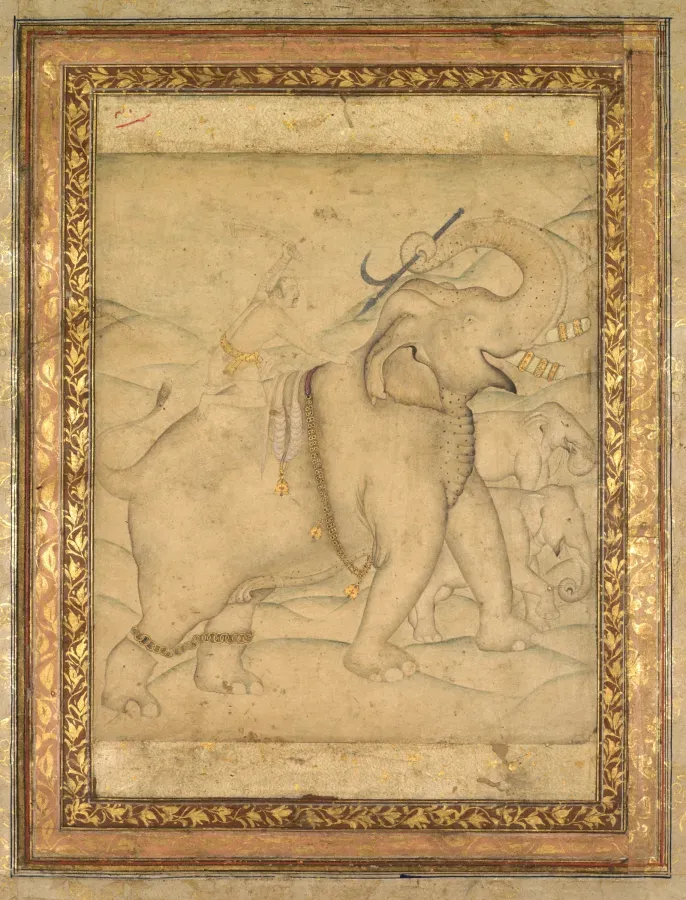
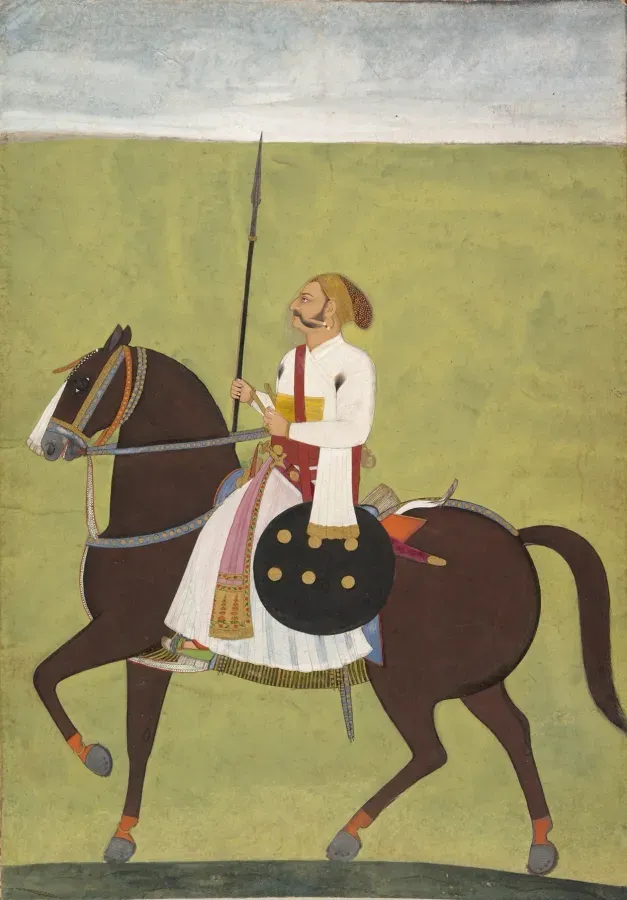
In Egypt, Mesopotamia and India pearls were among the most prized possessions a person could own, and the people who owned them were overwhelmingly men in positions of power. Pearls outranked gold in many ancient price hierarchies. Kings, high priests and military commanders wore them as visible proof of status.
The earliest documented pearl ornament is a necklace found in a Persian royal tomb dating to approximately 420 BC. Persian court culture treated pearls as the supreme luxury: the larger and more lustrous the stone, the more unambiguous the message.
In ancient India, pearls featured extensively in royal regalia. Sanskrit texts from the first millennium BC describe pearls adorning warriors and kings as emblems of both divine favor and martial prowess. The connection between pearls and masculine authority ran so deep that some texts listed pearl-bearing oysters among the natural resources a king was duty-bound to protect and exploit.
Ancient Rome
Roman writers noted the pearl obsession of their age with a mixture of admiration and alarm. Julius Caesar, according to Suetonius, was particularly devoted to fine pearls and spent fortunes acquiring them. He is recorded to have given a single pearl worth six million sesterces as a gift. The emperor Caligula famously decorated his horse with them, which at the time read as an act of extravagant royal power rather than eccentricity.
Roman senators wore pearl rings as markers of rank. The size of the stone corresponded, more or less directly, to the importance of the wearer. Pliny the Elder, in his Natural History, devoted entire chapters to pearls, describing the competitive acquisition that characterized the Roman senatorial class. He wrote with some exasperation about men who wore pearls on their fingers, ears and shoes simultaneously, not from vanity but from the explicit desire to display their wealth in the most concentrated form available.
The Roman pearl trade drew on supplies from the Persian Gulf, the Red Sea, the coasts of India and, eventually, the Caribbean. It was a genuinely global trade conducted entirely by men for men, centuries before anyone thought to describe the pearl as a feminine ornament.
Medieval Europe
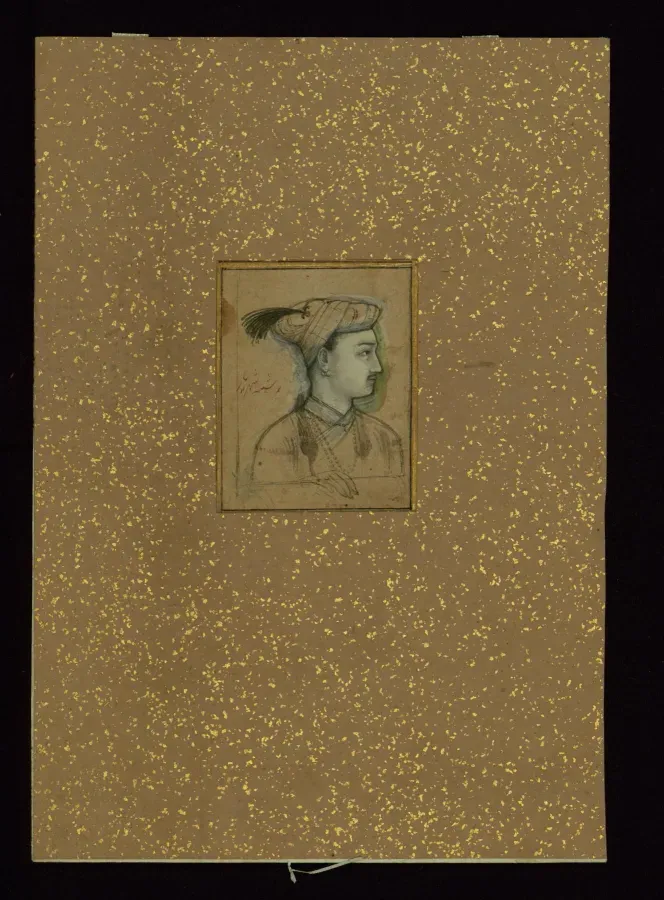
Through the Middle Ages pearls remained an exclusively male prerogative in royal and ecclesiastical circles. The crown of Charlemagne, preserved in Vienna, is set with large pearls. The British Imperial State Crown carries pearls around its lower band. Episcopal mitres were routinely decorated with pearls as a mark of spiritual authority.
Knights returning from the Crusades brought back pearls from the Persian Gulf as trophies. A man who wore them was advertising both wealth and a certain dangerous reach. The accounts of royal inventories from the thirteenth and fourteenth centuries are striking: jewelled items listed as personal to the king are disproportionately pearl-heavy, and they are listed among the assets of men, not women.
The Renaissance and Baroque Periods
Tudor and Stuart England produced some of the most pearl-heavy masculine portraiture in Western art. The portraits of Henry VIII show him wearing pearl brooches and chains alongside jewelled doublets. Charles I wore a single pearl earring in his left ear, a fashion that spread through the court. The portraits of this era are unambiguous: pearls on a man were a sign of power and cultural sophistication, not femininity.
George Villiers, Duke of Buckingham, favourite of both James I and Charles I, was notorious for the extravagance of his pearl jewellery. He was widely considered the best-dressed man in England.
In Spain and Portugal, the galleons returning from the New World in the sixteenth and seventeenth centuries carried pearls from the Caribbean shallows and the Venezuelan coast. The Iberian nobility wore them in earrings, chains and hat ornaments. The inventories of Spanish aristocrats from the Golden Age list pearls as masculine ornaments of the first order. The pearl fisheries of Cubagua, off the Venezuelan coast, were the first industrial-scale pearl extraction operation in the Americas, and the pearl was closely associated in the Spanish imagination with masculine conquest and dominion over new territories.
British Dandyism: Beau Brummell and the Regency Turn
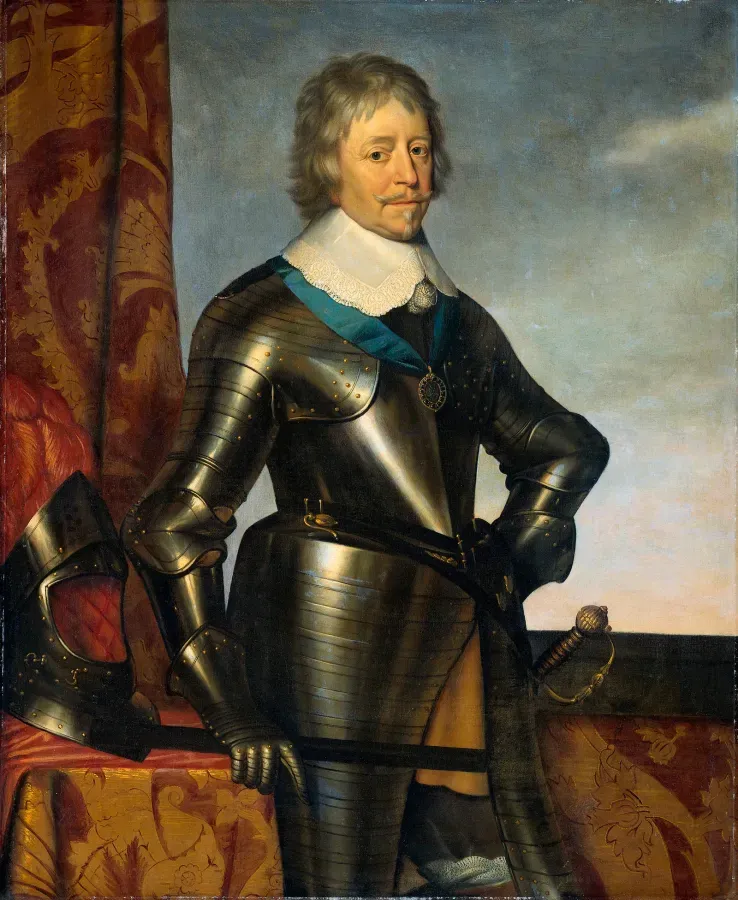
The late eighteenth and early nineteenth centuries brought a decisive shift in British masculine dress. The dandy movement, crystallised in the figure of Beau Brummell (1778-1840), redirected masculine elegance away from jewellery and towards cut, cloth and fit. Brummell famously spent hours achieving the perfect knot in a plain white cravat. His influence pushed men's dress towards sobriety and restraint.
This was the hinge point. After the Regency era, Victorian masculinity hardened into the black frock coat and the plain white shirt. Jewellery was reduced to the signet ring, the pocket watch chain, and, for the most formal occasions, pearl studs on a dress shirt and pearl cufflinks at the wrist.
That last point matters: pearl studs and pearl cufflinks held on through the entire Victorian and Edwardian period as acceptable masculine accessories. Men who wore white tie to Covent Garden or to a Savile Row fitting wore pearls. It was the one concession the Victorian dress code made to the idea that a man might want something to catch the light.
The Twentieth-Century Gap
From roughly 1920 onwards, as formal dress retreated and sportswear entered everyday life, even that narrow opening closed. For most of the twentieth century pearls on a man were the exception: jazz musicians, certain film stars, and the occasional rock-and-roll eccentric.
The Return: 2019 to Now
The revival of men's pearl jewellery over the past several years is part of a broader cultural shift. A younger generation of musicians, artists and designers began wearing pearl earrings, necklaces and bracelets, and the images travelled quickly through social media. What was once the exclusive territory of courts and Savile Row clients became something a man in his twenties could pick up and wear with a plain white shirt and jeans.
The historical framing matters here. These men were not doing something new. They were returning to something very old.
Who Is Wearing Pearls Today
To understand the shape of the current trend, it helps to look at where pearls are appearing.
On red carpets and at award ceremonies, male artists in their twenties and thirties have been photographed wearing pearl earrings and necklaces with increasing regularity since 2019. The images tended to be picked up by fashion press because the contrast was still striking: a man in a perfectly cut suit, and a single pearl.
In the fashion industry, male models, designers and creative directors in cities like London, Milan and New York have been wearing pearl jewellery in editorial and commercial contexts as a straightforward style choice rather than a statement of any kind.
In K-pop and the broader East Asian entertainment market, male performers have been wearing pearls as a normal part of their visual identity for longer than in Western pop. The influence of Korean fashion on global trends has accelerated the normalisation.
In streetwear and in music cultures that prioritise visual impact, pearl necklaces have been layered with gold chains and other pieces as part of a stacked, textured aesthetic. The Tahitian pearl, with its dark grey or green-black surface, has been particularly popular in this context because it reads as bold rather than delicate.
Among older British and continental European men with a classical background in dress, the pearl stud and pearl cufflink have simply never gone away. They are part of formal dress in the same way that a white pocket square is.
Types of Pearl
Understanding the types before you buy makes the difference between a purchase you are happy with and one that sits unworn.
Natural vs. Cultured
A natural pearl grows without human intervention when an irritant enters a mollusc. They are extraordinarily rare. Almost every pearl jewel made before the early twentieth century used natural pearls, which is partly why antique jewellery commands such high prices. A large natural pearl today is worth a significant sum.
A cultured pearl is produced when a technician implants a small nucleus into a mollusc and the animal deposits nacre around it over several years. The process was developed in Japan in the 1890s. The pearl produced is chemically and visually identical to a natural one. Cultured pearls account for effectively the entire modern market and there is nothing inferior about them.
Pearl Types by Origin
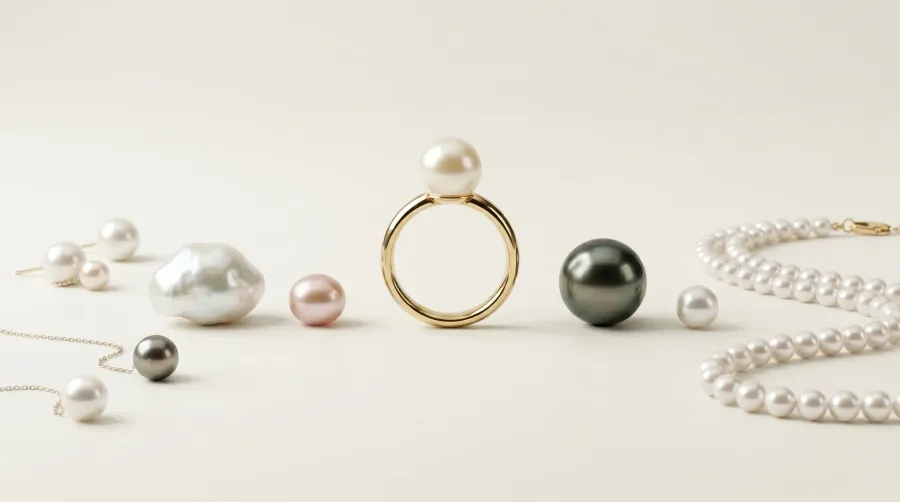
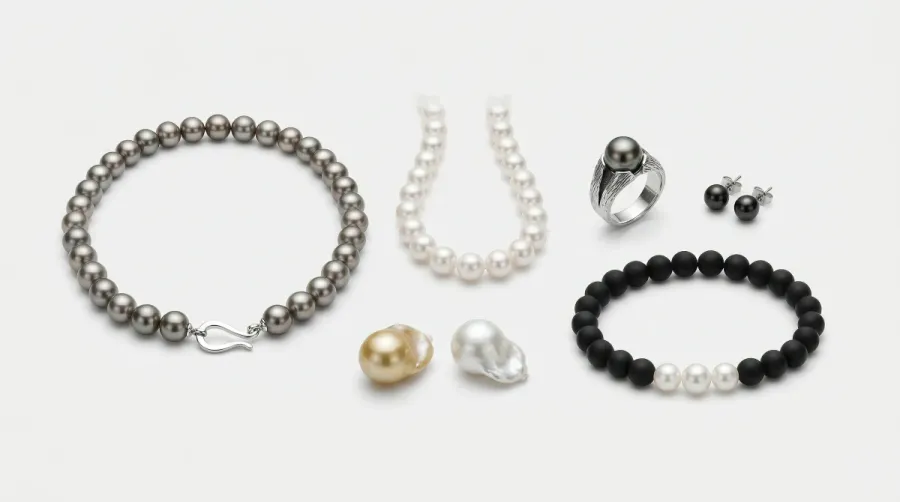
Akoya. The classic Japanese saltwater pearl. Small (5-9mm), very round, high lustre. The traditional white pearl stud is almost always akoya. For men wanting a minimal, clean look, this is the starting point. Akoya pearls are also produced in Vietnam and China, though Japanese akoya retains a reputation for particularly high surface quality.
Freshwater. Grown in lakes and rivers, primarily in China. Available in a wide range of shapes, from perfectly round to irregular. More accessible in price than akoya. Well suited to pendants and loose, organic designs. The baroque forms of freshwater pearls are popular in avant-garde men's jewellery because each one is unique and the shapes read as found objects rather than manufactured beads.
South Sea. The largest pearl in regular production, from Australia, Indonesia and the Philippines. Between 10mm and 20mm, white or gold in colour. These are statement pieces: a single South Sea pearl pendant on a silver chain is impossible to overlook. White South Sea pearls come primarily from Australian waters; the gold variety originates mainly from the Philippines.
Tahitian. From the black-lipped oyster of French Polynesia. Colours range from charcoal grey through peacock green to near-black. For men, this is often the most intuitive choice: the dark surface reads as naturally masculine and the orient (the subsurface glow) is extraordinary. A Tahitian pearl stud does not look delicate. The peacock overtone, a green-to-pink iridescence on a dark body, is considered the most desirable and commands a premium.
Baroque. Not an origin but a shape category: any pearl with an irregular form. Every baroque pearl is different. They are used in avant-garde and artisan jewellery where the irregularity is the point. A baroque freshwater pearl pendant in a silver setting can look more like a found object than a jewel, which suits certain aesthetics very well.
Mother-of-pearl. The inner surface of the shell, rather than a pearl itself. Used in inlay work, watch dials, ring faces and pendant shields. Visually distinctive, often more accessible in price, and carries the same iridescent quality that makes pearl appealing.
Colours and What They Signal
White is the classic, pairs with almost everything. Cream is warmer and slightly more casual. Black (Tahitian) and dark grey are the most immediately "masculine" options for men who are new to wearing pearls and want something that reads as confident without being delicate. Gold (South Sea) is warm and rich, and works particularly well in yellow gold settings. Lavender and pale rose exist in freshwater pearls and work in more unconventional pieces.
For a first piece, the two strongest starting points are white akoya (clean, unambiguous) and black Tahitian (dramatic, easily paired with dark clothing).
The colour you choose does not have to correspond to some notion of what is appropriately masculine. Men wore white pearls for thousands of years before anyone thought to classify them by gender. The only question worth asking is what reads well against your skin tone and what pairs with the clothes you actually wear.
How Men Wear Pearls
Earrings
Single pearl stud. A 5-7mm pearl in one ear. The minimal option. No conversation required. Works with everything from a suit to a plain T-shirt. This is the most historically grounded choice for a man starting out with pearl jewellery: single pearl earrings on men appear in portraiture from Tudor England through Baroque France.
Paired pearl studs. Less common but increasingly seen. Consistent, balanced. Works particularly well with symmetrical, minimal outfits.
Drop earring. A pearl suspended below a small connecting piece. For men who want something with more visual presence. The longer form moves with the wearer and catches light differently from a stud.
Necklaces
Choker of small pearls. Short, sits close to the throat. Maximum visibility. Works best with open collars. This is the format most associated with the current streetwear revival of men's pearls.
Long chain with a single pearl pendant. A larger pearl (10-15mm) on a fine silver or gold chain. More restrained than a full necklace. Easy to wear with or without a shirt collar. The pendant sits at the base of the throat or just below, depending on chain length.
Alternating chain. Pearls interspersed with metal beads or links along the chain. Creates rhythm and texture, reads as streetwear with historical roots.
Pearl on a leather cord. An alternative aesthetic: the pearl is set or knotted into a woven cord. The combination of organic textures is interesting and tends to work better in casual contexts.
Pendant
A single large pearl in a substantial silver or gold setting. Often references historical royal jewellery without looking like a costume. A South Sea pearl in a heavy silver bezel setting is a piece with genuine presence.
Bracelet
A fine strand of small pearls on the wrist. Can be stacked with a watch or worn separately. Works best when the pearls are small enough not to compete visually with the watch case. Baroque pearl bracelets with alternating metal elements read differently from a classic strand, more rugged and less formal.
Cufflinks
The most historically anchored option for men. Pearl cufflinks on a white dress shirt under a suit jacket have been worn by men in Britain and across Europe since the Victorian era. They are still entirely correct for formal and black-tie occasions. A man who wears pearl cufflinks with a dinner jacket is not doing anything unusual; he is following a tradition that spans at least a hundred and fifty years of formal Western dress.
Ring
A thick silver band set with a single large pearl. Striking, not especially traditional, but increasingly present in men's jewellery. An alternative is a signet ring with a pearl face rather than an engraved surface: this calls back to the Roman senatorial ring tradition in an updated form.
Tie Pin
A small pearl-topped pin that secures a tie. Nearly invisible as jewellery, noticed only at close range. Useful in environments where an earring would attract comment but a small token of personal style is still desirable.
Choosing Pearl Size and Color for a Masculine Look
The question of what size works for a man is practical, not theoretical.
For earrings, 5-7mm is the most versatile range. Large enough to read clearly, small enough to wear in almost any context without attracting a second look for the wrong reasons. A 6mm akoya stud in silver is the pearl equivalent of a classic watch: it does the job without announcing itself.
For pendants, 10-14mm is the sweet spot. Smaller than that tends to disappear against a shirt. Larger than 16mm starts to read as a centerpiece rather than an accent, which is fine if that is the intention.
For chokers and strands, smaller pearls (5-7mm) keep the piece wearable across contexts. A strand of 8-9mm pearls is more formal and reads closer to the classic pearl necklace traditionally associated with women's dress, which may or may not be the intention.
Color choices are genuinely personal but a few principles hold:
Dark complexions carry white and cream pearls with particular clarity. The contrast is clean and the lustre reads well.
Fair complexions work with Tahitian and South Sea pearls, where the darker or warmer tones of the pearl create their own visual anchor rather than disappearing into the skin.
Silver and cool-toned skin reads well against white akoya. Yellow or warmer tones pair naturally with gold South Sea pearls or cream freshwater.
If uncertain about color, black Tahitian is the most forgiving starting point for men: it works across skin tones, pairs with dark and light clothing, and has the visual weight to stand on its own without looking decorative in a way that feels unfamiliar.
Mixing Pearls with Metal and Leather
One of the most effective approaches to men's pearl jewellery is combining the pearl with contrasting materials rather than wearing it in isolation.
Pearl and silver. The cool tone of sterling silver against a white or cream pearl creates a clean, modern combination. A baroque pearl set in an open silver bezel, where the irregular form of the stone is visible from multiple angles, is one of the more versatile pieces in contemporary men's jewellery. It works from a casual coffee meeting to an art opening.
Pearl and oxidized silver. Dark oxidized silver against a Tahitian pearl deepens the visual effect. Both materials share a quality of restrained darkness, and together they read as intentional without being showy.
Pearl and gold. Yellow gold with a white pearl is the Edwardian tradition: formal, warm, historically grounded. Yellow gold with a Tahitian pearl is more unexpected and slightly theatrical, which can be exactly what is wanted for an evening event.
Pearl and leather. A single pearl set or knotted into a leather cord is a less formal alternative to a chain pendant. The contrast between the organic smoothness of the pearl and the grain of the leather is tactilely interesting. This format works well in casual settings where a metal chain might feel too polished.
Pearl in layered chains. A pearl pendant among a stack of silver or gold chains of different lengths and gauges. The pearl provides a point of textural contrast among the metal. The overall effect is streetwear-adjacent without abandoning the historical weight of the material.
Styling Pearls for Day, Work and Evening
Daytime Casual
A single pearl stud in one ear, or a pearl pendant on a fine chain under a crewneck or T-shirt, works as an unobtrusive personal detail in most daytime casual contexts. The goal is not to announce the jewellery but to let it be noticed by people who look closely.
White T-shirt, open collar, a Tahitian pearl pendant on a 50cm chain: the simplest possible combination that still has genuine visual weight.
Layered pearl and metal necklaces over a plain long-sleeve top: the streetwear approach, where the jewellery is the point of the outfit rather than an accent to it.
Office and Professional Environments
In most modern workplaces, a small pearl stud in one ear is unremarkable. In more conservative professional environments, such as traditional legal or financial settings, a tie pin with a small pearl is a more discreet option. Pearl cufflinks with a dress shirt remain entirely correct in formal professional contexts and have been part of British and European office dress for over a century.
If the office dress code is genuinely conservative and earrings would attract comment, pearl cufflinks or a pearl tie pin allow for personal style within conventional parameters. Both options have deep historical roots, which means they carry cultural weight alongside their aesthetic one.
Evening and Formal Occasions
Pearl cufflinks with a dinner jacket or a white dress shirt for a formal event: this is the most historically grounded combination. It requires no explanation because it has been correct for a very long time.
A single pearl stud with a dark suit at a formal event: minimal, controlled, visible without being conspicuous.
For a wedding, a groom wearing white pearl cufflinks makes a direct reference to the white tie tradition. A single white pearl stud alongside a well-cut suit reads in photographs as a considered detail: it will be visible to anyone who looks at the images carefully, and it will not distract from the overall look.
A large Tahitian pearl pendant on a gold chain with a black shirt for an art event, a concert or an opening: this is the more theatrical register, which has its own historical precedent in the Baroque court tradition of pearl display.
Pearls by Body Type and Personal Style
The Compact Build
Smaller pearl pieces, 5-7mm studs and pendants on finer chains, tend to scale better with a compact or lean frame. A very large pendant on a short man can look unbalanced. The exception is a choker, which works well at most heights because it sits close to the body and does not extend the visual line downward.
The Larger Build
Larger pearl pieces, 10-14mm pendants and chunkier chain formats, scale appropriately with a broader frame. A small stud on a large man can disappear. A Tahitian pearl of 9-10mm in a substantial silver setting reads clearly at a distance.
The Conservative Dresser
For a man who wears classic clothing, pearl cufflinks or a small pearl stud are the natural entry points. Neither requires any shift in the rest of the wardrobe. Both have historical legitimacy in the tradition of classic European dress.
The Creative or Expressive Dresser
Baroque pendants, alternating chains, layered necklaces and drop earrings offer more room for composition. The pearl functions as one element in a more deliberate overall look. A baroque freshwater pearl in an asymmetric silver setting, worn with a considered outfit, reads as a person with a specific aesthetic vocabulary rather than someone following a trend.
The Minimalist
One piece, worn consistently: a small stud, a single pendant, or a pair of matched studs. The fewer the pieces, the more the individual item carries. A 6mm white akoya stud in silver, worn every day, becomes a personal signature without any of the maintenance that a more complex look requires.
What to Pair Pearls With
With a Suit
A single pearl stud and a dark suit is perhaps the cleanest combination. The pearl is visible but the overall effect is controlled. On formal occasions, pearl cufflinks replace the stud as the primary piece.
A black suit with a black Tahitian pearl necklace is a different register entirely: deliberate, visual, slightly theatrical.
A navy suit with a cream or white pearl pendant on a silver chain, collar open: the combination reads as confident and well-considered without being showy.
With Casual Clothes
White T-shirt, open collar, a pearl pendant on a fine chain. The simplest summer combination. The casual clothing makes the pearl more conspicuous rather than less, which is the point.
A knit sweater or crewneck with a small pearl stud works because the understated clothing lets the pearl carry its own weight.
Layered necklaces over a plain T-shirt, with pearls mixed in among other chains, is the streetwear approach. Here the pearl is part of a visual texture rather than a focal point.
A linen shirt, open two buttons, with a Tahitian pearl pendant: the informal summer evening version.
What Does Not Work
Pearls do not work with sportswear, gym kit or anything intended for physical activity. This is not a question of aesthetics alone: sweat is mildly acidic and will damage the surface over time. Take them off before you train.
Very small pearl pieces can get lost against heavily patterned clothing. A 5mm stud against a loud check jacket simply disappears. Either the clothing or the jewellery should carry the visual weight.
Care
Pearl is not a mineral. It is an organic material: the nacre layer is composed of calcium carbonate crystals deposited by a living animal. It is more fragile than any gemstone, and it requires specific care.
What damages pearls:
- Acids: sweat, perfume, citrus juice, any cleaning product. Even the mild acidity of perspiration will dull the surface over time.
- Impact: the nacre layer can chip or separate from the nucleus if the pearl is knocked hard.
- Chlorine and sea water: pool water will strip the lustre.
- Long exposure to direct sunlight.
- Storage in sealed plastic bags or airtight containers: pearls need a small amount of moisture from the air.
The rules:
- Put them on after you have applied cologne, not before.
- Take them off for sport, showering and swimming.
- Wipe them with a soft dry cloth after wearing.
- Store them separately from other jewellery, wrapped in soft cloth or in a lined pouch. Other jewels, including gold and silver chains, will scratch the nacre.
- Have them cleaned professionally once a year if you wear them regularly.
Properly cared for, a pearl will retain its lustre for decades. Badly treated, it will begin to look dull within a couple of years. The rule of thumb is: last on, first off. Put the pearl on after getting dressed, and take it off before undressing.
Quality: What to Look For
When buying pearl jewellery, a few things are worth checking.
Lustre. This is the most important quality indicator. Hold the pearl up to the light and look for a deep, reflective glow coming from within the surface, not just a surface shine. A high-lustre pearl will show a slightly distorted reflection of your face. Low lustre looks chalky or flat.
Surface quality. Perfect surfaces are rare and command a premium. Minor surface characteristics, small wrinkles or pinhead-sized spots, are normal and do not affect the appearance of a piece significantly unless they are concentrated on the face of a stud or pendant. For earrings, the visible face is what matters.
Shape. For studs, round is the traditional ideal. For pendants and more expressive pieces, baroque or semi-baroque forms add character and make each piece unique.
Nacre thickness. In a cultured pearl, the nacre is the layer deposited by the mollusc around the nucleus. Thicker nacre produces a better, more durable lustre and a deeper orient. Ask about nacre thickness when buying akoya pearls in particular, since some production methods create very thin nacre that will wear through more quickly.
Setting. In silver or gold settings, the quality of the metalwork matters as much as the pearl. A pearl in a well-made bezel setting, where the metal supports the stone securely without covering too much of it, will wear better and look better over time than a pearl in a low-quality prong setting that sits unevenly.
Price Segments
Akoya stud (5-7mm) in silver: entry level. The cost of a meal out. A reasonable first purchase.
Akoya stud (8-10mm) in gold: mid-range.
Tahitian stud (8-10mm) in silver or gold: mid to upper mid-range, depending on the quality of the orient.
South Sea pendant (10-12mm) in gold: premium.
Akoya choker (40-45cm strand): upper mid to premium, depending on the uniformity of the pearls.
South Sea long necklace: high end.
Baroque artisan piece: varies widely, but typically mid to upper mid-range.
Natural (uncultured) pearls and antique pieces fall into a separate category and carry a significant premium.
Gifting Pearls to a Man
A pearl piece makes a specific kind of gift: it is unusual enough to signal genuine thought but not so personal that it risks being wrong.
For a man who already wears some jewellery, a pearl adds something he is unlikely to have bought for himself. The entry point is accessible: a sterling silver akoya stud, for example, is the kind of gift that costs about as much as a good dinner for two and will still be in use twenty years later.
For a groom, pearl cufflinks are one of the most appropriate and historically grounded gifts possible. They are usable the same day, they are not too intimate, and they have a meaning that the recipient will recognize if he knows anything about the history of formal dress.
For a father or grandfather with a classic sense of dress, a pearl stud or pearl cufflinks from a contemporary maker are a way of giving something that connects to a tradition without feeling old-fashioned.
For a man with a more expressive personal style, a baroque pearl pendant or a Tahitian stud in an unusual setting gives the recipient something with genuine character. The most effective gifts in this category tend to be single pieces with a clear visual point of view rather than sets.
The practical note: if you are not certain about ear size, studs are safer than pendants, which depend less on body dimensions. If you are buying for someone who does not yet have pierced ears, cufflinks remain the most fail-safe option.
Psychology of the Trend
Why now? Several factors have converged.
A loosening of gendered dress codes. The generation that grew up on social media is less attached to the idea that certain objects belong to one sex. Mixing and matching is not transgressive, it is just what they do.
A reaction against minimalism. The plain navy suit and white Oxford shirt aesthetic of the 2010s has been exhausted. There is appetite for more expressive, layered dressing, and pearls, historically associated with luxury and ceremony, are part of that.
The influence of East Asian fashion. Korean and Japanese popular culture, both with large global audiences, have normalised ornamental masculinity in ways that have filtered into Western markets.
The photograph. Pearls are extremely photogenic. They catch light from unexpected angles and glow in a way that reads well in both still photography and video.
Cultural weight. Men who know the history of jewellery understand that wearing a pearl is not avant-garde; it is a return to the mainstream of five thousand years of masculine dress. That historical legitimacy matters to a certain kind of wearer.
Silver, gold, wedding rings, symbolic pieces and paired sets.
Setting Materials
The setting matters as much as the pearl itself.
Sterling silver (925). The most common choice for men's pearl jewellery. Neutral, contemporary, suits every type of pearl. The cool tone of silver contrasts interestingly with the warmth of white akoya or underlines the brooding quality of a Tahitian stone.
14K gold. For more classical pieces. The gold post with a white pearl stud is the Edwardian cufflink tradition in miniature. Gold with a Tahitian pearl produces a richer, slightly theatrical effect.
Titanium. For men who have metal sensitivities. Lightweight, hypoallergenic, modern in appearance.
Pearl allergy is rare: the nacre is organic, not synthetic. Reactions to pearl jewellery are almost always caused by the metal setting, not the stone itself.
Storage
How you store pearls matters almost as much as how you wear them.
Keep pearl jewellery separate from other pieces. Gold and silver chains will scratch nacre. A silk-lined box or a soft fabric pouch are correct. A dedicated compartment in a jewellery box, lined with velvet or silk, is ideal.
Do not store pearls in plastic bags or sealed airtight containers. Pearls need a small amount of ambient moisture to maintain their surface. A sealed plastic bag traps residual perspiration, which accelerates deterioration.
Do not keep pearl jewellery in a bathroom. The humidity cycle, wet then dry, is damaging over time to both the nacre and the stringing thread if it is a necklace.
Who It Suits
Men tired of minimalism. If you already wear a watch, a ring, a chain, one pearl adds a specific quality of light and texture that nothing else provides.
Creative professions. Designers, artists, writers, photographers. The pearl signals aesthetic curiosity without any particular effort.
Public-facing roles. Actors, speakers, hosts. On camera, pearls work. The surface catches light in a way that reads as presence.
Weddings. A groom wearing pearl cufflinks, or a single pearl stud, is referencing a centuries-old tradition of formal masculine pearl jewellery. It is not eccentric. It is historically grounded.
As a gift. A pearl earring or pendant is an unusual and considered gift for a man who already has the obvious pieces.
Who Might Find It Less Natural
Very conservative professional environments. In a traditional City law firm or a classic finance setting with a strict office dress code, a pearl earring will attract comment. Pearl cufflinks will not.
Men with very active lifestyles. If you are in the gym five times a week and sweat through everything, you need to be diligent about removing pearls before training. The care requirements are real.
Men for whom it genuinely feels wrong. There is no obligation. If wearing a pearl feels uncomfortable rather than interesting, there are other choices.
Frequently Asked Questions
Do pearls have to be expensive?
No. A silver akoya stud is an entry-level purchase at an accessible price. That is the honest starting point for most men.
Black or white pearl first?
White akoya is safer: it pairs with more clothes, it is less conspicuous, it is easier to wear in varied contexts. Black Tahitian is more dramatic and better suited to dark clothing and bolder personal styles. If you are unsure, start with white.
Can a couple wear matching pearls?
Yes, and it works well. A common version: the man wears a pearl stud, the woman wears a pearl bracelet or pendant, both using the same variety of pearl. A thematic pair rather than identical pieces.
Do pearls work with tattoos?
Well. The contrast between the smooth, lustrous surface of a pearl and the texture of a tattoo sleeve is visually effective. Many heavily tattooed men wear pearls deliberately for exactly this reason.
How do I explain them in a conservative office?
Pearl cufflinks require no explanation in a formal office. A pearl earring in a strictly conservative environment may attract questions. The honest answer is: "it is a personal preference." You are not obliged to justify your jewellery.
Do they age badly?
With poor care, yes. With correct care, no. Old pearl jewellery, properly maintained, can become genuinely antique and increase in value.
Can I swim wearing pearls?
No. Chlorinated pool water and sea water both damage the nacre surface. Remove them before swimming.
How do I tell a genuine pearl from an imitation?
The tooth test: draw the pearl lightly across the edge of your teeth. A real or cultured pearl will feel slightly rough or gritty. A glass or plastic imitation will feel smooth. The test works every time.
Do pearls work with a beard?
Yes. The contrast between the smooth, cool surface of the pearl and the texture of a beard is one of the more interesting combinations in men's jewellery. Many bearded men find that a pearl earring or pendant works particularly well in this context.
What is the difference between orient and lustre?
Lustre is the reflective quality of the pearl's surface, the clarity and brightness of the reflection. Orient is the iridescent glow that appears to come from within the pearl, caused by light diffracting through the layers of nacre. High-quality pearls have both. Orient is particularly notable in Tahitian and South Sea pearls.
Can I wear a pearl necklace and stud together?
Yes, it is a working combination. A small pair of studs with a pendant necklace creates a layered look that reads as considered rather than accidental.
The Right Pearl for Different Men
The older gentleman who knows his clothes. Pearl cufflinks with a grey or navy suit. A single pearl stud with a well-cut casual jacket. A South Sea pendant as a formal piece. This man is not discovering pearls: he is continuing something that was interrupted.
The young creative. A large Tahitian pearl on a black cord. An alternating chain with pearls and silver beads. A baroque pearl in an asymmetric setting. For him, the pearl is part of a visual language where history and the present are deliberately mixed.
The groom. White pearl cufflinks with a morning suit or a dark wedding suit: a direct reference to the white tie tradition. A single white pearl stud that will be visible in photographs. Both options have centuries of historical precedent.
The musician or artist. Pearls fit a stage image naturally, because they carry cultural weight. A substantial black Tahitian chain over a plain black shirt. Baroque pearls in complex artisan settings. The pearl signals a certain visual intelligence.
Conclusion
Men's pearl jewellery is not a trend invented in the last five years. It is a return to something that was standard practice for five thousand years before a century-long interruption made it seem novel. Kings, emperors, senators, bishops, Tudor courtiers and Edwardian gentlemen all wore pearls as a matter of course.
The simplest starting point is a single pearl stud or a fine chain with one pendant. Wear it for a few months. The historical weight of the thing is part of what makes it interesting.
About Zevira
Zevira makes jewellery by hand in Albacete, Spain. The men's pearl pieces in our collections are not adapted from a women's line. They are designed separately, with an emphasis on contrast, texture and irregular form.
What is available for men:
- Single pearl studs in 925 silver
- Short necklaces with a single pearl pendant
- Baroque pearl bracelets with metal elements
- Rings with a single large pearl in a substantial setting
- Pendants combining pearl with other symbolic forms
Each piece is made by hand, with personalised engraving available. We work with 925 silver and 14-18K gold.