Wedding Rings for Men Who Work With Their Hands: The 2026 Guide
Ring avulsion, the injury surgeons call degloving, sends people to A&E every year all over the world. Standard alloy gold is the worst possible metal for hands that grip tools all day. What follows is how to choose a wedding ring for a mechanic, a chef, a doctor or a soldier, a ring built to last fifty years.
Among men whose work involves moving machinery, electricity, heat or grit, the habit of slipping the ring off before a shift is not a sign of cooling feelings. It is a sign of respect for one's own fingers. A wife gives her electrician husband a gold band, he takes it off before every shift and drops it in the glovebox of his van. That is not a rejection of the marriage. It is a gift-giving mistake by someone who did not think about the job. The fix has been described by hand surgeons and materials scientists for years: one symbol for the celebration, another for the shift. Below: the dangerous job categories, the materials, engraving, gift ideas, the mistakes people repeat, care, and strategies for couples.
Ring avulsion: the anatomy of an injury a plain band can cause
What degloving actually means
Surgeons call it degloving, literally the removal of a glove. The skin and soft tissue of the finger are stripped from the bone in a single movement. It happens when a metal ring catches on a hook, a pipe, a length of rebar, the rung of a ladder, a bracket on a machine bed, and the body keeps moving on momentum. The metal ring does not tear. It holds the finger while the body travels forward. The force of inertia exceeds the strength of the tissue. The result: partial or complete removal of the skin from the finger. In the worst cases, the whole finger is torn off with the bone.
The Urbaniak classification of finger avulsion:
- Class I: circulation impaired, artery intact. Treated conservatively.
- Class II: circulation impaired, artery damaged, microsurgical reconstruction required.
- Class III: complete degloving or amputation. Replantation or stump formation.
Class III requires microsurgery. It often ends in amputation, because replanting a finger that has been without blood flow for more than a few hours is impossible even in a well-equipped theatre. Hand surgeons describe this injury as one of the most demoralising they see: it happens in a fraction of a second, and the consequences are permanent. Unlike a fracture that knits or a burn that heals, full avulsion of soft tissue calls for either complex reconstructive surgery or the closing of a stump.
Why metal is more dangerous than silicone: the difference in force
The fundamental difference between metal and silicone is the force at which the material lets the finger go. A metal ring holds the finger to the last: for it to give way, the force has to exceed the strength of living tissue. Silicone yields far sooner. The line between injury and no injury sits exactly on that difference.
Ring avulsion turns up in emergency departments regularly. There is no neat separate statistic for rings, since these are logged as workplace, domestic or sporting injuries, but hand surgeons confirm it is far from rare.
The high-profile cases in the press all show the same thing: a person falls at home, the ring snags on a worktop or the edge of a cabinet, and ordinary domestic clumsiness ends in a long operation on the hand. After a few such stories, surgeons began warning patients about the risks of metal bands more actively. These cases make headlines precisely because they happen in ordinary homes, not on a building site.
Three ways a ring gets caught: the lathe, the motorcycle, the ladder
The lathe. The workpiece spins at 500 to 3,000 revolutions per minute. The operator feeds the tool by hand. One awkward turn of the wrist, and the ring on the fourth finger enters the rotating zone. The force of the spinning chuck or the work itself dwarfs the force at which tissue begins to tear. Human reaction takes 0.2 to 0.3 seconds. The work makes several turns in that time. The result: full avulsion of the finger's soft tissue happens before the operator can pull the hand away. Safety briefings in engineering plants carry an outright ban on rings for exactly this scenario.
The motorcycle. In a crash at speed, the rider travels on momentum. The fingers skid across tarmac or catch on a barrier. A metal ring snagged on the lip of a kerb, a step or a length of rebar instantly becomes an anchor point. The body keeps moving. This mechanism is well studied in road-trauma medicine: ring avulsion in motorcycle crashes accounts for a meaningful share of cases where the ring has to be cut off surgically during the first examination.
The ladder. A fitter climbs a metal ladder. The ring catches under a sharp edge of a rung as the hand slips. Body weight goes down, the hand travels up on momentum, then sharply down. The ring stays on the edge for the fraction of a second in which the tissue cannot move with it. The scenario is described in dozens of headline cases where fitters lost fingers during an ordinary climb up a standard ladder.
High-risk occupations under safety regulators
Occupational safety regulators in the UK, the US and across Europe state it plainly: metal jewellery must be removed before work with moving machinery, electrical equipment and heating installations. This is not a suggestion. It is part of the safety standard for the workplace.
In Britain, industry guidance for electricians, welders and machine operators carries an explicit prohibition on wearing metal jewellery during work. So if a man follows the rules and takes the ring off before a shift, he is following official safety requirements. It is not a personal quirk. It is the law.
Recovering a finger after degloving: what happens in hospital
Urbaniak Class I: circulation impaired with the artery intact. Treatment is conservative or minimally invasive. The finger is saved with function restored in most cases. Rehabilitation runs from a few weeks to a few months depending on the extent of soft-tissue damage.
Class II: artery damage with impaired blood supply. Microsurgical reconstruction of the vessel is required. Surgeons work under high magnification, suturing vessels less than a millimetre across. If the theatre is well equipped and the surgeon experienced, the result is good. If first aid was delayed, the outlook is worse.
Class III: full avulsion or amputation. Two paths. First: replantation, if the tissue remains viable. The amputated finger should go into a clean bag, the bag onto ice (never in direct contact), and travel with the patient to a specialist hand centre. The window for successful replantation is 4 to 6 hours of warm ischaemia, up to 12 hours with cold preservation. Beyond that the tissue is no longer viable. Replantation surgery takes 4 to 12 hours: the surgeon joins bone (with wire or pins), tendons, arteries, veins and nerves. The post-operative period is several weeks in hospital on anticoagulants, with constant monitoring of circulation in the replanted finger. Then several months of rehabilitation.
The second path: amputation with a stump, when replantation is impossible. Hand function is largely preserved even with the loss of one finger, but psychological adjustment takes time.
Hand surgeons who see these injuries regularly say the same thing: the best treatment here is prevention. Changing the material of the ring you wear on shift is simpler, cheaper and quicker than rebuilding a hand later.
Dangerous job categories for a classic gold band
Below are the seven main categories of occupational risk for a gold wedding ring. For each, the specific mechanism of harm and the fix.
Mechanics and equipment repair
The specific risk. Turner, miller, car mechanic, industrial machinery fitter. The work is saturated with moving machinery whose rotational forces vastly exceed the strength of finger tissue. Any contact of the ring with a chuck, spindle, belt drive, chain drive or spinning prop shaft creates the classic avulsion scenario. Extra snag points: lever handles with knurling, tilt cranks, slotted jacks, protruding nuts and clamps on a jig, gantry-crane brackets.
Avulsion in a machine shop rarely happens during the main operation, when the operator is focused and the hands are well placed. Injuries happen in the moments of switching: the operator resets a clamp, checks a part, turns away from the panel. Attention scatters, the hand drifts on momentum towards the rotating zone. The ring catches on an edge, the hand keeps moving.
The fix. On shift, a 7 to 8 mm matte black silicone ring. Caught by a chuck or an edge, silicone yields before metal does, which is exactly why it stands between the hand and the injury. As a bonus, the matte surface does not throw back the glare of factory lighting and does not distract at the moment of work. A spare set (one or two rings) in the locker: if the main one tears, there is a replacement within ten seconds.
The dress gold ring stays at home. It goes on at weekends, on birthdays, on anniversaries. The average number of days a year such a man wears gold is around 30 to 50. The polish on a gold ring in these conditions holds for 10 to 15 years with no visible change.
Electrical work and contact with current
The specific risk. Arc burns and short circuits. A metal ring conducts. An electric arc reaches 3,000 degrees Celsius and higher. The metal heats instantly, before a person can react. A third-degree burn under the ring in a fraction of a second. The ring works as a heat conductor wrapping the finger in a full circle, the skin scorched evenly around the whole band.
Shorting through the ring: if a hand with a ring accidentally touches two conductors at once, the ring completes the circuit. Even on low voltage this leads to a burn or a shock. High-voltage lines and distribution boards multiply the risk: during a fault the arc can jump to the ring even if it never touched a conductor directly.
Professional electricians remove rings, watches and bracelets before every job. It is the reflex drilled in at the first briefing. The problem: a ring left on the finger before a shift will very likely be lost or forgotten. The glovebox, the jacket pocket, the workbench, the site cabin: each of these has seen hundreds of forgotten wedding rings that never made it back to their owners.
The fix. Silicone is a fully dielectric material. Polydimethylsiloxane does not conduct current at any everyday voltage. On shift, a silicone ring; at weekends and for dress occasions, gold or titanium. For linesmen on high-voltage work there is a further rule: silicone without exception, no titanium even in theory, because titanium, though it conducts worse than gold, is still metal.
An extra detail for electricians: ceramic based on zirconium carbide or zirconia is also a dielectric. It is an alternative to silicone for those who want visual weight and sheen rather than a rubbery texture. Matte black ceramic looks restrained and does not announce itself as a wedding ring at first glance. On electrical work it is an order of magnitude safer than gold.
Cooking and the professional kitchen
The specific risk. Heat, chemicals, bacteria, touch. A chef works beside open flame, hot pans, cloths and knives. The ring heats up from cloths, pan handles and metal worktops next to the hobs. A burn under the ring hurts more than a burn on bare skin, because metal holds the heat longer and spreads it evenly across the skin in contact. Greasy skin: with constant contact with oils and fats, the skin under the ring macerates, softens, and chronic dermatitis sets in.
Hygiene rules. In most countries, catering rules prohibit jewellery in open kitchens. The reason: the ring traps bacteria and dirt in the gap between metal and skin. Even with thorough handwashing that gap is never fully rinsed. It is especially dangerous in cooking: food residue can collect in the gap and contaminate the next dish. Food-hygiene inspectors flag rings as a violation regardless of material, so a professional chef on shift works without jewellery on principle.
The knife. Working with a large professional knife, the ring changes the familiar feel in the hand. The shift in balance is minimal, but enough to disturb technique at a critical moment. A chef with years of experience is used to the feel of the fingers on the handle. A new element on the finger changes that feel. In a professional kitchen, where the knife makes hundreds of movements an hour, that matters.
The fix. On shift, nothing on the fingers. A silicone ring is accepted by hygiene rules in some places, but not all. If a chef runs a strict kitchen, the ring comes off entirely. On a chain inside the shirt, a thin metal layer keeps the wedding ring close through the shift: the ring is next to the body, not on the finger, and the risk is gone. After the shift the ring goes back on.
For a chef at the level of fine dining, the matte black zirconia option works during non-working hours: evening tastings, supplier meetings, press shoots. Ceramic carries no association with mass-market jewellery; it reads as the deliberate choice of a professional who knows gold has no place in a kitchen.
Medicine and surgery
The specific risk. Sterility and latex gloves. A surgeon, a scrub nurse, an intensive-care doctor, a dentist. The glove is pulled over the ring from two directions. Sharp edges of a setting or a cut can tear the glove as it goes on. A glove without jewellery sits snugly; a glove over a ring forms folds and stress zones, raising the risk of a tear at the worst possible moment.
Sterility: medical standards for surgeons require no jewellery in theatre. The rule is the same in the UK, across Europe and in the US. Senior nurses enforce it strictly: entering theatre with a ring means stopping the procedure and changing. Surgeons used to daily work have long worn either nothing or a thin, unobtrusive band that comes off in two seconds.
The fix. A smooth Grade 5 titanium band with no cut, no stones, no protruding detail of any kind. Rounded outer profile, rounded inner edge. The glove goes on without trouble, the ring does not catch on the cuff of the gown, does not scratch the glove from inside. It comes off for surgery; at every other moment of the hospital day it stays on. Some surgeons go further: titanium on ordinary days, silicone for especially demanding operations, because silicone gives the tactile feedback the surgeon grew used to on the simulator during training.
An extra detail: the inside of a titanium band can carry a laser engraving of the coordinates of the hospital where the surgeon works. It is a personal gesture; no colleague sees it, but the person knows that they chose those coordinates, and that this is their professional biography on the finger.
A surgeon who has worked decades in one historic teaching hospital may fix that hospital's coordinates inside the band as the symbolic place of a professional life. It is not advertising for the institution. It is a private code.
Military and the armed services
The specific risk. Snagging on kit, metal detectors, a flash of light that breaks tactical concealment, catching while working with vehicles. In many armies, wearing metal jewellery during field exercises and operations is officially restricted or banned. A serviceman, special forces, a pilot, an armoured-vehicle crewman faces several sources of risk at once: kit straps with quick-release buckles, carabiners on safety systems, weapon grips with protrusions and perforations, levers in vehicle cabins, radio antennas. Every one of those surfaces can snag a metal ring.
An added risk: in tactical conditions the glint of polished gold in sunlight or under a searchlight is visible for hundreds of metres. It is a giveaway. A ring can betray a sniper's position or an observation post.
The fix. Matte black palladium. Palladium belongs to the platinum group of metals, is hypoallergenic, does not tarnish and is durable. The black matte finish is achieved by ion implantation or PVD coating. The result: a ring that does not reflect light, does not ring out on a metal detector like a heavy lump of metal (palladium has lower electrical conductivity than gold or silver), and does not catch on buckles.
Dark green or black matte silicone is accepted in the US, UK, Canadian and several European armies as the standard for field conditions. It works in the harshest settings: it tears on a snag, it does not ring on a detector, it does not reflect light.
The dress gold ring stays at home and goes on at weekends, on return from deployment, at formal parades in dress uniform. Dress uniform allows jewellery; the field does not.
Sport and intense physical activity
The specific risk. Sweat, abrasion against the bar, contact in team games. The gym-goer, the CrossFit practitioner, the fight club, basketball, rugby, rowing. Each discipline is unfriendly to metal on the finger in its own way.
Sweat eats away at low-carat gold faster than you would think. The alloying additions in such gold, copper above all, oxidise under acidic sweat. The ring darkens in the zone of contact with the skin, the colour goes uneven. After a few years of intense training, low-carat gold looks worse than the day it was bought.
Deadlifts, pull-ups, kettlebells, the bar. The ring rubs the skin against the bar. In a single session the bar makes dozens of contacts. The ring concentrates pressure at the point of contact, loading the skin in a way a clean grip never does. Calluses form unevenly, hurt, and get in the way of training.
Beyond the mechanical: metal traps moisture under the band. In long sessions with sweat this macerates the skin under the ring, softening and irritating it. Dermatologists call this ring dermatitis and see it regularly in people who train in jewellery.
The risk in contact sports. In contact sport a ring creates a risk for others. A ring striking an opponent's face or neck is far more dangerous than a bare fist. The rules of most contact sports (wrestling, rugby, basketball) explicitly ban hard jewellery.
The fix. A thin 4 mm silicone band. Minimal profile, barely felt on the grip, tears on a snag. A spare set in the kit bag. Any colour; dark shades get chosen more often because they are neutral.
Many professional athletes wear the wedding ring on a cord under their kit. Training runs without a ring on the finger, but the symbol stays on the body. No one reads it as a rejection of the marriage.
Construction, cement and abrasives
The specific risk. Cement, quartz dust, the abrasion of concrete, constant contact with tools. A builder, a bricklayer, a tiler, a plasterer work in an environment where the hardness of the dust (quartz at 700 HV) is many times that of 14-carat gold (60 to 70 HV). A ring worn on site every day needs re-polishing within 6 to 12 months. After a few years it is matte and worn all over, no matter how it was buffed in the shop.
Cement is additionally aggressive towards gold. Fresh mortar is alkaline at pH 12 to 13. Long contact with that alkalinity breaks down the alloying metals in a gold mix. The ring's surface turns rough, the colour dulls.
The risk of loss. On a construction site there are many places to drop a ring and never find it: mortar, plaster, gaps in the floor, ventilation shafts, a load of poured concrete. Builders lose rings more than most trades for exactly this reason.
The fix. Tungsten or zirconia ceramic. Tungsten at 8 to 8.5 on the Mohs scale against 3.5 to 4 for gold. Quartz at 7 on Mohs does not scratch tungsten. The ring holds its polish for months and years through daily site work. Zirconia ceramic, 8.5 on Mohs, does not react with the alkalinity of cement, does not tarnish, does not scratch against standard building materials.
A caveat for the builder with tungsten: under a hard impact, tungsten shatters. On site there are falls from height and knocks against metal. If the work involves height or scaffolding, zirconia ceramic is preferable to tungsten for its slightly greater give on impact. If the work is masonry, tiling and finishing with no heavy impact loads, tungsten is ideal.
Engraving for a bricklayer: the coordinates or the name of the first building they built. It is a personal code with nothing to do with marketing. A bricklayer remembers his first site for life, and the ring carries that site on the finger.
The materials that actually work
Six materials that today replace classic gold for men who work with their hands. For each: properties, pros, cons and use cases.
Medical silicone, certified by a regulator
Composition and certification. Medical silicone certified by the regulators is polydimethylsiloxane in vulcanised form with additives that have passed biocompatibility testing. Certification means the formula has been tested for the absence of toxicity, carcinogenicity and allergenicity in skin contact. The same class of material is used in medical implants, catheters and the seals of surgical instruments.
Why this matters: cheap, uncertified silicone can contain additives that leach compounds on contact with skin and sweat. That is a source of contact dermatitis people mistake for an allergy to the jewellery. Certified medical silicone gives no such reaction.
Temperature range. From minus 60 to plus 200 degrees Celsius with stable properties. At 200 degrees it does not ignite, gives off no toxins, only loses a little elasticity. At minus 60 it does not crack. The ring works the same in winter outdoor cold and next to heating equipment.
Tensile strength. Low relative to metal, and that is the critical safety feature: the ring tears before the finger tissue begins to deform. Caught on a hook or a machine, the ring bursts and the hand is free.
Chemical inertness. Resistant to acids, alkalis, alcohols, oils and lubricants in the concentrations met in construction, mechanics and food production. It absorbs a little oil over long contact, which makes the surface slightly slippery but does not change its structure. Washed with soapy water, the oil comes out.
Lifespan. Quality medical silicone, injection-moulded and then vulcanised, holds its shape for 2 to 4 years with daily wear. Cheap versions of ordinary silicone lose shape within months, fade and start to smell.
Width. From 4 to 10 mm. For a man's hand, 7 to 8 mm is noticeable but not bulky. 4 to 5 mm is barely felt when handling tools. 9 to 10 mm creates extra friction.
Colour. Black is the most popular with men. Neutral, undistracting, restrained against any background. Grey, blue and dark green are also common.
Who it suits. Every category in the previous section. The universal material for a working shift.
Titanium Grade 5 (Ti-6Al-4V)
What it is. An alloy of titanium with aluminium and vanadium, developed for aerospace. The equivalent Grade 23 (medical ELI) is used in orthopaedic implants. For wedding rings the practical difference between Grade 5 and Grade 23 is minimal.
Bio-inertness. Titanium does not react with the body's tissues. Osseointegration (direct bone-to-implant contact with no connective layer) is possible only with titanium among metals. No allergic reaction to pure titanium is recorded in the medical literature. People with a nickel allergy who react to 316L surgical steel (which contains up to 14% nickel) wear titanium without consequence.
Hardness. 300 to 350 HV against 60 to 70 HV for 14-carat gold. Four to five times more scratch-resistant. On a matte surface, scratches are practically invisible.
Weight. The density of titanium is 4.5 g/cm3, against 8 for steel and 19 for gold. The ring is barely felt on the finger. For men unused to jewellery this is decisive: in the early months a heavy ring constantly announces itself and weighs on the mind. Light titanium needs almost no getting used to.
Conductivity. Titanium conducts current worse than gold, silver or steel, but it is not a dielectric. For high-voltage work, only silicone.
Emergency removal. A titanium ring can be cut off in an emergency with standard medical equipment. That matters for emergency care: if the finger swells after an injury, the ring has to come off. Titanium cuts with pliers like an aluminium can.
Lifespan. No limit in the absence of extreme impact. A matte surface is refreshed with a special paste every few years. A polished surface scratches but can be re-polished by a jeweller.
Who it suits. A surgeon, a fitter not working with current, an athlete under moderate load, a serviceman off duty, a driver, a storeman, a security guard.
Tungsten (tungsten carbide)
What it is. Tungsten carbide is a ceramic composite of tungsten with carbon and cobalt. Not a pure metal but a composite. Hardness 8 to 8.5 on Mohs. That is almost sapphire (9 on Mohs). It is practically unscratchable by any tool met in the home or on most worksites.
Density. About 15.5 g/cm3, twice as dense as steel and nearly eight times that of titanium. A ring of the same width is noticeably heavier than titanium. For a man who wants to feel the ring on the finger, that is a virtue.
Who it suits. Work with wood, paint, plaster, dry building mixes. The decorator, the finisher, the joiner on an assembly line, the security guard, the driver. Where abrasive wear is high but the direct risk of avulsion or a knock against metal is lower.
Weak point one: brittleness. Tungsten is hard but not tough. Under a sharp blow (dropped on a hard surface, struck against a steel beam) the ring shatters into pieces. In most cases this is not dangerous to the finger, since the force goes into the shattering rather than into the tissue. It bursts but does not stretch the hand. But the ring has to be replaced.
Weak point two: emergency removal. A tungsten ring cannot be cut off with standard emergency pliers. In A&E they use a different approach: cracking the ring with precise blows at several points around the band. It works but takes experience. Staff unfamiliar with tungsten lose time.
Weak point three: it conducts. Tungsten carbide conducts electricity. Not for electricians.
Zirconia ceramic (ZrO2)
What it is. Zirconium dioxide, technically the same material used in dentistry for crowns and in orthopaedics for joint prostheses. For jewellery it is used in sintered form with stabilising additives (most often Y2O3). Fully hypoallergenic: zero skin reactions in the medical literature.
Hardness. 8.5 on Mohs. Not scratched by ordinary household materials. Household quartz at hardness 7 leaves no mark.
Conductivity. A full dielectric. Conducts no current at any voltage. Suitable for electricians as an alternative to silicone for dress occasions.
Colour. Black (the default thanks to the composition), white with extra processing. Black ceramic looks like a black matte stone, with no metallic sheen. For men who want minimalism and restraint, it is the ideal visual choice.
Brittleness. Like tungsten, ceramic is more brittle than metal. A hard blow against concrete can shatter it. That is the trade-off for total resistance to scratches and chemicals.
Emergency removal. Cracked like tungsten, but ceramic tends to split more linearly rather than fragmenting. Removal on a swollen finger is possible with a special tool in A&E.
Who it suits. A high-grade electrician, a chef in upmarket kitchens, a doctor, a lawyer with an active working environment, a musician whose fingers do fine work on an instrument.
Stainless steel 316L
What it is. Surgical steel, a medical standard. Used in implants, instruments and piercings. It contains molybdenum, which makes it resistant to corrosion in salty environments. It does not tarnish from sweat and does not react with most household chemicals.
Hardness. 150 to 200 HV. Harder than gold, softer than titanium. Scratches are possible but visually less obvious than on gold.
Weight. Density 8 g/cm3, like mid-carat gold alloys. The ring is felt on the finger but not tiring.
Cost. The lowest among the practical wedding-ring materials. The affordable tier.
Conductivity. Steel conducts. Not for electricians.
Who it suits. Trades with water and chemicals but no electricity and no heavy mechanical load: the plumber, the cleaner, the lab technician with no high-temperature processes, the food-industry packer.
Weak point: with heavy machinery the avulsion risk remains. Steel, like gold, does not tear on a snag. On a lathe, silicone is safer.
Black palladium
What it is. Palladium belongs to the platinum group of metals: ruthenium, rhodium, palladium, osmium, iridium, platinum. In itself it is silvery-white and resistant to oxidation. The black version is achieved by carbon ion implantation or a black PVD coating. The result is a matte black metal with a deep, far-from-cheap look.
Hypoallergenic. Palladium does not react with skin or tarnish from sweat. It is used in dentistry for crowns and in medical instruments.
Strength. Between steel and titanium. Not as light as titanium, but not heavy either. The polish holds longer than on gold.
Cost. The premium tier. Palladium trades on world markets as a precious metal, below platinum and gold but well above silver.
Who it suits. A serviceman at tactical level, an athlete with team-game ambitions, a man with an active lifestyle who wants a material with status but not classic gold. An investment-class choice on the balance of its properties: black palladium does not go out of fashion, does not tarnish, and reads as a deliberate choice.
Care. Minimal. A wipe with a soft cloth, a soapy wash every few months.
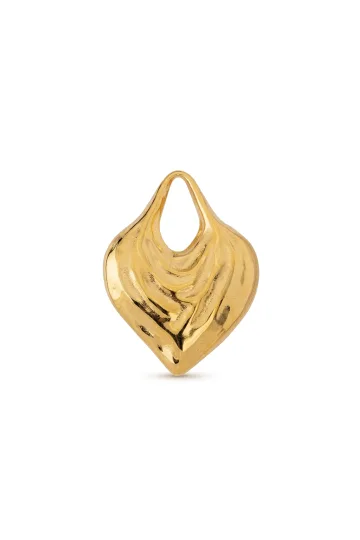
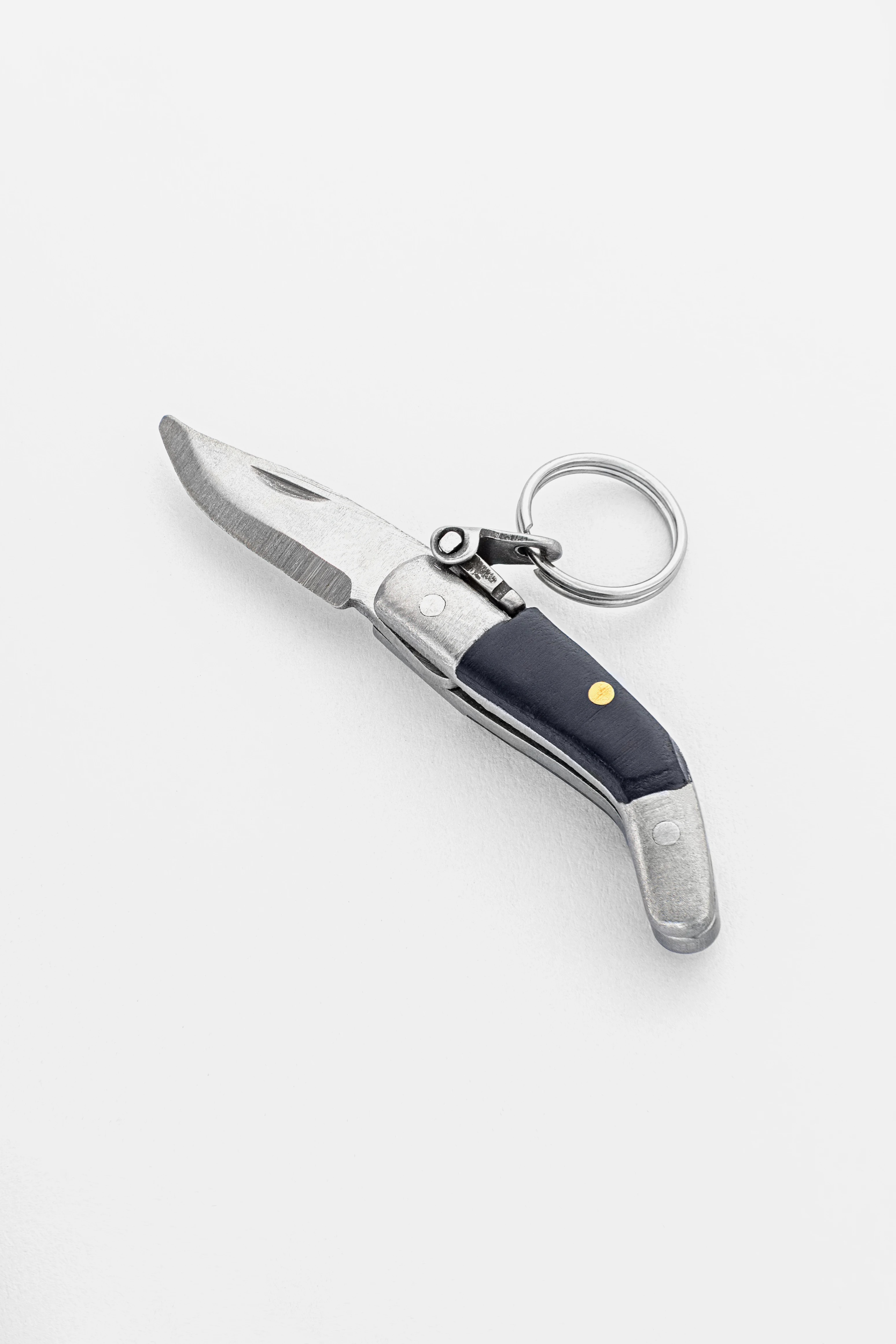
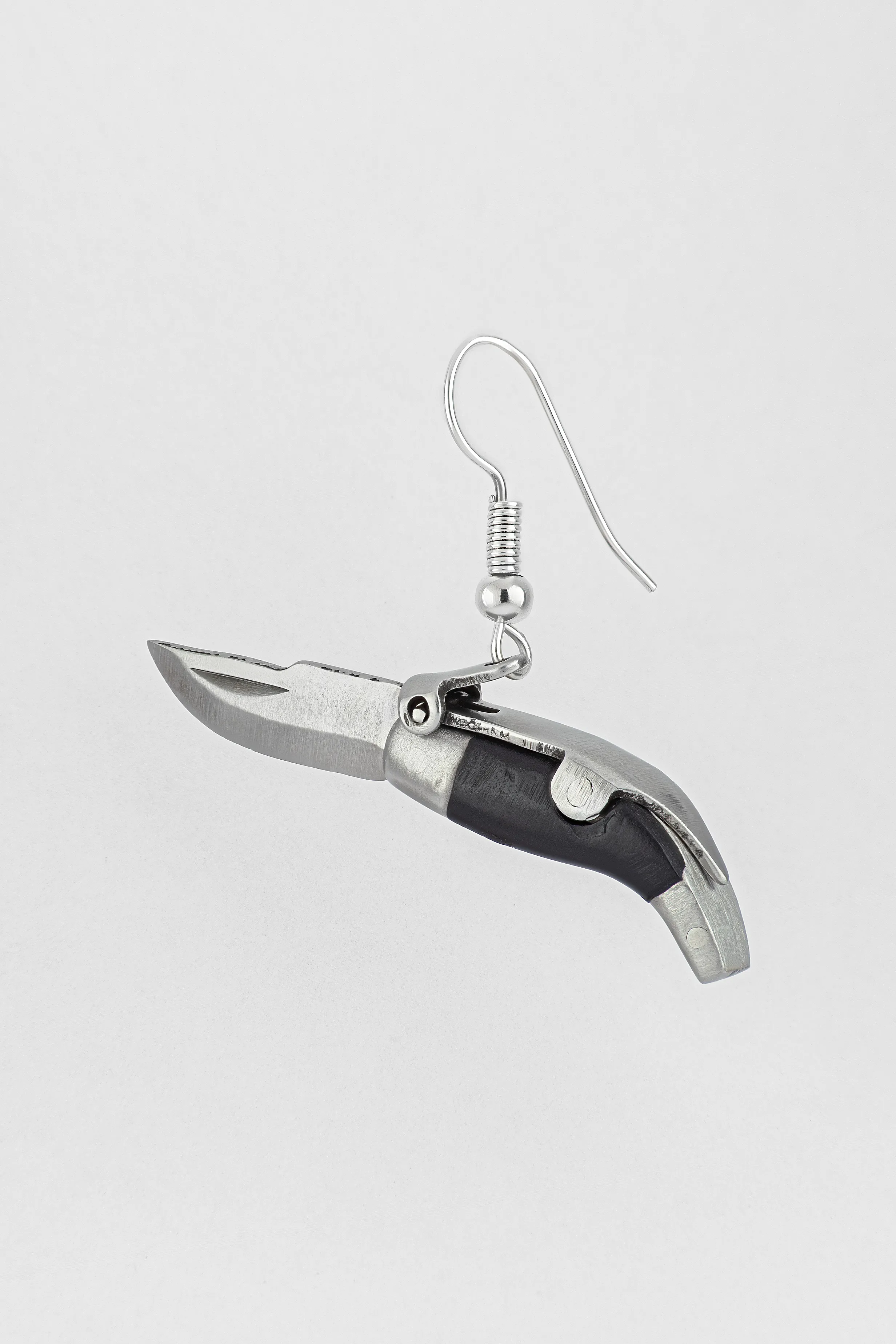
Related jewelry on this topic, available in our shop
Engraving a working ring: materials and durability
Laser on titanium lasts 50+ years
Laser engraving on titanium is done with a focused beam that burns micro-grooves into the metal. A depth of 0.1 to 0.3 mm gives a clear image of letters, numbers and symbols. The surface around the engraving does not deform, the edge of the groove is clean. After the natural oxide film forms, the grooves darken against the metal and the contrast deepens over time.
The durability of laser engraving on titanium exceeds the lifespan of the ring itself. The grooves do not wear away with daily use. Even if the ring is worn for fifty years, the engraving stays legible. That is critical for inscriptions meant to outlive both the wearer and the ring's passage to the next generation.
What gets engraved on titanium. The wedding date. A partner's initials. The coordinates of the place of the proposal. The coordinates of a hospital (for surgeons and medical staff). The coordinates of the first building built (for builders). The coordinates of a first posting (for officers). A short phrase in Latin or one's own language.
Technically you can engrave the outside of titanium too. Laser engraving on the matte outer surface looks like a fine dark pattern. It does not wear off over time. That makes a visible engraving possible, unlike gold rings, where an outer engraving wears away within a year.
Hand engraving on low-carat gold fades within 10 years of heavy wear
Hand engraving with a graver on gold remains the standard method for classic wedding rings. The jeweller cuts the lines by hand or with an engraving machine. On soft low-carat gold the graver leaves a clear mark, but with daily contact with surfaces the lines wear down.
In ordinary office wear, an engraving on the inside of a low-carat gold ring lasts 20 to 30 years before noticeable wear. With physical work the same span shrinks to 5 to 10 years. The inner surface of a ring on a working hand rubs against the finger more actively than on a quiet one.
Laser on gold gives a more durable result than the graver, but loses to laser on titanium. Gold is softer, and the engraving gradually wears even from inner contact with the skin.
The practical conclusion: if an engraving on a wedding ring carries meaning you want to keep for decades, the best solution is laser on titanium. If the engraving is traditional and aesthetic value matters more than durability, the graver on gold does the job for the non-working gold ring that comes off for the shift.
Inner-surface engraving as the universal classic
On any material, the inner surface of the band stays the place where engraving survives longest. The inner surface touches the skin of the finger but not the outside world. No scratches from the desk, the tool, the dishes. The inner engraving outlives the polishing of the outer surface, a repair, a resizing.
What fits inside a standard 4 to 6 mm band by inner diameter: 15 to 25 characters in a fine font for sizes 18 to 22. Enough for a date in figures (8 characters), initials (2 to 5 characters), a short phrase up to 15 to 20 characters.
What does not fit: long phrases, verse, full dedications. For those you need bands wider than 8 mm, or engraving in two lines. Technically possible, but aesthetically overloaded.
A recommendation for a paired set: identical engraving inside both rings (the gold and the working one). For example, the wedding date in figures in both. It ties the rings together as part of one meaning regardless of material.
Relief on silicone, cast into the mould
On silicone, classic engraving does not work: the material is soft, and any recess gradually blurs under wear. The fix: relief text moulded in. Makers who produce silicone rings to order add raised text directly into the mould. It is not engraving of metal but raised or recessed text built into the structure of the ring.
The relief holds for the whole life of the item (2 to 4 years). When the ring is replaced, the relief is repeated in the new mould. Options are usually short initials (A+M), a date in figures, a short word. Longer text is harder to execute technically.
What you cannot engrave on tungsten and ceramic
Tungsten does not take standard hand engraving: its hardness will not let a graver through the surface. Laser engraving of tungsten is technically possible on special equipment but gives limited contrast. The depth is minimal, so personal inscriptions on tungsten are rare.
Ceramic takes laser engraving better than tungsten but needs precise settings. Most jewellery workshops do not offer this service; you have to find specialists.
The practical conclusion: if engraving matters to a couple as part of the symbol, the choice of material for the working ring shifts towards titanium or silicone with relief. Tungsten and ceramic remain options without personalisation.
Thirty wedding-ring gift ideas by trade, character and budget
Below are thirty concrete options for working wedding rings along three axes: trade, the wearer's character, budget.
By trade
High-grade electrician: matte black zirconia ceramic, 7 mm. A full dielectric. Safe on shift with boards and lines. Laser engraving of a favourite place's coordinates inside the band.
General surgeon: smooth matte Grade 5 titanium, 5 to 6 mm, no stones, no cut, rounded inner edge. The glove goes on without trouble. Hospital coordinates engraved inside.
Head chef: black zirconia ceramic, 6 mm. Off entirely on shift by hygiene rules, worn constantly off the clock. Fears no kitchen chemistry.
Career serviceman: matte black palladium, 6 to 7 mm. No shine, no ring on the detector, no snagging on kit. A dress option for time with family.
Special forces: dark green or black silicone, 7 mm for field deployments. Black palladium for dress uniform.
Car mechanic: black silicone, 7 mm with a spare set. A matte 6 mm gold dress ring for off-hours, not distracting from the professional look.
Plumber: black silicone, 7 mm or polished 316L steel, 5 mm. Steel does not tarnish from water and detergents.
Welder: dark, dense silicone, 8 mm. Does not heat up from the radiant heat of the arc.
Bricklayer: matte tungsten, 7 mm with the coordinates of the first building built engraved.
Joiner and carpenter: polished tungsten, 6 to 7 mm. Holds its shine against woodworking abrasion.
Ventilation fitter at height: matte Grade 5 titanium, 6 mm. Light, strong, does not shatter against the profile on impact.
Roofer: black silicone, 7 mm. On a pitched roof the fall risk remains; a metal conductor is dangerous near overhead lines.
Firefighter: heat-resistant black silicone, 7 mm. Does not heat up, does not pass heat to the skin.
Rescue worker: dark silicone, 6 mm with size fixing. As an extra: a ring on a cord inside the uniform for ceremonial shifts.
Military pilot: matte Grade 5 titanium, 5 mm. Light, no shine, does not interfere with instrument work.
Professional team-sport athlete: thin silicone, 4 mm. Minimal profile, unfelt on a ball or bar grip.
Strength coach: silicone, 5 mm with initials in cast relief.
Chemistry lab technician: zirconia ceramic, 6 mm. Full inertness to most reagents.
Scientist regularly in protective kit: Grade 5 titanium, 5 mm. Compatible with most gloves.
Dentist: smooth Grade 5 titanium, 5 mm with a rounded inner edge. Gloves go on easily.
By character
The minimalist: a smooth titanium band with no decor, no stones, no cut. 4 to 5 mm wide, matte surface. Draws no attention, reads as a professional choice.
The aesthete and decorator: black palladium with a fine polished line down the centre or with engraving on the outer surface. Visible decor, but not shiny gold.
The techie who values materials science: Grade 23 ELI titanium with the chemical formula Ti-6Al-4V laser-engraved inside. A technical cipher only the knowing will read.
The traditionalist forced to work with his hands: a two-part set: gold for non-working days with a traditional engraving, and black silicone for the shift.
The man with tattoos and an active subculture: black ceramic, 7 mm with the coordinates of a meaningful place laser-engraved on the outer surface.
The lover of vintage aesthetics: Grade 5 titanium with an aged finish, anodised to a brown-gold tone. The look of antique metal, modern strength.
The neat conservative: black palladium, 5 to 6 mm with a very fine polish on the outer edge. Restrained, no shine, reads as a fully deliberate choice.
By budget
Affordable tier: a matte black silicone ring, 7 mm. Planned replacement every 2 to 4 years. The lowest total cost over 10 years of any option.
Mid-range: black zirconia ceramic, 6 to 7 mm. Bought once, worn for years. The cost is many times lower than palladium and platinum for a comparable visual effect.
Premium: matte black palladium, 6 to 7 mm with laser engraving inside. An investment material: it does not tarnish, does not go out of fashion, reads as a status choice. Alternative: Grade 23 titanium with a premium finish and multi-layer anodising.
Customer reviews
Zevira is a real jewellery shop. Genuine payments, deliveries and customer thank-yous.
🥰🥰🥰 gracias
Ok, ¡gracias! 🙂
Five detailed cases
Case 1: General surgeon, city hospital
Profile. A man of 38, a general surgeon in a hospital with a heavy flow of emergencies. He works in gloves 6 to 10 hours a day. Before the wedding he wore a gold ring as a trial: within a month he gave up, the glove kept catching on the setting, and in theatre the ring came off 4 to 5 times a day and went into the locker.
Solution. A smooth matte Grade 5 titanium band, 5 mm, rounded on both edges. A brushed, unpolished surface. Sized with 0.5 to spare for fingers that swell after long shifts. Laser engraving of the hospital coordinates on the inner surface: latitude and longitude in decimal degrees, no words. The dots in the coordinates encode the place.
Effect. On shift the ring stays on with an ordinary glove. For especially demanding operations it comes off only under the sterilisation protocol (not because of the ring as such, but under the general rule of bare hands in a sterile field). The engraved hospital coordinates became a personal symbol only the surgeon sees. His wife knows of the engraving and treats it as part of her husband's professional identity.
After two years in titanium: not a single scratch visible to the naked eye, not one episode of catching on a glove. At weekends an extra gold ring goes on for formal events, but that is rare: the main symbol is titanium.
Case 2: Fine-dining head chef
Profile. A man of 44, head chef at a fine-dining restaurant focused on modern signature cooking. The face of the restaurant, a known name, frequent tastings and gastronomic events. On the main line he works 6 to 7 hours a day on average; the rest is tastings, supplier meetings, menu development, press shoots. His wife works in the same industry and understands kitchen ethics.
Solution. Matte black zirconia ceramic, 6 mm. His wife's initials laser-engraved on the inside. On the main line it comes off entirely (the kitchen's hygiene rules) and lives in a locked cell of the dressing room. After the shift it goes back on and is worn through all the off-hours: tastings, meetings, media, home.
Effect. Black ceramic reads as part of the professional style: black uniform, a minimalist accessory, none of the bright shine of gold that would compete with the plating on the plate. On press shoots the ring does not distract from the food. Suppliers and colleagues read it as a deliberate choice, not a cheap substitute for gold.
An extra detail. For formal events outside the restaurant (friends' weddings, relatives' anniversaries, festive receptions) there is a second ring: 18-carat gold with a traditional engraving of the date inside. It goes on two or three times a year. It lives in a bank vault with other valuables.
Case 3: High-voltage linesman, foreman
Profile. A man of 41, foreman of a crew maintaining overhead high-voltage lines at 110 to 220 kV. Work on pylons, under live conditions (with additional protective equipment), in any weather. Before a shift, any metal jewellery comes off as the regulations require. Before the wedding he wore a gold ring off the clock; on shift he always took it off and forgot it in the changing room.
Combined solution. On shift: black matte medical silicone, 7 mm, a full dielectric. A spare set (2 rings) in the rucksack. For dress events: matte black palladium, 6 mm with the wedding date engraved inside. Palladium was a conscious choice: it looks like a precious metal (because it is one), but it does not shine like polished gold and draws no attention at gatherings of the work crew.
Effect. On the pylon the ring is always on the finger: silicone is a dielectric, no risk of a short through the jewellery. The psychological effect for the foreman: no more switching between "on shift without a ring" and "off shift with a ring", it is one and the same symbol in one form. On leave or among old college friends he wears the black palladium. The silicone then lives on a chain inside the shirt as a spare.
His wife knows both systems. Together they chose both rings: the silicone set and the dress palladium. A third ring, a classic gold one, lives at home and goes on once a year for the anniversary.
Case 4: Soldier, tactical unit
Profile. A man of 32, a contract soldier in a special unit. Long field deployments (3 to 6 months), work in small groups. Total dependence on kit: straps, buckles, carabiners on safety systems, weapons, night optics, radio. Anything that gives away a position is unacceptable.
Solution. Matte black palladium, 6 mm. A black matte finish through carbon ion implantation. Laser engraving of the latitude and longitude of his first posting on the inside (a symbol of the start of service).
Effect. No shine in sunlight, no signal to night optics, no ringing on most metal detectors (palladium has relatively low conductivity compared with classic jewellery). Handling a weapon, it does not snag on the pistol grip or the rifle handguard. Working with kit, it does not catch on buckles and carabiners.
On long field deployments he additionally wears a dark green silicone ring, 7 mm, as a stand-in for the palladium: palladium is a precious metal and can be lost in the field, while silicone is easily replaced. The palladium stays with his wife until he returns.
His wife knows of the two rings. Coming back from deployment begins with him changing into civilian clothes and putting on the palladium ring. Taking off the silicone and putting on the palladium, he draws the line between service and home.
Case 5: Bricklayer with his own crew
Profile. A man of 47, a bricklayer with 25 years' experience, and for the last 10 years the owner of a small crew doing cladding and exterior masonry. Work in any weather, constant contact with mortar (fresh mortar at pH 12 to 13), brick, sand, abrasive mixes. Until 35 he wore a low-carat gold ring that, after 12 years of work, had become a matte patch of uneven colour.
Solution. Polished tungsten, 7 mm. The coordinates of the first building built engraved inside. The crew's first project, built from foundation to roof on their own. The bricklayer remembers that site for life; the coordinates are engraved as the personal code of the trade.
Effect. Tungsten does not scratch against brick, cement or sand. The polish holds through years of work. Mortar does not react with tungsten; the ring rinses under water and shines like new. Tungsten withstands knocks against metal tools; a bricklayer on the ground has less risk of a hard impact fall than a fitter at height.
His wife sees that her husband comes home with the same ring he left in. Before, the gold grew duller year by year and she worried each time. Now her feeling about the ring is calm: the tungsten has survived three years of active work with no sign of wear.
There is a dress gold ring; it lives at home and goes on for anniversaries and festive dinners. Its engraving is traditional: the wedding date. The tungsten ring carries the coordinates of a professional identity. Two different meanings in one system.
What to wear with a working wedding ring
A working ring lives on the shift, and the look around it is built differently from the look around dress gold. What matters here is not the setting or the shine but how material and colour read in clothing and in the context of the day.
Everyday city look. Black silicone or a black ceramic surface goes with almost anything: jeans, a henley, a heavy tee, a bomber, a work jacket. A dark matte band does not argue with the clothes; it dissolves into them, like a dark watch on a leather strap. A simple rule applies: if the wardrobe runs to muted tones (khaki, grey, navy, black), matte black or anthracite metal sits cleanly. Glossy gold in such a wardrobe looks foreign, like a festive detail in the wrong day.
Office and meetings. If after the shift a man changes into a shirt and jacket, titanium or black palladium works as a restrained accessory at business level. A rolled cuff, an open wrist, a simple watch on steel or leather, and a matte band matching the case: the set reads as a whole. A note on metals: keep the ring and watch at the same colour temperature. A warm watch case pulls towards lightly anodised titanium, a cool steel one towards palladium or brushed titanium.
Evening and the special occasion. Here dress gold comes in, or palladium with a fine polished line. A dark shirt, an open collar, a ring with a little more visual weight. For a celebration, the gold band on the hand brings back the classic that the second symbol exists for.
Who it suits. The minimalist in a monochrome wardrobe is perfectly served by a smooth matte titanium band, 4 to 5 mm: zero decor, maximum character. The man with tattooed hands finds black ceramic or palladium fits the graphic of the skin, while yellow gold gets lost against it. One practical note on width: the more active the gestures and the larger the hand in conversation, the calmer a narrow 5 to 6 mm band looks, rather than a wide one that turns the hand into a billboard.
Turn on your camera, pick earrings, a pendant or a ring, and see the piece on yourself in real time.
Switch items in one tap.
Everything runs in your browser: no photo or video is ever uploaded.
Anti-patterns: what does not work and why
These mistakes repeat over and over, and each costs money, nerves, or a finger. Let us take them in turn: what does not work for a man who works with his hands, and what to replace it with.
Cheap low-carat gold for an active husband
The most common anti-pattern. The wife buys a gold wedding band on a budget and chooses low-carat as the most common. The husband works with his hands. Within five years the gold looks worse than the day it was bought: the alloy (copper and silver in the mix) reacts with sweat and abrasives, the surface darkens unevenly, deep scratches appear.
The cost of re-polishing a gold ring every 2 to 3 years under active wear far exceeds the cost of one silicone ring over 4 years. Over 15 years the total spend on keeping low-carat gold looking decent rivals the cost of a Grade 5 titanium ring with laser engraving plus five silicone rings for the shift.
The fix: either drop low-carat gold for higher-carat (which wears more slowly at work) and wear it only off the clock, or buy a working ring from the start in addition to the dress one.
A stone-set ring for someone working with his hands
A stone in a setting on a working ring falls out faster than most people expect. With active hand work the stone risks loss in the first months of wear, and the more contact with tools and surfaces, the higher the risk. The claws of a prong setting catch on tools and gloves, gradually bend back, and the stone drops out.
A bezel setting (a rim around the stone) holds better than prongs, but mortar and gritty abrasion still wear away the edge of metal around the stone over time. On site or in mechanics, a stone in any setting remains a risk factor.
The fix: a stone is not needed in a wedding ring for a man who works with his hands. If an accent is wanted, engraving or an inlay of another metal gives a visual effect without the risk of loss. More on setting types and which is best for an active life: a guide to ring setting types.
A diamond on a man's working ring
A separate anti-pattern that needs explaining. A diamond, at hardness 10 on Mohs, is the hardest of the precious stones. That means in a ring it will scratch everything it touches. A diamond scratches other metals, watch glass, a phone screen, worktop surfaces.
If a man works with his hands, the ring is in constant contact with tools. A diamond will leave marks on a spanner handle, on the metal of a hammer, on the plastic of a car dashboard. It is no catastrophe, but it is pointless: a man will not weep over the first mark on a hammer, but the aesthetic of the diamond loses its meaning in this context.
In addition: a diamond is itself vulnerable to impact. Hardness is not the same as toughness. Under a hard blow on a sharp facet a diamond can chip. On physical work the risk of such blows is high.
The fix: a diamond for the dress gold ring worn off the clock. For the working ring, no stones.
No spare silicone for sport and the shower
The anti-pattern of the couple who bought a working ring in titanium or ceramic but made no provision for a spare for sport and the shower. In training or a hot shower a smooth metal ring slides on a wet bar or wet skin. The grip on the surface is weaker than with silicone: a risk of dropping and losing it.
The ring comes off before the shower and goes into a robe pocket. A week later the robe goes in the wash and the ring turns up in the machine. Two weeks later it is not found at all: fallen off a shelf into the sink or gone down the shower drain.
The fix: a working ring must have a silicone spare. Training, the shower, the pool, the sauna, the sea. Any environment with a lot of water is one where metal slips off or gets forgotten. Silicone does not slip, and losing it is no worry (it costs next to nothing relative to metal).
Too thick a band for slim fingers
The anti-pattern of proportion. A 9 to 10 mm band on a finger 18 to 20 mm wide looks massive and sits uncomfortably. On a working hand a wide band creates an extra contact zone with the tool: a spanner handle presses on the wide metal around the finger, and chronic joint soreness develops.
The fix: for most men's hands, 5 to 7 mm is the optimal width. 8 mm suits large hands with wide fingers (size 22 and up). 9 to 10 mm is only for very large hands and is more decorative than functional.
A shared ring with no size allowance
The anti-pattern of morning sizing. The ring is fitted in the morning in the shop, when the finger is slim after a night's rest. By the end of the working day the finger has swollen by 0.5 to 1 mm in circumference. The ring that fit perfectly in the morning pinches by evening, leaves marks, gets in the way.
The fix: a ring for a working hand is sized at the end of the working day or after light physical activity. Allow 0.5 of a size for metal rings, up to a full size for silicone. The resistance of silicone is lower, so a small allowance will not let it slip off.
Care and replacement
When to replace a silicone ring: the signs of wear
Medical-grade silicone with daily wear lasts 2 to 4 years. The exact span depends on the frequency of contact with oils, ultraviolet and temperature.
Signs it is time. First: visible deformation. The ring has stopped being round, starts twisting or flattening to one side. That means the silicone has lost elasticity in some segments. You can wear it another month or two, but the risk of a tear at a bad moment rises.
Second: cracks on the surface. Silicone should have no visible cracking lines. If they appear (usually on the inside in the zone of constant contact with the finger), the ring is near the end of its life.
Third: smell. Quality silicone has no smell beyond the faint "new material" note in the first weeks. If the ring starts to smell of a persistent chemical or biological note, replacement is essential.
Fourth: colour. Silicone fades gradually under ultraviolet. Matte black turns dark grey. Grey turns light grey. If the colour has visibly gone, the ring is living out its time.
Planned replacement. Check every six months to a year. Full replacement every 2 to 4 years. Cheaper than a single polish of a metal ring. For sport, the shower and the pool, a separate set that is replaced more often, because chlorinated water speeds up the ageing of silicone.
How to clean a ceramic ring
Zirconia ceramic does not react with most household substances. Care is minimal.
Standard cleaning. Warm soapy water with no abrasives. A soft-bristled toothbrush for the grooves of the engraving. Rinse under running water. Dry with a lint-free cloth.
For heavy soiling (paint, mortar, resin). Soak in warm soapy water for 10 to 15 minutes. Then mechanical cleaning with a brush. Do not use metal scrapers or hard abrasives: ceramic resists scratches, but strong chemical solvents (acetone in high concentrations, for example) can damage laser engraving if it was black with extra processing.
What to avoid: ultrasonic cleaning. Although the ceramic itself withstands ultrasound, cheap ultrasonic baths can cause micro-cracks in a non-uniform structure. Professional ultrasonic cleaning at a jeweller is fine.
Storage. In a separate cell of a soft box. Ceramic is hard, but a knock against another ceramic or metal item can chip it.
Repairing titanium at a specialist workshop
Titanium does not work in an ordinary jewellery workshop used to gold and silver. The melting point of titanium is 1,668 degrees Celsius (gold melts at 1,064, silver at 962). Standard jeweller's torches do not reach the needed temperature. In addition, titanium oxidises in air at high temperatures, and soldering needs argon shielding.
What is usually needed from a repair. Resizing (increasing or reducing the ring's diameter). Polishing after scratches. Restoring the matte surface. Adding engraving or restoring existing engraving.
Where to find a specialist. Specialist jewellery ateliers working with titanium, platinum and palladium. Aerospace workshops (a niche segment) also take orders. Cheap gold-and-silver workshops are best avoided: they may ruin the ring without warning.
Resizing titanium. Possible within 0.5 to 1 size in either direction. Beyond that range it is better to make a new ring. The structure of titanium does not allow metal to be added or removed easily, as it can with gold.
What to do if the ring is stuck on a swollen finger
The scenario. The finger swells from an injury, a burn, an allergic reaction, prolonged physical load. The metal ring has tightened to visible constriction. Circulation is impaired, the finger goes blue, sensation drops.
Step 1. Raise the hand above heart level for 5 to 7 minutes. This reduces swelling through venous return. If the swelling has only just begun, this may be enough to remove the ring the usual way.
Step 2. Coat the finger with a rich cream, petroleum jelly, soap, olive oil or just ordinary kitchen oil. Any slippery medium lowers friction between skin and metal. Try to remove it with slow rotating movements.
Step 3. The string method. A thread or dental floss is fed under the ring from the palm side. One end is left long on the palm side, the other is wound round the finger above the ring towards the nail, turn by turn, tightly. When the winding reaches the nail, the end fed under the ring is unwound towards the nail. The ring advances with the unwinding thread, sliding over the tight layer of winding.
Step 4. Ice cooling. If the above did not help, wrap the finger in ice or a cold compress for 5 to 10 minutes. Cold constricts the vessels, the swelling temporarily reduces. After removing the ice, quickly try to slide the ring off.
Step 5. Emergency services and the jeweller. If nothing helped, do not wait. Swelling rises fast after an injury, and within hours a more complex procedure may be needed. At A&E the ring is cut off with a special tool (a ring cutter). Metal rings (gold, silver, steel, titanium) cut off in 1 to 2 minutes. Tungsten and ceramic cannot be cut and have to be cracked. A jeweller with a special cutter works more carefully than A&E, but you still have to get there, which is unacceptable with severe swelling.
Prevention. A ring sized with 0.5 to spare. A silicone ring in principle needs no removal on swelling: it stretches and does not constrict the finger.
Caring for the gold ring in a paired system
A gold ring worn only off the clock needs minimal care. Two or three times a year: a soft toothbrush, warm water with a little non-abrasive soap. After rinsing, dry with a soft cloth.
Every 3 to 5 years: professional polishing at a jeweller. It restores the shine and lets you check for hidden damage.
Storage: in a separate section of a box, so it does not touch other jewellery. Gold is soft and scratches against hard items nearby.
Inner engraving: needs no special care. Text inside the band does not wear away with ordinary careful wear.
Caring for a palladium ring
Palladium does not tarnish from sweat or react with most household substances. The black coating, via PVD or ion implantation, is durable but not eternal: under very strong abrasion (constant work with sandpaper, say) the coating can gradually wear. For everyday wear this is invisible for years.
Cleaning: a soft cloth, a soapy wash every few months. Do not use abrasive metal pastes on the black surface: they can leave shiny dots on the matte coating.
Restoring the coating. If the black matte palladium loses its tone (relevant after 7 to 10 years of very active wear), a specialist workshop can renew the coating. The cost is well below that of a new ring.
Leave your email, we'll send your discount code. No spam, unsubscribe anytime.
The code arrives by email, valid on your first order.
Paired rings for a couple where one partner works with their hands
The general principle: she wears the classic, he the functional
The base model of the paired strategy. The wife works in an office, a school, a GP's room, or as a nurse without theatre, or remotely. She wears a classic gold or platinum ring constantly, without taking it off. The aesthetic of the wedding craft in her life does not conflict with the work.
The husband works with his hands. An electrician, a fitter, a chef, a serviceman, an ambulance paramedic. He wears the working ring on shift (silicone, titanium, ceramic, palladium) and the gold one off the clock. Both partners accept this system as deliberate, not as a compromise.
The stylistic link. Identical engraving inside both partners' gold rings (the wedding date, initials, coordinates). On the husband's working ring you can repeat just the initials or the date in figures where possible (titanium and ceramic support it, silicone through cast relief).
The colour link. If she wears yellow gold, he wears gold of the same tone at weekends. If white gold or platinum, then he wears white gold or platinum at weekends. The husband's working ring is a separate category whose colour need not match the woman's.
The alternative model: both partners wear the functional
Less common but logically whole. Both partners work physically with their hands. The wife a nurse or doctor, the husband a fitter. Both agree the wedding ring should be a working one, not a dress piece.
In this case. At the ceremony the exchange is of a pair of working rings (silicone or titanium in black or white matte). These rings become the everyday symbol. Dress gold rings are either not bought at all, or acquired later as a separate set for formal events.
The aesthetic. Both partners in matte titanium rings with identical engraving create a visually unified set. It looks whole and considered, especially in circles of professionals where both partners do physical work.
The third model: she wears the man's functional
Rarer, but it exists. The wife works with her hands as much as the husband or more. A surgeon, a dental hygienist, a vet, a landscape architect, a sculptor. Her wedding ring at work faces the same loads as a man's.
In this case both partners wear titanium, ceramic or silicone daily. Dress rings are a separate set or absent.
Engraving can be mutually complementary: her ring carries his initials, his ring carries hers. This is a common practice in couples where both work actively and see the wedding ring as part of functional kit.
How to discuss the paired strategy before the wedding
The best moment for the conversation: the stage of choosing rings, not after the ceremony. Many couples come to the jeweller with a ready idea to "buy two identical gold ones". Five years on, one partner (the one who works with their hands) stops wearing their ring, which leads to conversations and interpretations that could have been avoided.
A talking algorithm. Step 1: both partners describe their work. What the hands do through the day. What risks are possible (machinery, electricity, chemicals, abrasion, contact). Step 2: an estimate of how often the ring will be removed. If the answer is "every working day", that is a signal for the paired strategy. Step 3: choosing the materials for the working ring together. Not the husband buying silicone alone after the wedding, but both partners choosing together.
The effect of choosing together. The wife sees the working ring as part of a shared symbol she helped choose. When she sees her husband on the job in silicone or titanium, the ring reads not as a substitute for gold but as a continuation of the system they built together.
Many couples turn the choice of the working ring into a separate outing. They buy it together after the ceremony. It becomes a second jewellery trip that gives the working ring a personal weight.
The psychological aspect of the paired strategy
Many couples worry whether the working ring will be seen as "not real". Practice shows the opposite. A man who puts on a silicone ring every morning before a shift performs a deliberate act. It is not the reflex of a gold ring put on once and never removed. It is a choice repeated daily.
Several couples moving to the paired strategy note the same effect: putting the gold ring back on at the weekend becomes a small ritual. "You put the ring on" turns from an observation into a moment of attention. A symbol that can be seen and taken off proves more deliberate than one worn constantly and ceasing to be noticed.
Children in the family read this system intuitively. A simple explanation, "this one is for work, this one is for celebrations", works with children from four. Children grasp the split through the analogy of their own clothes: work clothes and party clothes.
More on paired jewellery in the hub article wedding rings: the complete guide.
FAQ
A mechanic's wedding ring: what to choose?
A matte black 7 to 8 mm silicone for the shift. Gold of any carat, 14 to 18K, at weekends. Do not wear gold at the lathe: turning, milling and drilling, with rotational forces many times the strength of finger tissue, remain a classic avulsion risk zone. A spare set of silicone rings in the locker to replace a torn one.
Is it embarrassing to wear a silicone ring?
It is not. Among men with a considered approach to their work, the silicone ring has been the norm since 2018 to 2020. The armies of the US and UK, firefighters in most Western countries, professional athletes, chefs, high-grade electricians: for them silicone is standard. Perception is more conservative in some places, but the change is moving the same way.
What looks cheap is a worn, deformed ring of poor silicone worn for a year without replacement. Quality medical silicone with good vulcanisation holds its shape for 2 to 4 years, looks restrained and reads as a professional choice. When colleagues understand the context, a ring in black matte silicone works as a marker that "this person takes the job seriously", not as a marker that "this person has a cheap ring".
Is tungsten brittle, is it true?
Partly true. Tungsten is hard (8 to 8.5 on Mohs) but not tough. Under a sharp blow against a hard surface (concrete, metal) the ring can shatter. It happens, but not every day: shattering needs a serious blow, not a scratch.
This counts as a safety plus: on a snag, tungsten bursts rather than stretching the hand. The downside: the ring is lost. So tungsten does not suit trades with high impact loads (working at height, roofing, rigging).
In ordinary work with wood, paint, plaster and household tools without heavy blows, tungsten lasts for years without breaking.
Titanium and allergy: is it real?
Pure titanium (Grade 2) and the medical alloy Grade 23 (Ti-6Al-4V ELI) show zero allergic reactions in the medical literature. They are implanted in bone, in jaws, in vessels, with no reaction. Aerospace Grade 5 (Ti-6Al-4V) does in theory contain aluminium and vanadium, to which rare people may react, but in a metal ring these elements are bound with the titanium and do not leach into the skin. For all practical purposes titanium is hypoallergenic.
If a person has a jewellery allergy, it is almost always nickel (found in cheap gold, in steel, in brass). Titanium contains no nickel. That is exactly why titanium suits people with a nickel allergy.
A set of rings for work and dress: how to organise it?
The base system: one working ring on the finger (silicone or titanium), one dress ring in the box at home. The working one is replaced by wear (silicone every 2 to 4 years, titanium practically never). The dress gold one lasts decades.
The extended system. Two working rings (one on the finger, one in the locker at work for emergency replacement). One everyday non-working ring (metal, say ceramic or palladium for after the shift). One dress gold for formal events.
Storage. All non-working rings in one box at home, in the same place. Spare working rings in the changing room at work (for silicone) or in the wardrobe with the work clothes (for titanium).
Does work temperature affect finger size?
Yes, significantly. Heat expands tissue: on a hot day or after physical effort the finger is 0.5 to 1 mm larger in volume than in the morning at rest. A ring fitted in the morning on an empty stomach in a cool shop can sit tighter by the end of the working shift.
For metal rings: size at the end of the working day or after light activity. For silicone: elasticity compensates for the swing, but a too-tight ring on swelling causes discomfort even in silicone.
An allowance of 0.5 a size for metal, up to a full size for silicone, is reasonable under active work.
Can you wear a tungsten ring in water?
Yes. Tungsten does not react with water, does not corrode, does not tarnish. However, tungsten's heat capacity is high; in very cold water (ice fishing, a cold dip) the ring can chill the finger for longer than silicone. It is not critical, but noticeable.
In hot water (sauna, steam room) the same in reverse: tungsten is slow to cool after heating. For the steam room, silicone is preferable.
Can a tungsten ring be soldered or repaired?
No, not in the traditional sense. Tungsten does not take soldering by standard jeweller's methods. If a tungsten ring cracks, it is not repaired but replaced whole.
Polishing tungsten is possible on special equipment at specialist workshops. Not every jeweller takes such work. Most couples whose tungsten ring has cracked order a new one of the same size and design.
Will a titanium ring suit an electrician?
For most electrical work with the power off: yes, far better than gold and steel. For live work or high-risk conditions: no, only silicone or ceramic (a full dielectric), or removal. Titanium is a metal, and in extreme conditions it still conducts, even if worse than gold.
How to choose ring width for hand work?
The narrower the better for active work. 4 to 5 mm in silicone is barely felt and ideal for sport. 6 to 7 mm is the gold standard for a man's ring, noticeable but not in the way. Wider than 8 mm is not needed for a working ring: more contact with surfaces, more friction.
For a dress gold ring the width can be greater (8 to 9 mm is considered a classic men's width), because it does not touch tools.
How long does a gold ring last without physical work?
Far longer than under active wear. 14K gold at 60 to 70 HV is scratched by quartz (700 HV) in any building or household dust. A ring in the office or at home does not meet such abrasives. The polish can hold for years with no visible change.
The average time to the first re-polish of a dress gold ring worn 30 to 50 days a year: 10 to 15 years. The average time to the first re-polish of gold on physical work: 6 to 12 months.
Engraving coordinates: how popular is it?
The practice has been gaining popularity since 2020. The coordinates of the place of the proposal, the wedding, the birth of a first child, a first trip together are engraved on the inner surface as technical data. No outsider sees them; the wearer knows.
For titanium and ceramic, coordinates are especially convenient: the laser makes them clear and durable. For gold, coordinates last 20 to 30 years in ordinary wear.
In men's rings, the coordinates of a professionally significant place are often engraved: a hospital (surgeon), a first posting (officer), the first building built (builder), a first professional win (athlete).
What to do with a gold wedding ring you have fallen out of love with wearing?
Do not throw it away. Keep it in the box, use it on formal occasions. Over time it can take on the status of a family heirloom: passed to the children as a symbol of the parents' marriage.
Alternative: melt it down and make a new piece to a design. A pendant, earrings, a new ring of a different shape. Family gold gets a second life.
A silicone ring for the sauna and steam room: will it hold?
Medical silicone withstands 150 to 200 degrees. A sauna runs at 80 to 100, a steam room at 60 to 80. Technically the ring survives, but elasticity temporarily drops with heat. Whether to take it off is a matter of preference. Many do not.
Diving into cold water after the steam, a silicone ring does not tarnish, does not react with water, does not lose its properties.
Does black palladium wear off over time?
The black coating through PVD or ion implantation is durable for years. In ordinary wear the coating holds 10 to 15 years with no noticeable wear. Under extreme abrasive conditions (constant work with sandpaper, emery) the coating can gradually wear, exposing the silvery-white palladium.
Restoring the coating is possible at a specialist workshop.
How to discuss the move to a working ring with your wife?
The base structure of the conversation. The situation: "At work I take the ring off every day and I am afraid of losing it." The facts: ring avulsion, occupational safety rules. The solution: "We need two rings, one working (silicone or titanium), one dress (gold). Let us choose the working one together."
What does not work: turning up in a silicone ring with no prior conversation. What works: choosing the working ring together a week or two after the conversation.
Can you wear a working ring in the first month after the wedding?
Technically yes. Emotionally it is better to wear gold the first month: the symbolic value of the recent ceremony works more strongly when the symbol is worn constantly. After the first month, switch to the paired strategy: gold off the clock, the working ring on shift. Many couples do exactly this.
Alternative: at the ceremony the exchange is of a pair of matte titanium rings, which are then worn daily. Gold rings as dress pieces are bought later or not at all. That is the solution for couples where both partners work with their hands.
What to tell a child about why Dad wears different rings?
"This is the work ring, it does not break from tools, and this is the celebration one Dad wears when we are together" works for children from four. Children accept the idea of two things for two situations through the analogy of clothing: work clothes and party clothes.
Do combined silicone-metal rings exist?
Yes. A silicone base with a thin metal inlay (titanium, stainless steel) on the outside. Silicone inside, a metal strip outside. The safety of silicone (it tears on a snag) plus the visual weight of metal outside.
It is a compromise product some men choose when they want a metal look at work but fear an avulsion. It works in most scenarios but not for an electrician on live work (the outer metal still conducts).
A ring on a cord as an alternative to silicone: does it work?
It works, but it has limits. A cord on the neck with a ring runs between body and clothing. On physical work the cord can snag on a piece of kit or a tool, and in rare cases creates a strangulation risk.
The safe version: a thin cord running inside the shirt, with no part hanging out. The ring rests against the breastbone. It suits a chef who cannot wear rings on the fingers by hygiene rules.
It does not suit a serviceman with tactical kit, an athlete in contact games, a fitter at height.
Less-discussed but real risk categories
The seven main risk categories are described above. There are several more situations that fall under "physical work" but get discussed less. They deserve a separate word, because for a particular man, underestimating such a risk turns into exactly the injury we are talking about.
Dentist and dental technician
At first glance a dentist's work does not belong to "physical labour". But on closer look the profession has several sources of risk for a classic wedding ring.
Gloves. A dentist works in gloves 6 to 8 hours a day. The glove is pulled over a hand with a ring, and any protruding detail (a stone, a prong claw, a roughly finished outer engraving) tears the latex or nitrile glove as it goes on. A torn glove breaks sterility. A dentist changes gloves many times a shift, and a ring with any decor becomes a factor that lengthens the procedure.
Sterility. Between the band and the skin a gap remains that is not rinsed by standard dental handwashing. Microorganisms accumulate there. In dentistry, with constant contact with a patient's body fluids, that is a potential route of cross-contamination.
Sharp instruments. A dentist works with burs at high speed (200,000 to 400,000 rpm in an air turbine). Although contact of the instrument with the ring is unlikely, in the tight space of a patient's mouth a ring on the doctor's finger can catch the edge of the handpiece and disturb the precision of the movement. Dentists with years of experience notice that a ring changes the familiar feel of the instrument in the fingers.
The fix. A smooth matte Grade 5 titanium band, 4 to 5 mm, rounded edges. Suitable for sterility, does not tear gloves, does not change the feel in the fingers. Engraving inside only. For complex procedures (surgery, implants) the ring comes off entirely under the sterilisation protocol.
Vet and veterinary technician
The work profile. Contact with animals that can move suddenly. A cat scratches the hand, a dog bites in a moment of panic, a horse jerks a hoof. A ring on a vet's finger catches on claws, teeth, the edge of a cage.
An added risk: a vet works with body fluids, disinfectant solutions, in gloves. Hygiene requirements similar to a dentist's apply.
A unique risk for the vet: working with large animals (horse, cow), the ring can catch on harness, bridle or collar. In calm conditions it is just an inconvenience; in a moment of the animal's panic it is an avulsion risk.
The fix. Matte black silicone, 6 to 7 mm. A spare set in the office. For especially complex handling (surgery, X-ray with restraint) it comes off entirely.
Musician on an instrument with active technique
The profile. Drummer, rock guitarist, pianist with active technique, cellist, double-bassist. Any instrument where technique involves active movement of fingers and hands.
The specific risk. Drummer: sweat, constant wrist movement, a stick can strike the ring on a ricochet. Guitarist: the string catches the ring on accented movements, the pick slips. Pianist: the width of the ring changes the feel of the keys, fine movements lose precision. Cellist and double-bassist: the bow catches the ring, vibration passes through the metal and throws off the attack of the note.
Musicians often describe a ring on the finger as "losing a thousand hours of trained reflexes". It is subjective but real at the level of a concert performer.
The fix. A thin titanium band, 3 to 4 mm, Grade 5, or silicone, 4 mm. A minimal profile that does not change the feel in the hand. For the classical stage: a gold ring in the dressing room, removed before going on.
Hairdresser and barber
The profile. Constant movement of scissors, clippers, comb. Contact with water, shampoos, dyes, perm chemicals. Many work 8 to 10 hours a day with short breaks.
The specific risk. The ring catching a lock of a client's hair mid-cut. It does not reach avulsion, but it creates discomfort for both sides. Constant contact with detergents and dyes: laminating compounds and hair dyes contain alkaline components that with daily contact can affect low-carat gold alloys.
An added risk: perm chemistry contains ammonium thioglycolate or other active reducing agents that can react with silver and low-carat gold, leaving marks of tarnish.
The fix. Silicone or 316L steel. 316L steel resists hairdressing chemicals; silicone is fully inert. For stylists with aesthetic ambitions (their own name in the trade, an active social-media presence): black zirconia ceramic.
Diver and underwater worker
The profile. Scuba diver, professional underwater engineer, shellfish diver, underwater construction specialist. Long contact with seawater, pressure changes, contact with kit.
The specific risk. Seawater contains chlorides and sulphates that react actively with silver and low-carat gold. Over a year of professional dives, low-carat gold darkens in the zone of skin contact. Sterling silver darkens within weeks.
Wetsuit gloves are pulled over a hand with a ring, raising the risk of a tear. A tear is critical in cold water: the suit must stay watertight.
Working with kit (cylinders, regulators, valves) the ring can catch on carabiners and buckles.
The fix. Grade 23 ELI titanium (the marine standard), 5 mm matte. Does not react with seawater, light, does not catch. Alternative: silicone, 6 mm for training dives, titanium for the main work.
Tailor and textile worker
The profile. At first glance not physical work. In fact: work with a needle, scissors, an iron, a sewing machine. Constant fine motor work, focus on a single point.
The specific risk. The ring catches on thread, on fabric, on the feed of the sewing machine. Thread winds round the ring, halting work. For a professional tailor that is lost working minutes, which over a day add up to tens of minutes.
The iron creates a heat risk for the metal. A burn under the ring from accidental contact with a hot surface.
The fix. Thin silicone, 4 to 5 mm, or a smooth titanium band, 4 mm. A minimal profile that does not catch thread.
Electronics and microchip assembler
The profile. Precise work with small components, soldering iron, hot-air station, antistatic equipment. Part of the work under a microscope or a magnifier.
The specific risk. An antistatic wrist strap works poorly if there is a metal ring on the fingers not connected to ground. A static charge can damage sensitive electronics.
Fine motor work: a wide ring hinders free finger movement. Work with tweezers and a soldering iron needs a precision the ring reduces.
Heat from the soldering iron: working at close range, a metal ring can heat from the radiation.
The fix. Thin silicone, 4 mm, or zirconia ceramic, 4 to 5 mm. Does not conduct static, does not hinder motor control.
Domestic risk: the ring in ordinary life, not at work
By the observation of hand surgeons, a large share of ring-avulsion cases happen not at work at all. They happen at home, in the garage, in the garden, during a hobby. This scenario deserves its own section, because a man who does not see himself as "working with his hands" can be in the same risk zone as a bricklayer.
A fall from a ladder at home
The most common domestic avulsion scenario: a fall from a ladder. The homeowner changes a bulb, cleans the windows, gets the Christmas decorations down from the loft. The stepladder wobbles, the person falls. The hand instinctively seeks support, catches the edge of a shelf, a ladder, a banister. The ring catches on an edge or a nail, the body keeps moving on momentum.
The best-known public cases happened exactly this way: a fall at home, the ring snagging on a worktop. Not at work, not on a site. In the kitchen.
The fix for the domestic scenario: either take the ring off during potentially dangerous chores (cleaning windows from a ladder, repairs up high), or keep a silicone "home" ring for active hobbies.
The garage and working on the car
Many men change the oil, the brake pads, the battery in their own garage. That is work with machinery, tools, potentially under the car on a lift or a ramp.
The scenario: the ring catches on the jack, a suspension arm, an engine mount. Raising or lowering the car gives force enough to deglove a finger.
An added risk: contact with the battery. A car battery gives current enough to heat a metal ring on a short across the terminals. If a hand with a ring accidentally touches two terminals, or a terminal and the body, the ring heats to burn temperature in a fraction of a second.
The fix: silicone or removing the ring before work in the garage. A silicone "garage" set lives on a shelf there and goes on before work.
Sporting hobbies: the pull-up bar, kettlebells, sawing wood
The home strength enthusiast, the wood-sawer with a chainsaw, the man building a sauna or a gazebo at the cottage. All these hobbies carry the same risks as professional work, only without a mandatory safety briefing.
A pull-up bar in the garage or outdoors: the same risks as in the gym (calluses, ring dermatitis, a knock against metal on a pull-up).
A chainsaw: a spinning chain, snag risk, kickback risk. A ring on the finger adds an extra point of contact.
Sawing wood by hand (a two-man saw, an axe): abrasion, blows, the risk of a dropped tool.
The fix: a silicone "hobby" set. One set for active leisure that you do not mind losing and that costs nothing to replace.
Hiking and camping
Long hikes in the mountains, camping, fishing overnight. Contact with nature, with ropes, knots, the fire, water. The ring can catch on a carabiner of a safety system, a knot on a rope, the guy lines of a tent.
In winter, cold metal sticks to the skin in hard frost. Silicone does not stick.
The fix: for a hike and camping, take off the gold or wear silicone.
Household chemicals and garden work
Household soaps, bleaches, soda-based cleaners, acidic solvents. Regular contact with aggressive household chemistry affects any metal, especially silver and low-carat gold.
Garden work: contact with soil, fertilisers, tools, abrasive wear. A ring in the garden scratches against a spade handle, a rake, secateurs.
The fix: take the ring off before cleaning and garden work, or keep a silicone one for these cases.
Cooking at home
Even home cooking creates risks for a classic wedding ring. Hot dishes, the knife, flour, dough, greasy food. Each of these on its own is small, but over decades of active cooking the metal wears.
An added aspect: hygiene. The ring holds residue of dough or grease that ends up in the next dish. For family use it is negligible, but if the homeowner regularly entertains or handles food for others, the hygiene factor already matters.
The fix: take the ring off before preparing food, or keep a silicone one for cooking. Many families end up with a separate "kitchen" ring.
The long view: a ring fifty years ahead
The guide is named that for a reason. The idea of fifty years' service is not a marketing slogan but a real time horizon for a couple married at 30. The ring has to work at 30, at 50, at 70, at 80. Each of those eras makes its own demands on material, shape and engraving.
0 to 10 years: forming the habit
The first decade of marriage. The ring is new, the symbolism fresh, the emotional bond strong. In these years the couple forms the habit of the paired strategy (if one partner has physical work) or of wearing one ring constantly.
What matters in these years. Finger size is stable, the ring sits perfectly. The engraving is fresh and legible. The material is in ideal condition.
A recommendation. Do not rush to replace the working ring: the first years help you understand which material really works in a particular life. If silicone was chosen first and after four years has proved itself, stay with it. If problems arose (an allergy to the formula, an awkward shape), change the material.
10 to 25 years: wear and upkeep
The middle decade. Finger size may change (body weight shifts; in men after 40 the fingers can grow a little thicker from reduced activity or, conversely, slimmer from sport).
What matters. Resizing the ring if needed. Polishing the gold dress ring every 5 to 10 years. Replacing silicone on schedule. A preventive check of stones (if any are on the dress ring).
A recommendation. By this age the paired strategy has become a habit. Many men who started at 30 with silicone, by 50 already see the working ring as the main symbol and the gold one as a rare festive accessory.
25 to 50 years: the move to heirloom status
The late period of marriage. The ring becomes part of family history. The gold dress ring begins to be seen as a legacy that will pass to the children. The working ring may change several times over these years (silicone served its term and was replaced; titanium resized or replaced; tungsten swapped for ceramic after leaving active physical work in retirement).
What matters. The engraving on the dress ring survives all these years and becomes a historical record.
A recommendation. Coordinates, dates, initials engraved in the ring become a family archive. If you want to add new elements to the engraving (the birth dates of children, say), this can be done at a jeweller with laser engraving, without damaging the old text.
50+ years: passing to the next generation
In the long run the wedding ring passes to the children. That rarely happens with silicone, which is replaced by wear, but always happens with gold, titanium or ceramic. The engraving inside becomes part of family history.
A recommendation. If it matters to a couple that the ring serves as a memory for descendants, it should carry an engraving that will stay legible in fifty years. On gold such an engraving is possible with careful wear. On titanium it is guaranteed to survive. On ceramic and palladium too.
A history of the men's wedding ring tradition
From ancient Egypt to the Second World War
The wedding ring as a symbol of union has existed for thousands of years. In ancient Egypt a ring of reed or papyrus was worn by women as a symbol of eternity (the shape of a circle with no beginning and no end). Gradually reed gave way to metal: silver in the Roman era, gold in medieval Europe. The ring became part of the Christian wedding ceremony in the fifth and sixth centuries AD.
Crucially: throughout that whole era the wedding ring was worn almost exclusively by women. A man might receive a ring as a sign of power (a signet ring), as a war trophy, as a mark of church office, but not as a symbol of marriage.
This began to change in Britain in the nineteenth century, when among the aristocracy a practice arose of exchanging rings to symbolise the equality of spouses in marriage. But it did not spread widely.
The turning point came during the Second World War. American soldiers heading to the front began to wear wedding rings as a reminder of their wives and as a way to be identified if they fell. After the war the practice became a cultural norm: veterans came home with rings, and the next generation adopted the men's wedding ring as standard.
By the 1960s in the US and Western Europe the men's wedding ring had become the norm; by the 1970s and 80s it spread across much of Europe. The whole tradition that today is taken for ancient is about 80 years old. By historical measures that is fairly recent.
How work has changed in 80 years
Physical work in 2026 is utterly different in its risks from the 1960s. The electrification of industry, mechanisation, work with chemical compounds, the rise of professional sport as a career, the growing complexity of construction technology, the arrival of high-voltage lines and complex electrical equipment in every home. The working person's hands now interact with objects our grandfathers never saw and could not have imagined.
Meanwhile the jewellery tradition has not changed. The gold ring is sold as a symbol worn always. Makers of metal rings have no interest in promoting silicone. The marketing stayed in the 1960s, while life moved on.
The result: men find the solution themselves, on their own initiative. One takes the ring off before the shift and pockets it. One buys silicone of his own accord. One leaves the gold at home and wears it only at weekends. All these solutions are right in essence; it is just that no one talks about them loudly enough in public.
Forum threads under a heading like "married men: how often do you wear your wedding ring" gather tens of thousands of votes precisely because they lift the taboo on the subject. It turned out thousands of married men do the same thing and thought they were the only ones. It is not a breaking of the norm. It is a norm found independently.
Men's jewellery in the twenty-first century
Beyond the wedding ring, men's jewellery in the twenty-first century has grown far more varied. Bracelets, chains, signet rings, earrings, pendants, accessory rings (not wedding ones). The wedding ring has ceased to be the only "permissible" men's jewellery.
In this context the paired strategy (gold plus working) reads as natural. A man can wear several pieces at once, and a wedding ring in titanium or silicone simply becomes one element of the overall look.
In youth culture of the last 10 to 15 years, men's jewellery has gone well beyond the wedding ring and the watch. Several rings on one hand, steel bracelets, pendants. The wedding ring here is only one element. That shifts the perception of the "working wedding ring" from "compromise" to "deliberate choice".
Send a friend a discount code, they save on their first order.
A detailed comparison of materials: figures and properties
If you want to choose a material at the level of exact properties, below is a summary of the key parameters of the six main materials.
Hardness
| Material | Mohs | Vickers (HV) | Scratched by |
|---|---|---|---|
| Silicone | n/a | n/a | A sharp knife |
| Steel 316L | 5-6 | 150-200 | Quartz, emery |
| Titanium Grade 5 | 6 | 300-350 | Diamond, corundum |
| Black palladium | 5-6 | 200-250 | Quartz under strong pressure |
| Tungsten | 8-8.5 | 1500-2000 | Diamond, not by ordinary materials |
| Zirconia ceramic | 8.5 | 1200-1400 | Diamond |
| Gold 14K | 3.5-4 | 60-70 | Steel, quartz, paper (faintly) |
| Gold 18K | 3-3.5 | 50-60 | Steel, quartz |
The practical conclusion. 14 to 18K gold is the softest metal used in jewellery. Any work with hard materials (quartz at 7 on Mohs is in any dust) scratches it. Tungsten and ceramic are practically unscratchable by anything but diamond. Titanium and palladium are mid-range, scratch but re-polish.
Density (the weight of the ring)
Density determines the weight of the ring on the finger. It is a subjective parameter: some prefer a heavy feel, others minimal lightness.
| Material | Density (g/cm3) | Weight of a 7 mm ring, size 20 |
|---|---|---|
| Silicone | 1.1-1.3 | 1-2 g |
| Titanium Grade 5 | 4.5 | 4-5 g |
| Zirconia ceramic | 6.0 | 6-7 g |
| Steel 316L | 8.0 | 8-9 g |
| Gold 14K | 13.0 | 13-14 g |
| Palladium | 12.0 | 12-13 g |
| Gold 18K | 15.5 | 15-16 g |
| Tungsten | 15.5 | 15-16 g |
Silicone is weightless, convenient for those unused to jewellery. Tungsten and 18K gold are the heaviest, felt on the finger constantly. Titanium and ceramic are the middle options.
Temperature range of the working environment
| Material | Stability at low temperature | Stability at high |
|---|---|---|
| Silicone | To minus 60 °C | To plus 200 °C, does not ignite |
| Steel 316L | To minus 200 °C (cryogenic) | To plus 800 °C |
| Titanium | To minus 250 °C | To plus 400 °C in air (then oxidises) |
| Palladium | To minus 200 °C | To plus 600 °C |
| Tungsten carbide | To minus 100 °C (brittle) | To plus 1000 °C (cobalt binder loses properties) |
| Ceramic | To minus 200 °C | To plus 1500 °C |
| Gold | To minus 270 °C | To plus 400 °C (melts at 1064) |
In the context of a wedding ring, temperature range matters for two groups: the chef (heat) and the worker in cold regions or winter conditions.
Electrical conductivity
| Material | Conductivity | Suitable for live work |
|---|---|---|
| Silicone | 0 (full dielectric) | Yes, fully safe |
| Zirconia ceramic | 0 (full dielectric) | Yes, fully safe |
| Titanium | Conducts, but 30 times worse than gold | Not for high voltage |
| Palladium | Conducts, 5 times worse than gold | Not for high voltage |
| Steel 316L | Conducts, 60 times worse than gold | Not for high voltage |
| Tungsten carbide | Conducts | Not for electrical work |
| Gold | High | Absolutely not |
| Silver | Highest | Absolutely not |
For electricians the choice comes down to silicone or ceramic. All other materials are metals or composites with conductive components.
Reaction with sweat and seawater
| Material | Sweat | Seawater |
|---|---|---|
| Silicone | No reaction | No reaction |
| Ceramic | No reaction | No reaction |
| Palladium | No reaction | No reaction |
| Titanium Grade 23 | No reaction | No reaction (marine standard) |
| Steel 316L | No reaction | Minimal reaction over long contact |
| Tungsten | No reaction | Possible reaction of the cobalt binder |
| Gold 18K | Minimal reaction | Minimal reaction |
| Gold 14K | Dulls in the contact zone | Dulls |
| Low-carat gold | Darkens over years | Darkens fast |
| Sterling silver | Darkens from sweat in months | Darkens in weeks |
For athletes and seafarers: everything but silver and low-carat gold works. Silver is a separate category, not for active wear.
Medical certification
| Material | Certified for medical implants |
|---|---|
| Silicone | Yes (medical standard ISO 10993) |
| Titanium Grade 23 ELI | Yes (ASTM F136, bone and vessel implants) |
| Zirconia ceramic | Yes (dental crowns, orthopaedic prostheses) |
| Palladium | Yes (dentistry) |
| Steel 316L | Yes (surgical implants) |
| Tungsten carbide | No (but used in instruments) |
| Gold | Partly (dental crowns in high carat) |
All the materials recommended for working wedding rings in this guide carry medical certification. That guarantees the absence of allergy and toxic reactions in long contact with the skin.
A short checklist before buying a working wedding ring
A list of 15 questions to answer before choosing material and placing an order. It helps you avoid a mistake and avoid buying a second ring in 6 months.
- What is the wearer's main occupation? (mechanics, electrics, cooking, medicine, military, construction, sport, other)
- What specific risks come with the work? (rotation, current, heat, abrasion, chemicals, snagging, impact)
- Does the person work on voltage above 220 V?
- Are there hygiene rules requiring no jewellery on the hands?
- Which materials cause an allergy in the wearer? (nickel, brass, low-carat silver)
- What is the standard length of a shift? (4, 8, 12 hours, 24 hours)
- Does the person take the ring off in the shower, sport, sauna?
- What is the finger size morning and evening, and the difference?
- What ring width feels comfortable? (4, 6, 7, 8 mm)
- What materials does the partner wear? (for a stylistic link)
- What is the budget for the working ring? (affordable, mid-range, premium)
- What is the budget for the dress ring?
- Is engraving needed? What kind? (date, initials, coordinates)
- Is there family gold to melt down?
- Where will it be bought? (online, a local jeweller, a specialist showroom)
If all 15 questions have answers, the choice of material and shape becomes practically obvious.
Conclusion
A wedding ring for a man who works with his hands is not a choice between symbol and safety. It is a question of what the symbol should be for a particular life.
Gold at the ceremony, at weekends, on anniversaries, at formal gatherings. Silicone or titanium on shift. Ceramic for the electrician or chef. Black palladium for the soldier with tactical work. Tungsten for the bricklayer. 316L steel for the plumber. Each material in its place, each closing a specific occupational risk.
The principle is one: the ring should be where you are, not where no one sees it. A ring in a desk drawer every morning does not do its job better than a ring on the finger, because it is there. It does its job worse, because you took it off and did not think about it for eight hours out of sixteen.
The decision is made once and works for years. Choose the right material in advance, not after the gold ring is lost in an inspection pit or has burnt a mark under the band. Agree it with your partner, so both understand how the paired system works. Make an engraving that will outlive the ring itself, on a material that will hold it.
And remember the main thing: ring avulsion is not a line from a health-and-safety leaflet. Behind every such case is a real person whose wedding ring became the last metal object he lost along with his finger. A silicone ring costs as much as a few cups of coffee. Reconstructive hand surgery costs differently on any measure.
More on the kinds of wedding rings, metals and styles: the complete guide to wedding rings.
On comparing metals for jewellery in general: brass, steel, silver: an honest comparison.
On permanent jewellery and its fitness for physical work: a guide to permanent jewellery.
On setting types in men's rings, if you want a stone in the dress one: a guide to setting types.
Paired wedding rings, classic gold and options for an active life. Engraving of coordinates, dates and initials to order.
About Zevira
Zevira makes jewellery by hand in Albacete, Spain. Among our pieces are wedding rings made with an understanding of how life is built: different people live by different rhythms, and one shape of symbol does not suit everyone.
What you can find with us:
- Classic wedding rings in 14 to 18K gold with laser engraving
- Paired wedding sets for couples with different lifestyles (classic plus functional)
- 316L steel rings as a practical option for off-shift hours
- Grade 5 titanium models for those who want metal but not gold
- Engraving inside the wedding ring: a date, initials, the coordinates of a meaningful place
We work with sterling silver, 14 to 18K gold, 316L steel and Grade 5 titanium. Every piece can carry a personal engraving, including the coordinates of a hospital, the first building built, a first posting: symbols the wearer chooses as part of a professional biography.