Choker Collar with Lock: Meaning and How to Wear It
An Accessory with More Than One Story
A choker with a padlock is a short necklace that sits close to the throat, with a small lock as its centerpiece. At first glance it is jewelry. Look again and it is a signal. Look a third time and it is a whole cultural genealogy, where Victorian mourning ribbon, Edwardian dog collar tradition, Gothic subculture, rock aesthetics and contemporary fashion all converge in a single piece.
This guide is for anyone who wants to understand what a lock choker actually means before wearing one or giving it as a gift. No alarm, no mystification. Just context, history and an honest answer to the question of whether it is right for you.
What a Lock Choker Is
Technically it is a short necklace (30-38 cm in length) that sits snugly around the base of the throat, with a lock as the central pendant or clasp element. Variants include:
- Chain choker with a padlock pendant
- Leather or velvet band with a metal lock
- Rigid metal collar with a lock at the clasp
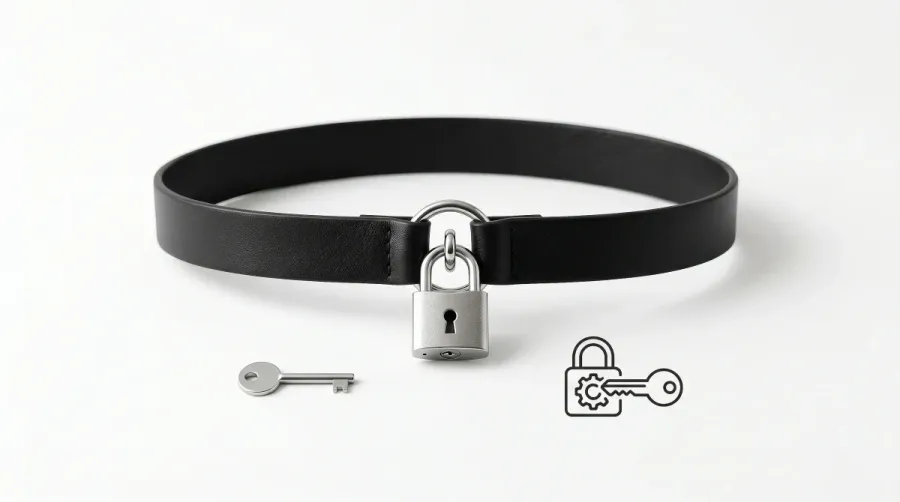
- Working lock with key, symbolizing that "someone holds the key"
The key visual difference from an ordinary choker is the presence of the lock, whether centered or to one side. That single element transforms a simple necklace into a statement.
Choker vs. Collar vs. Necklace: What Is the Difference
These terms overlap and it is worth sorting them out. A choker is the tightest format, running 30-38 cm and sitting at the very base of the throat. A collar necklace is typically slightly wider and sits a little lower, resting on the collarbone. A necklace is a broad term covering anything worn around the neck regardless of length.
The lock choker specifically occupies the choker end of this spectrum. It hugs the throat and, because of that close fit, makes the lock pendant or lock clasp immediately visible. A collar necklace with a lock sits lower and reads differently, softer and more architectural. When this guide uses the phrase "lock choker," it means the snug-at-the-throat format. The considerations around neck type, fit and layering that follow are specific to that placement.
Understanding the distinction matters practically. Chokers draw the eye to the jaw and throat. Collars draw the eye to the collarbone and décolletage. The same lock pendant on each of those formats gives a different result. Knowing which format you want shapes every other choice, from material to lock size to how you layer it.
A History: Where the Lock Choker Comes From
History matters here, because this piece carries several distinct layers of cultural heritage. Each layer added its own meaning, and understanding them helps you wear the thing with intention.
The Victorian Mourning Ribbon (1860s)
Chokers entered mainstream British and American fashion in the 1860s. They sat close to the throat, often with a small pendant or locket. The black velvet ribbon choker began its life as mourning jewelry: after a bereavement, women wore dark accessories as a mark of grief. The ribbon was tight, sombre and deliberate.
Within a decade, the style shed its funerary associations and became general fashion. The velvet or silk ribbon around the throat was simply elegant. Padlock pendants appeared in this period as sentimental tokens: "the key to my heart," "a feeling kept close," "a secret I carry." They were exchanged between sweethearts as pledges of affection, in the same spirit as lockets containing hair.
The Edwardian Dog Collar (Alexandra of Denmark, Late 19th Century)
The transformation from mourning ribbon to aristocratic statement came largely through one woman. Alexandra of Denmark, Princess of Wales and later Queen consort of Great Britain, wore the high, multi-strand necklace that came to be called the "dog collar" to conceal a childhood surgical scar on her throat. Her version consisted of stacked pearl strands and jeweled bands fitted tightly from collarbone to jaw.
The style was immediately copied across the upper classes and filtered rapidly into the wider population. By the 1890s and early 1900s, dog collar variants appeared in every jewelry catalog in Britain and the United States. The rigid, structured collar with a locking clasp had established itself as a recognizable form in formal women's dress, and it is one of the direct visual ancestors of the modern padlock choker.
The Flapper Era and the Pearl Choker (1920s)
The 1920s brought short hair, open necklines and a new image of femininity. The pearl choker in multiple strands was the defining accessory of this decade. It sat close to the throat in exactly the way flappers wanted: visible, self-possessed, unhidden. The lock pendant translated naturally into this era as a sentimental keepsake worn close to the body. Miniature gold padlocks on thin chains were popular gifts between couples.
The American Alternative Scene of the 1980s
Punk and Gothic subcultures adopted leather chokers with heavy locks as part of their visual vocabulary. In American cities from New York to Los Angeles, the scene drew on the severity of the dog collar and the industrial aesthetic of the padlock. These were markers of outsider identity and deliberate aesthetic transgression rather than anything else. Worn alongside studded cuffs, combat boots and dark eye makeup, the locked leather band around the throat said: "I am not part of your mainstream."
90s Grunge and Y2K in the USA
The choker made a broad return in the 1990s across American youth culture. The thin black velvet ribbon became one of the signature accessories of grunge. By the late 1990s and into the early 2000s, metal variants with pendants and locks took over. Y2K fashion's love of chrome, thick chains and deliberately oversized accessories put the padlock front and center.
The Y2K revival of the 2020s has brought that same energy back, this time with the full awareness that it is a deliberate reference, worn with context. Younger buyers in the US market have been a major driver of the renewed interest in lock chokers as part of the broader Y2K resurgence.
The Padlock as Sentimental Symbol
Alongside all these fashion movements runs a separate, quieter thread: the padlock as a direct expression of emotional attachment. The "key to my heart" is not merely a metaphor. In 19th-century sentimental jewelry, a miniature gold or silver padlock with a matching key was a literal gift: I give you the key, you keep it, I wear the lock. This tradition of paired lock-and-key jewelry persisted through Victorian and Edwardian eras and is still the emotional logic behind modern lock choker sets that come with a key pendant for a partner.
The Day Collar Tradition
Parallel to all of this, and predating much of it, the locked collar carries a specific and serious meaning within BDSM communities. The "day collar" is a piece worn by the submissive partner in everyday public life, deliberately chosen to look like ordinary jewelry so that it does not attract uninformed attention.
Within that culture, there is a recognized hierarchy: a training collar at the start of a relationship, a consideration collar when things become serious, and the final locked collar whose key is held by the dominant partner. A locked collar is the highest level of commitment within that culture, broadly equivalent in emotional weight to an engagement ring. For anyone operating within this world, a locked choker on a stranger has very specific meaning.
The 2010s: Entry into Mainstream Fashion
After the global reach of the film adaptation of Fifty Shades of Grey in 2015, BDSM-adjacent aesthetics moved into mainstream collections and onto the high street. Lock chokers appeared in editorial spreads and chain-store windows. Younger buyers adopted the look as pure fashion, without any framework beyond aesthetics. This created the dual reality that still holds today: for some it is a style choice, for others it carries weight.
2020-2026: An Everyday Category
The lock choker now sits in every accessory shop and mainstream jewelry chain. The majority of wearers use it as fashion. The Y2K revival pushed another wave of demand, nostalgic for the chunky chains and layered necklaces of the early 2000s.
What a Lock Choker Means (by Context)
The core principle is that context determines meaning. The same lock choker can signify entirely different things depending on who is wearing it and where.
Pure Fashion
The most common contemporary reading. Someone picks one up, wears it with a crop top and jeans, and there is no hidden layer. It is simply a well-chosen accessory.
Gothic Aesthetic
Within Gothic fashion the lock choker is a standard element, part of a broader dark visual language. No specific meaning is implied beyond aesthetic commitment.
Romantic Gesture
Some couples exchange chokers and keys: one wears the lock, the other carries the key. "My key is yours." Romantic symbolism without any other context. This maps neatly onto the Victorian tradition of sentimental padlock pendants.
Day Collar and BDSM Community
A locked collar in this context is a declaration about a relationship dynamic. It is worn deliberately to signal belonging, chosen because it looks like ordinary jewelry to anyone outside the community. Those who know the vocabulary will read it accordingly. Those who do not will see a choker.
Friendship or Promise
Some people exchange lock-and-key sets as friendship symbols or pledges, without any romantic or erotic dimension. The meaning is: "we are connected, and I carry that with me."
Remembrance
Sometimes the locked aesthetic is personal: a sealed chapter, a private grief, a memory held close. Engraved with a date or initials, it becomes a quiet memorial that only the wearer knows is there.
Personal Commitment
A purchase made for oneself. "I locked this year away from bad habits." A private vow, worn outward.
Context cannot be read from the outside. If you are not in a BDSM environment, no one will automatically interpret a lock choker as a declaration of submissive identity.
Types of Lock: What Is Available
The type of lock shapes the whole character of the piece. It is never a passive element.
Carabiner Lock
A functional metal clip styled to resemble a lock. Common in industrial and grunge-influenced designs. Opens and closes with a click, requires no key, functions as an ordinary clasp. Wears easily for everyday use.
Padlock-Style (Shackle Lock)
The classic silhouette: the recognizable form of a small padlock. The most widely seen variant. Comes in decorative versions (does not open) and functional versions (supplied with a working key). Size ranges from around 1 cm to 5 cm.
Magnetic Lock
A contemporary approach. Two sections connect by magnet and read visually as a lock. Easy to put on and take off. Less secure than a mechanical lock for prolonged wear. Suits those who want the aesthetic without the fuss of a working mechanism.
Slide Lock
An adjustable clasp that fixes a chain or band at a chosen length. The lock element acts as the size control. Allows precise fit. Found in adjustable choker designs where one size needs to serve multiple wearers.
Working Lock with Key
A genuine padlock that opens with a real key. Used in paired sets. The key is held by a partner or stored separately. The most symbolically loaded variant.
Materials
Leather
Natural leather gives the strongest "collar" effect. Tactile, durable, develops character with wear. Available in smooth, embossed and lacquered finishes. Leather is the traditional material of choice in specific communities. Mass-market pieces often use faux leather, which is softer and less long-lasting.
Velvet
Soft and warm against the skin. Creates a Victorian or Gothic character. Less practical than leather for daily wear. Works well with metal lock hardware, providing a textural contrast.
925 Sterling Silver
The standard for quality jewelry. Hypoallergenic for most wearers. Takes engraving well. Tarnishes slightly over time but polishes easily. A good base material for chain chokers with lock pendants.
Gold-Plated
A metal base (usually brass or silver) with a thin layer of gold applied. Gives the gold look at a more accessible price. The plating wears over time, especially with contact with water and cosmetics. For everyday wear, look for quality plating of at least 18 karat.
Titanium and Stainless Steel
Modern hypoallergenic metals. Do not oxidize or tarnish. Waterproof. Good for rigid collar designs and for anyone with sensitive skin. Surgical steel 316L is the standard choice for anyone with metal sensitivities.
Types of Lock Choker
Leather with Padlock
A leather or suede band around the throat with a metal lock centered at the front. The most archetypal variant. Available across price points from budget (roughly the cost of a dinner out) to premium.
Chain with Padlock Pendant
A fine or medium-weight chain with a small padlock hanging from it. Less intense visually than leather. Reads firmly as fashion.
Rigid Metal Collar
A stiff metal hoop with a lock at the clasp. This sits in more expressive territory, or functions as a very striking editorial accent.
Working Lock and Key Set
Choker plus a separate key, typically worn by a partner on their own chain or kept separately. A considered romantic gift.
Velvet Choker with Lock
Velvet ribbon plus metal lock. More Victorian or Gothic in character, softer in texture.
Engraved Lock
A lock bearing a name, date or symbol. Meaningful personalization.
Neck Types and Necklines: What Works
A lock choker suits most neck types, but some choices are better than others.
Long, slender neck. Any width, from a fine chain to a wide collar band. The choker emphasizes the line of the throat.
Average neck. No restrictions. Room to experiment with width and lock size.
Short neck. Go narrow and lightweight. A wide, heavy collar visually compresses a short neck further. Best choice: fine chain with a small lock.
Fuller neck. Finer pieces work better than wide rigid collars, which can create an uncomfortable framing effect.
By neckline:
V-neck. The choker and the V create a complementary triangle. Attention is drawn cleanly to the throat and collarbones.
Round neckline. Works well, the contrast between a snug choker and a simple round collar is deliberate and effective.
Off-shoulder or strappy. The neck is already the focal point; the choker amplifies that.
Roll neck or high collar. Choker worn over the fabric. Unconventional, but effective in avant-garde styling.
Open-collar shirt or blouse. A fine gold-toned chain choker with a small lock under an open collar reads as quietly elegant. This combination works especially well in creative professional environments.
Square neckline. A particularly strong pairing. The horizontal geometry of the square neckline and the close line of the choker create a frame that draws the eye upward in a deliberate way.
Sizing and Fit
Getting the fit right makes the difference between a choker that works and one that sits in a drawer.
The two-finger rule: two fingers should slide comfortably between the choker and your throat. Less than that and the choker is too tight. More than that and it will shift around and lose its visual impact.
Standard choker lengths run from 32 cm to 36 cm. Most designs include a 3-5 cm extender chain at the clasp, which gives you a working range of roughly 32-41 cm. If your neck is on the larger side, look specifically for designs that include an extender or that are sold in multiple lengths.
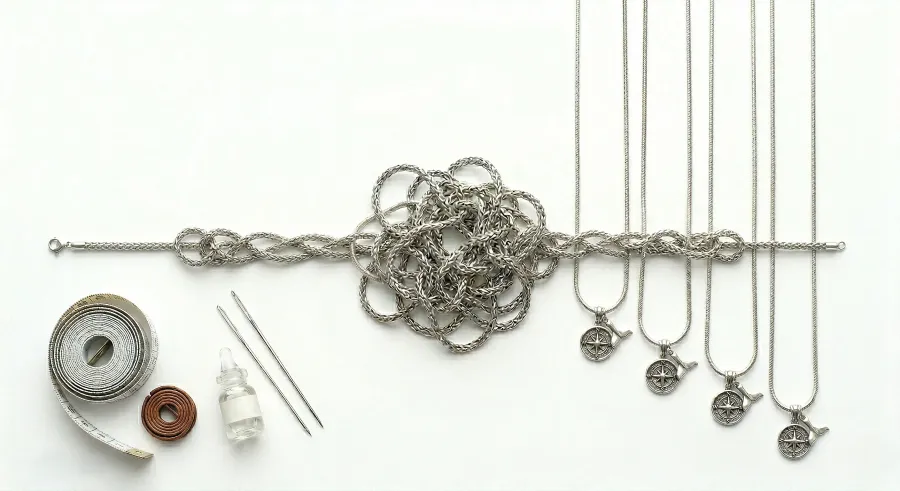
To measure accurately: use a soft measuring tape around the base of your neck, where the choker will sit. Add 2 cm for comfort. That number is your ideal choker length.
Snug fit vs. loose fit: a snug fit gives the maximum visual effect, with the choker reading as a clear horizontal line at the base of the throat. A looser fit is more comfortable for long wear but loses some of the graphic impact. For leather and rigid metal, snug is typical. For chain designs, the extender lets you adjust to preference.
Try the fit before committing to prolonged wear. A choker that feels fine when you first put it on may become uncomfortable during extended movement, particularly with rigid designs that do not flex with the neck. Test it through a few head rotations, looking down and up, to see how it behaves.
Engraving: Making It Yours
Engraving transforms a manufactured piece into a personal object. Options include:
A date. Anniversary, wedding day, a significant event. Readable only to those who know what it means.
Initials. Your own, a partner's, or both together. The classic choice for paired pieces.
A word or short phrase. One word on a lock carries more weight than a long explanation. "Always," "mine," "free," "yours."
A symbol. A small star, moon, arrow or infinity sign. Minimal and personal.
Engraving is applied to the face of the lock. Small locks (1-2 cm) accommodate one to three characters. Locks of 2-3 cm take a short word or pair of initials. Ask about technical limits before ordering. Laser engraving gives sharper results on small surfaces than hand engraving, which can blur on fine metal.
How to Wear It
With a Black Dress
The classic combination. Black dress of any cut, black leather choker with lock. Straightforward and always works.
With a T-shirt and Jeans
Contemporary and everyday. A white or black fitted tee, straight-leg jeans, lock choker. Ordinary dressing with an edge.
With Workwear
Unexpectedly effective. A small gold-toned lock choker under an open-collar white shirt and blazer. Low-key enough for a creative or media office environment.
Full Gothic
Total black from head to hem, leather choker with a heavy lock, layered chains, further Gothic details such as a skull or memento mori pendant carrying the same dark narrative. A complete aesthetic commitment.
With a Low Neckline
The choker and a V-neck or square neckline direct attention to the throat and collarbone. Highly effective for a dressed-up evening look.
Layered with Longer Chains
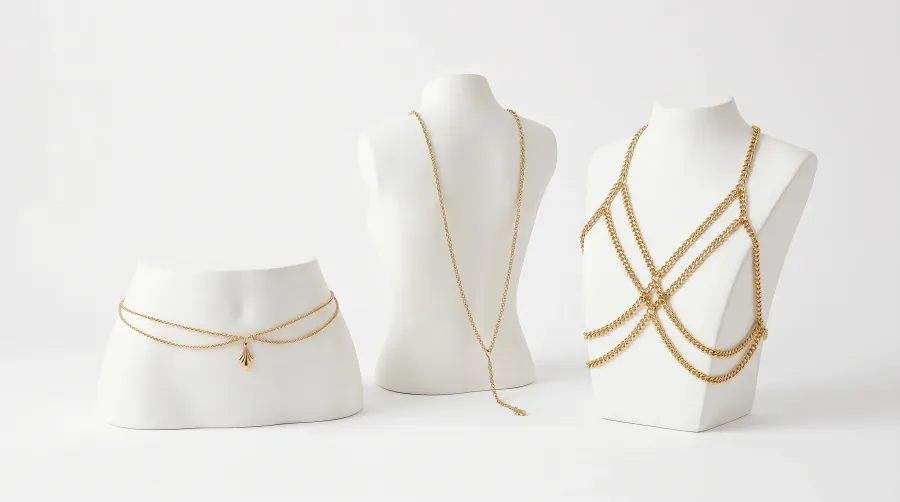
The lock choker as the shortest layer in a stack of necklaces. The lock reads as the anchor piece while longer chains, and even body chains running across the torso, play off it. For layering to work, you need at least a 5-7 cm gap between lengths to avoid tangling.
Day-to-Evening Transition
A fine chain lock choker in sterling silver or gold-plated metal works across both registers. Pair it with a casual blazer for daytime, swap the blazer for a fitted dress and the same choker carries the look forward into the evening without changing your accessories.
Alternative Wedding
Some brides in non-traditional ceremonies wear a pearl or fine-chain choker with a lock pendant. The reference is deliberate: "bound together."
Silver, gold, signet rings, symbolic pieces and paired sets.
Layering: Working with Other Jewelry
The lock choker is at its most interesting when it sits in a considered composition with other pieces.
With earrings. The tight placement of the choker around the throat draws the eye toward the jaw, which makes earrings especially visible. Statement hoops or long drop earrings create a strong balance with a heavy leather choker. With a fine chain choker, small studs or delicate drops are proportionally more appropriate.
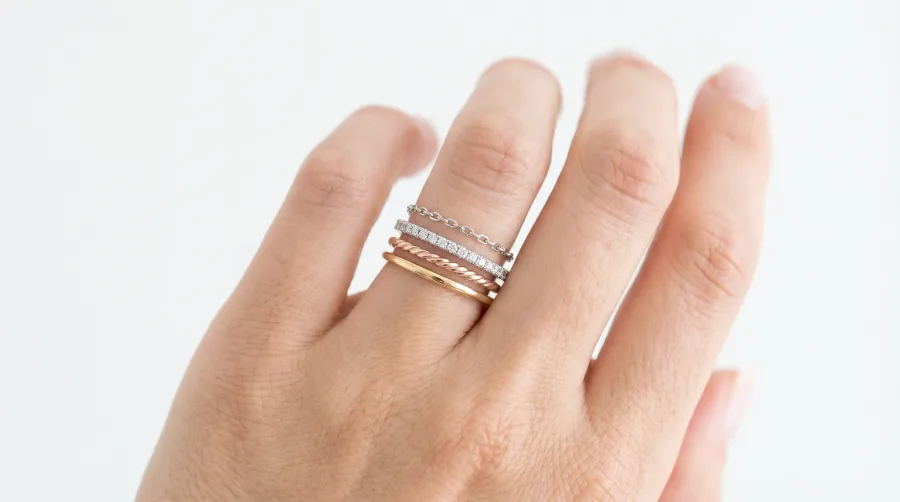
With rings. Metal matching matters. A gold-toned lock calls for gold-toned rings. Mixing silver and gold is possible in a deliberately mixed look, but the metals should have a reason to coexist rather than suggesting you put on whatever was available.
With bracelets. Wrist jewelry and a choker occupy different visual zones and do not compete. A stack of thin bracelets with a thin chain choker reads as cohesive. A single heavy cuff with a heavy leather choker can read as too much hardware. One of them is the accent.
Layering necklaces. The lock choker is the shortest anchor. Add a delicate chain at 40-45 cm, and a longer pendant necklace at 50-55 cm. The three lengths create depth. The lock on the choker remains the visual focus. Do not add a competing statement piece in the longer layers; keep them simpler.
With body chains. For festival or beach styling, a body chain below the choker extends the metal line across the torso. The choker acts as the punctuation at the top.
Care and Maintenance
Leather Choker
Wipe with a dry soft cloth after each wear. Apply leather conditioner every few months. Keep away from water and prolonged sun exposure. Store rolled, not folded. If it gets wet, dry slowly at room temperature, not with a heat source.
Sterling Silver Lock (925)
Wipe with a silver polishing cloth. For tarnish, rinse in a weak bicarbonate solution, then dry thoroughly. Store in a closed pouch or box away from air. Remove before showering, swimming, applying perfume or skincare products.
Gold-Plated Elements
Wipe with a soft cloth. No abrasive cleaners. Always remove before water contact; plating degrades faster with moisture. Store separately from other pieces to avoid surface scratches.
Velvet Band
Do not machine wash. Gentle hand rinse in cold water if necessary. Air dry flat. Store without pressure so the pile does not mat.
Stainless Steel and Titanium
The least demanding care. Wash with warm water and mild soap, dry with a soft cloth. Does not tarnish or oxidize. Safe to store in any box or tray.
Working Lock Mechanism
If your piece has a genuine mechanical lock, a small drop of watchmaker's oil into the keyhole every few months keeps the mechanism functioning. Store the key where you can reliably find it. If you lose the key to a working lock, the only way off is to cut the chain, not the lock itself. Keep a spare key somewhere accessible.
The Lock as a Gift
A lock choker is one of the few jewelry pieces that arrives with a built-in narrative. That makes it a powerful choice when the giving itself is meant to say something.
For a partner. The lock-and-key set format is the clearest version of this: one person wears the lock, the other wears the key. The asymmetry is the point. It does not need explaining. This maps cleanly onto the Victorian tradition of sentimental padlock jewelry and communicates the same thing those pieces communicated two hundred years ago.
For a close friend. Two matching lock-and-key sets, worn without romantic intent, say something different: "you have access to what others do not." This kind of friendship jewelry is having a significant moment in the United States, and the lock format is one of its expressions.
For yourself. Buying a lock choker as a personal talisman is its own category. You decide what the lock means. A closed chapter. A commitment to yourself. A year you sealed off. The piece carries that meaning without advertising it to anyone else.
When giving a lock choker, think about functionality. A decorative lock is easier to care for and more durable. A working lock with keys is symbolically more precise. If the gift is intended as a statement, choose the working version. If it is primarily an aesthetic choice, the decorative version wears better over time.
Who It Suits
Fans of Gothic and alternative fashion. A natural part of the wardrobe.
People drawn to 1990s and Y2K aesthetics. The choker revival sits squarely in that territory.
Couples wanting a symbol of commitment short of engagement. Paired lock-and-key sets.
Anyone who enjoys experimenting with accessories. An entry point into an unfamiliar aesthetic.
Leather enthusiasts. A leather choker works naturally alongside a leather jacket or boots.
Anyone who values jewelry with a documented history. Few pieces carry as many layers of cultural context as this one.
Lock Chokers in American Culture
A few cultural moments clarify why this piece has held its power across decades of American fashion.
The 1990s: From Underground to Mall
The choker made its mass-market American debut in the 1990s, moving from Gothic and alternative subcultures into mainstream youth fashion within a few years. The black velvet ribbon at the throat was one of the defining accessories of the decade across genres, from grunge to pop. By mid-decade it was available in every mall in the country.
The lock element appeared as the decade moved toward its end and as Y2K aesthetics began to take shape. Chrome, chunky hardware and oversized pendant necklaces became the dominant jewelry mode of the early 2000s, and the padlock fitted naturally into that grammar.
Gothic and Alternative
The American Gothic scene has maintained a consistent relationship with the lock choker across all its transformations. From the leather-and-spike aesthetic of early American Gothic through the darkwave and deathrock scenes, the locked collar at the throat has been a persistent element. It reads differently in this context than in mainstream fashion: more deliberate, more charged, more connected to the specific visual history of the form.
The Y2K Revival
The Y2K revival of the early 2020s has been a particularly American phenomenon, driven in large part by a generation that grew up in the era and is now revisiting it with nostalgia and irony in roughly equal measure. The lock choker is one of the central objects of this revival. Social media has given it wider reach than it had in its original context, and the parallel conversation about its history, symbolism and cultural layers has made buyers more informed than previous generations.
Today
The lock choker in 2026 exists simultaneously at every register: in mass-market stores as a trend item, in fine jewelry as a crafted piece with personal significance, in alternative communities as a continuation of a long visual tradition. The diversity of its contexts is part of what makes it interesting. You choose which layer you are engaging with.
Who Might Hesitate
In very traditional or religious environments. Associations may be drawn that you did not intend.
If you prefer not to be asked about your accessories. Be ready to answer or choose something quieter.
In conservative office settings. Depends on the company culture, but generally a risk.
At a job interview. Not the first impression to lead with.
FAQ
Does it immediately read as BDSM?
No. Most people see a choker with a lock and think nothing beyond the aesthetic. Only those familiar with BDSM culture will read it as a signal, and only if they are paying attention.
What is a day collar?
A day collar is a piece worn by the submissive partner in everyday life within BDSM relationships. It is deliberately chosen to look like ordinary jewelry. A lock choker is one of the most common day collar choices. If you are not in such a relationship, this is simply a cultural reference worth knowing.
Can I wear one if I am not in the BDSM scene?
Entirely. In contemporary fashion it is primarily an aesthetic object. The cultural layer exists for those it applies to.
Will someone ask what it means?
Possibly. "I like the style" is a complete and honest answer for the vast majority of situations.
Does the lock actually open?
Depends on the piece. Some versions include a working lock and key. Most mass-market pieces use a decorative lock only.
Can I sleep in it?
In a metal piece: better to remove it, as it may press and leave marks overnight. In a soft leather or velvet choker: possible if the fit is not rigid. Silver and gold tolerate contact well if there are no sharp edges.
Can I shower or swim in it?
925 silver tolerates water but chlorine and salt gradually affect the surface. Gold plating degrades noticeably faster with water contact. Leather does not like water. Remove before water activities as a general rule.
How should it fit?
A choker should sit snugly without pressing. The standard guide: two fingers should slide comfortably between the choker and your throat. Less than that and it is too tight. More and it will shift around. Standard lengths run from 32-36 cm, with most designs including a 3-5 cm extender.
Does it suit men?
Yes, particularly within Gothic, punk and alternative fashion. A rigid metal collar with a heavy lock worn by a man reads with considerable presence. Some men also wear it as a symbolic piece within relationship contexts.
Which lock size works best?
Small (1-2 cm): everyday, understated. Medium (2-3 cm): expressive without being theatrical. Large (4 cm+): Gothic, stage, events.
Does it work on sensitive skin?
Yes, if you choose the right material. Surgical steel 316L and titanium cause reactions in almost no one. Sterling silver 925 is well tolerated by most. Problems typically arise with gold plating over brass: prolonged skin contact can leave a faint metallic trace. Check the base metal before buying.
Are there age restrictions?
None. Chokers are worn at any adult age. Younger wearers tend toward expressive leather styles and larger locks. Preferences often shift with time toward finer chain chokers with smaller, more delicate locks. There are no rules, only personal taste.
Lock Chokers Across Styles: Reading the Outfit
The same piece reads radically differently depending on what it is paired with. A few concrete scenarios make this clearer than any general rule.
Minimalist Urban
A fine sterling silver chain choker with a small lock (1.5-2 cm) over a white oversized Oxford shirt, straight-cut trousers, loafers. No additional layers of jewelry. The choker becomes the only accessory holding visual interest. In this context the lock reads as a clean, precise detail, not as darkness or subculture. The white ground lets it speak without competition.
Dark Aesthetic Without Overload
A leather choker with a medium lock (2.5-3 cm) over a black turtleneck, straight jeans, chunky lug-sole boots. Nothing else. One choker sets the entire register of the look. This combination works for both daytime and evening, requiring only a change of shoes to shift registers.
Romantic Evening
A fine silver choker with a small lock engraved with a date or initials, paired with a V-neck dress in substantial fabric. No other neck jewelry. Small stud earrings or a delicate ring. The lock in this context becomes a private detail, something you know is there but that most people will not read from the outside.
Festival and Summer
A cord or braided choker with a metal lock, paired with a cropped top, high-cut shorts and flat sandals. Wrist stacking optional. The lock here reads as bohemian individuality rather than any heavy statement. Lightweight materials and a casual setting defuse any intensity.
High-Impact Evening
A wide leather choker with a large lock, paired with a fitted bodysuit or a slip dress. Statement heels. Strong eye makeup. Here the choker is operating at full volume. It is the intended center of the look.
Buying a Lock Choker: What to Look For
If you are choosing your first lock choker, a few practical considerations save time and money.
Decide on function first
If the piece is purely aesthetic, a decorative lock is the better choice. More durable, lower maintenance, no key to lose. If the symbolic dimension matters, whether giving the key to a partner or wearing it as a personal talisman, choose a working lock supplied with two real keys.
Match the metal to your skin
Sensitive skin or metal allergies? Surgical steel 316L or titanium are the safest options. No known sensitivities? Sterling silver 925 or gold plating over a silver base (not brass) works well. Most accessible: steel. Most durable: titanium. Most classic: 925 silver.
Check the actual clasp
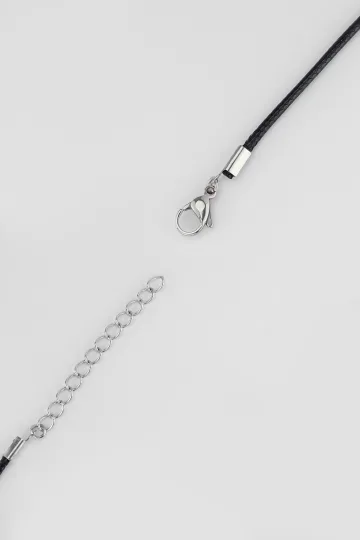
Separate from the decorative lock element, every choker has a functional clasp that opens and closes the piece. On chain designs this is typically a lobster claw or box clasp. Test that it opens and closes smoothly but does not disengage under tension. A poorly made clasp loses the choker.
Confirm the extender
Most chokers ship with a 3-5 cm extender chain at the clasp. This is critical if you are on the edge of standard sizing. Confirm it is included before buying.
Allow time for engraving
Custom engraving takes time. For gifts or events, allow an additional 5-10 business days. Laser engraving is sharper than hand engraving on small surfaces. Check technical character limits before ordering.
Lock Choker vs. Lock Pendant vs. Lock Bracelet
Lock jewelry extends beyond the choker format, and these pieces are often confused.
Lock choker (30-38 cm) sits at the base of the throat. The snug fit creates the collar effect. This is the most intense version of the symbolic vocabulary.
Lock pendant on a longer chain (40-60 cm) is the same padlock motif worn lower, below the collarbone. It lacks the collar effect and reads softer. A good option if you like the lock symbolism without the throat-level intensity.
Lock bracelet carries the same symbolism at the wrist. Often used as part of a pair: one person wears the bracelet with the lock, the other wears the key as a pendant. Different body placement, identical emotional logic.
Lock ring is the most discreet version. A padlock motif on a ring band. Almost private in its scale.
All of these formats share the same underlying symbolic grammar. The choker is the loudest version because of where it sits on the body.
Wearing Through the Seasons
The lock choker works year-round, but there are seasonal differences worth knowing.
Spring and Summer. Open necklines, bare skin. The choker is at maximum visibility. Fine chain variants in silver or steel are ideal for warm months: lightweight, do not trap heat, suit the season's overall lightness. Cord and fabric chokers with metal locks fit festival and beach aesthetics well.
Fall. Layered clothing, transitional dressing. The choker works under an open coat and over a light-knit sweater with equal ease. Metal variants against the darker autumn palette tend to give strong results.
Winter. Heavy knitwear, closed necklines. The choker over a turtleneck is an intentional avant-garde choice. Beneath a scarf it disappears, which means winter appearances of the lock choker tend to be at indoor venues, parties, restaurants, concerts. When it does appear in winter, the contrast between warm fabric and cold metal is part of the visual.
Conclusion
A lock choker is a piece with layers. Wear it as fashion, as Gothic aesthetic, as a relationship symbol, as a day collar, or as a private vow. All of those are legitimate. You decide what you put into it.
If you are trying it for the first time, a fine chain with a small padlock pendant is a low-commitment entry into the aesthetic. If you know your direction: a leather band with a heavier lock. For something fully personal: a lock with an engraved date or initials.
About Zevira
Zevira makes jewelry by hand in Albacete, Spain. Lock chokers are part of the range in two distinct modes: as a fashion accessory and as a functional relationship symbol with a paired key pendant for a partner.
What you will find:
- Chain chokers with decorative padlock pendants
- Leather chokers with metal locks
- Paired "choker and key" sets for two
- Locks with engraved dates or initials
- Gothic and Victorian chokers with heavier locks
- Fine silver chokers for everyday wear
Each piece is made by hand with the option of personal engraving. We work in 925 silver and 14-18K gold.